French
  English
  Russian
  German
  Italian
  Spanish
  Polish
  Ukrainian
  Turkish
  Portuguese
  Greek
Greek  Arabic
  Korean
  Chinese
  Japanese
  Czech
Czech 

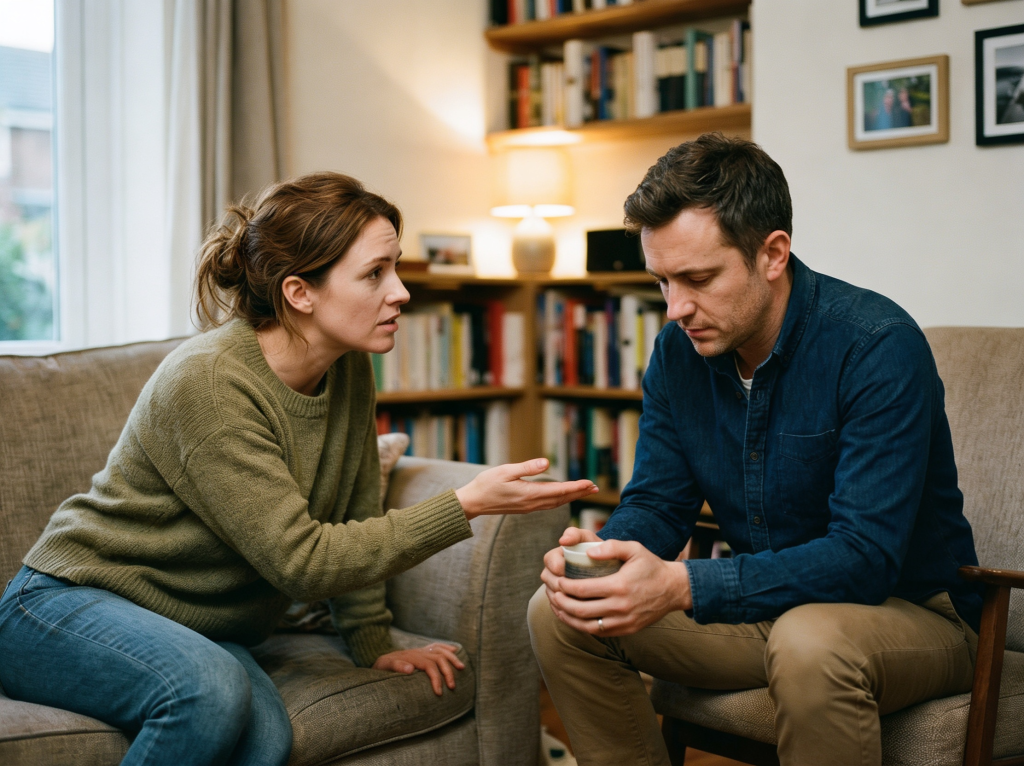
You remember the argument as a minor disagreement. Your partner remembers it as one of the worst nights of the relationship. You recall offering support during a difficult period. Your partner recalls feeling completely alone. Same relationship, same timeline, entirely different experiences. This is the perception gap — the space between how two people in the same partnership encode, store, and recall shared events. Understanding why this gap exists, and why it often grows larger over time, is one of the more useful things a couple can do for their relationship.
What the Perception Gap Actually Is
The perception gap is not about lying or selective memory in the deliberate sense. It describes the inevitable differences in how two individuals perceive, filter, and remember the same events. Memory is not a recording device. It is a reconstructive process — shaped by emotion, attention, prior experience, and the story each person is already telling themselves about their life and their relationship.
Two people sharing a dinner, an argument, or a milestone bring entirely different inner landscapes to that moment. One person arrives anxious and hypervigilant; the other arrives calm and distracted. One person attaches enormous significance to a particular phrase; the other barely registers it. The event is the same. The experience of it is not. And what each person remembers later reflects not the event itself but their individual experience of it.
This is not a flaw in human cognition. It is a feature. The brain prioritises emotionally significant information and encodes it more deeply. It fills in gaps with inference and expectation. Over time, memories shift slightly with each retrieval — a process researchers call reconsolidation. The result is that two people can live through the same relationship and come away with genuinely different accounts of what happened, neither of which is straightforwardly false.
Why the Gap Grows Larger in Intimate Relationships
The perception gap tends to grow larger in close partnerships than in more casual relationships. Several factors drive this.
First, the emotional stakes are higher. Events in an intimate relationship carry more weight than the equivalent events in a friendship or professional context. Greater emotional intensity means more active encoding — which also means more individual variation in what gets stored and how. Two people who both care deeply about an outcome will often remember it more differently, not less, than two people who were relatively indifferent to it.
Second, each person interprets events through the lens of their attachment history. Someone with a strong fear of abandonment will encode moments of distance differently from someone with a more secure attachment style. What registers as neutral to one person — a partner who needs a quiet evening alone — registers as alarming to the other. Those differences in perception accumulate over years into significantly different accounts of the same relationship.
Third, intimate relationships generate ongoing narratives. Each person constructs a running story about the relationship — who they are in it, how they are treated, what the pattern is. New experiences get interpreted through that narrative. When the narrative diverges, as it inevitably does, the perception gap widens. Events that confirm one person’s story get weighted more heavily. Events that contradict it get minimised or forgotten.
How the Perception Gap Creates Conflict
Most couples encounter the perception gap most acutely in arguments about the past. “You always do this.” “That never happened.” “I told you exactly how I felt.” These statements feel true to the person making them. They feel equally false to the person hearing them. Neither person is necessarily distorting the truth deliberately. Both people are reporting their experience accurately — and the experiences genuinely differ.
The problem is that each person tends to interpret the gap as evidence of bad faith rather than different perception. If my partner remembers this so differently from how I remember it, one of us must be lying, or manipulating, or rewriting history to win the argument. That conclusion generates contempt and mistrust — and makes the original disagreement significantly harder to resolve.
A distorted understanding of how memory works compounds this problem. Most people believe their memories are more accurate than they are. That confidence makes it harder to consider that the partner’s different account might be as valid as their own. The perception gap, in other words, does not just create misperceptions about events. It creates misperceptions about each other’s honesty and intentions.
The Role of Perspective in Bridging the Gap
Closing the perception gap — or at least preventing it from growing into a larger source of damage — requires a shift in how partners relate to their own memories. Specifically, it requires holding individual memories with slightly less certainty and slightly more curiosity.
That is harder than it sounds. Memory feels like fact. The conviction that you remember correctly is built into the experience of remembering. Loosening that conviction requires not just intellectual understanding of how memory works, but a genuine willingness to consider that your partner’s different account might reflect real differences in experience rather than dishonesty.
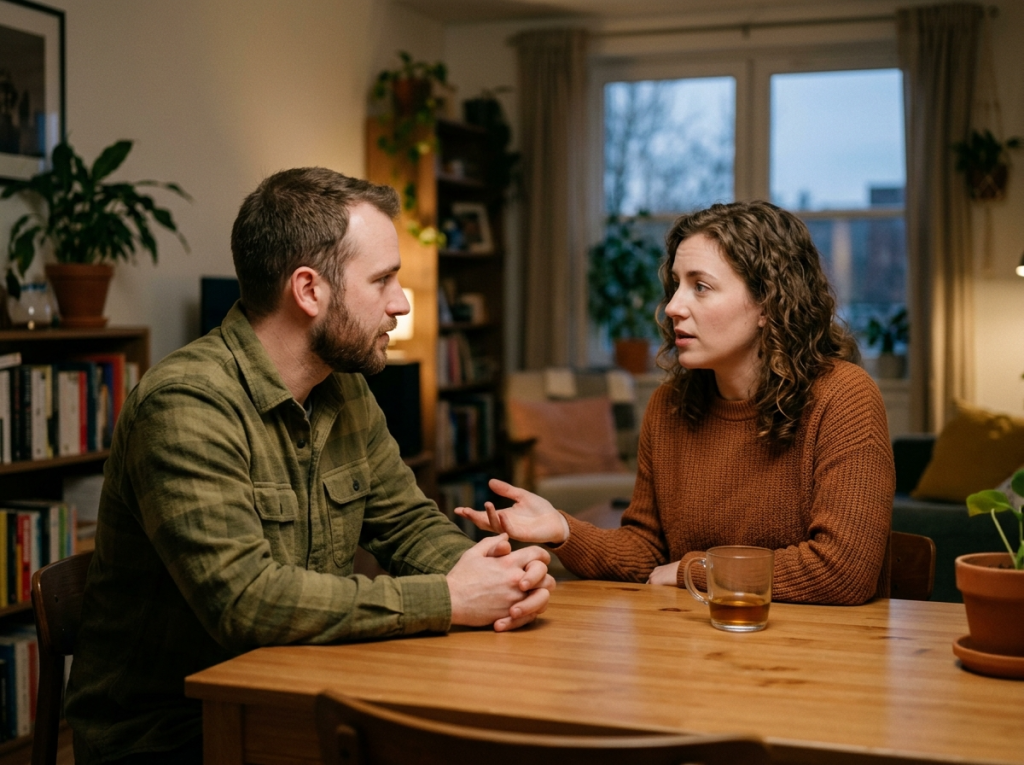
One useful reframe is to move from “what actually happened” to “what we each experienced.” Those are different conversations. The first sets up a contest between two incompatible accounts. The second opens a space where both perspectives can exist simultaneously — where two valid individual experiences of the same event can both be true at once.
That shift does not resolve every disagreement. Some differences matter too much to simply hold in parallel. But it changes the emotional register of the conversation. Instead of prosecuting each other’s memories, couples can begin to explore why this event landed so differently for each of them — which is almost always the more interesting and more useful question.
What the Perception Gap Reveals About Each Partner
One of the less obvious benefits of understanding the perception gap is what it reveals about each person individually. When two accounts of the same event diverge significantly, that divergence is informative. It points toward each person’s emotional sensitivities, their unmet needs, and the stories they carry about themselves and about the relationship.
If one partner consistently remembers experiences as more negative than the other does, that pattern is worth exploring. It might reflect a genuine imbalance in the relationship — one person absorbing more stress or feeling less secure. It might also reflect an individual tendency toward negative encoding that predates the relationship entirely. Either way, the gap is telling you something.
The same applies when the differences are positive. A partner who consistently remembers shared experiences as warmer or more connected than the other does may be expressing a longing that the relationship currently does not fully meet. Paying attention to the direction and pattern of perception gaps — rather than simply arguing about which account is correct — gives couples access to information that can genuinely improve the relationship.
Navigating the Perception Gap Without Losing Trust
Trust is the thing most at risk when perception gaps surface in conflict. The accusation of dishonest memory — even when unspoken — does serious damage. Protecting trust while navigating different accounts requires a few deliberate habits.
Acknowledge the gap without assigning blame. “We seem to remember this differently” is a more productive starting point than “that’s not what happened.” The first invites exploration. The second closes it down.
Resist the urge to prove your account. The goal of most memory-based arguments is to establish that your version is the correct one. That goal is rarely achievable and usually counterproductive. Shifting the goal toward understanding — why did this land so differently for each of us — tends to produce more insight and less damage.
Check for the larger pattern. Individual perception gaps are normal. A consistent and growing divergence in how two people experience the relationship is a signal worth taking seriously. It may point toward a communication breakdown, an unaddressed imbalance, or a widening in emotional distance that benefits from direct attention.
The perception gap is, in one sense, simply evidence of two genuine individuals sharing a life. No two people will ever experience the same relationship in identical ways. The question is whether those differences become a source of distorted understanding and conflict, or a source of deeper knowledge about each other. That outcome depends less on memory than on what couples choose to do with the gaps between them.