Ukrainian
  English
  Russian
  French
  German
  Italian
  Spanish
  Polish
  Turkish
  Portuguese
  Greek
Greek  Arabic
  Korean
  Chinese
  Japanese
  Czech
Czech 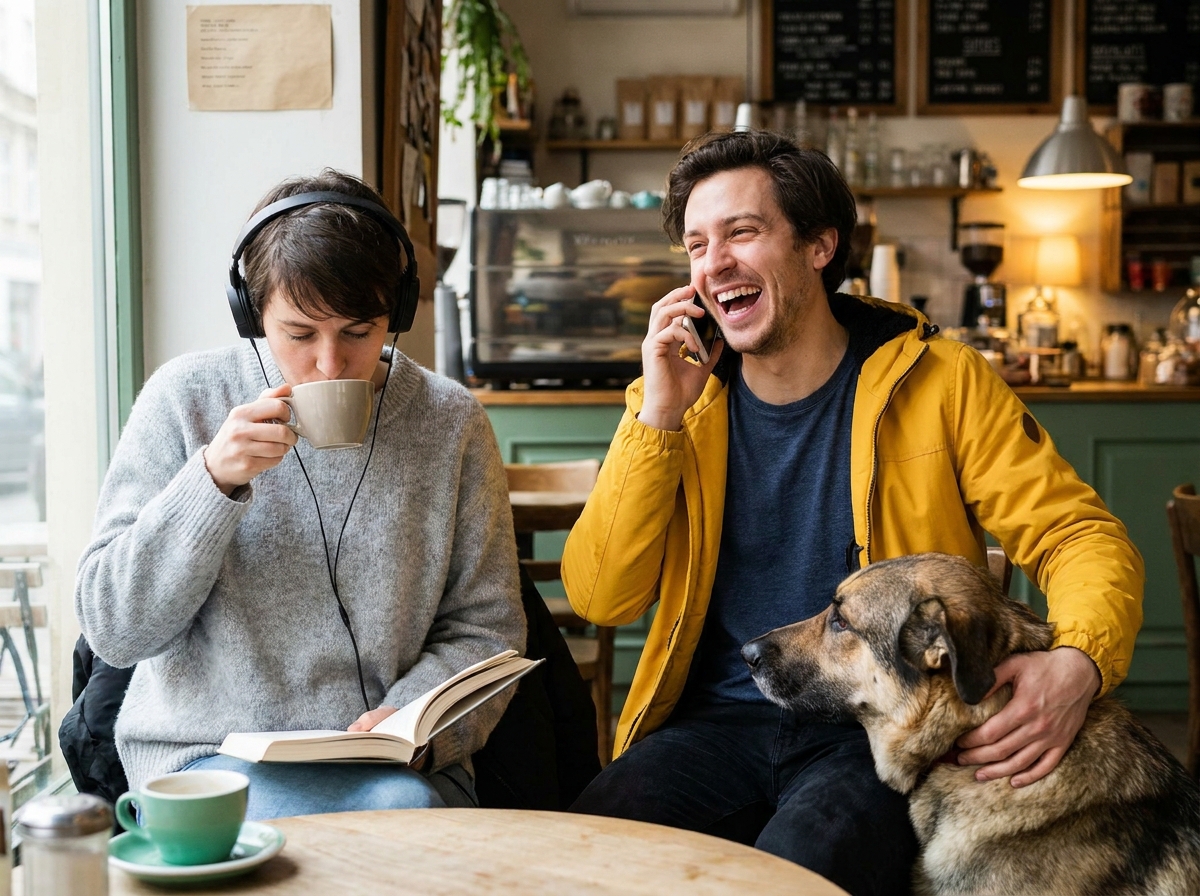

There is a particular kind of love that feels like standing in a doorway — one foot in the warmth of deep connection, one foot in the cold of your own exhaustion. Introverts love fully. They commit deeply, listen carefully, and invest in ways that few other personality types match. But when introverts love extroverts, that love comes wrapped in a specific kind of tension. The extrovert moves through the world loudly and hungrily, craving stimulation, company, and constant engagement. The introvert moves through it quietly, guarding their energy like a finite resource. When these two types collide romantically, the result is one of the most dynamic, growth-producing, and genuinely tiring relationship configurations that exists. Understanding it honestly is the first step to navigating it well.
What Being an Introvert Actually Means in a Relationship
Being an introvert is not the same as being shy. Shyness is fear-based — a discomfort with social judgment that makes social situations feel threatening. Introversion is structural. Introverts are wired to find social engagement energetically costly in a way that extroverts simply are not. The neurological characteristics of introversion include heightened sensitivity to external stimulation and a tendency to restore through solitude rather than social contact.
In a relationship, these characteristics shape everything. Introverts are not people who dislike their partners. They are people who need time away from everyone — including the person they love most — in order to feel like themselves again. This distinction is critical. An introvert who retreats after a social weekend is not withdrawing from the relationship. They are restoring themselves so they can return to it fully.
Being an introvert also means processing internally. Where extroverts think out loud — using conversation to work through ideas and feelings — introverts tend to arrive at a conversation having already processed much of it internally. They say less, but they mean more of what they say. They take longer to respond, but their responses tend to carry more weight.
For a partner who operates through extroversion — who processes by talking, who energizes by sharing, who interprets silence as distance — this can feel like emotional absence. It rarely is. Signs of an introvert’s love tend to be quiet rather than demonstrative, consistent rather than dramatic. Learning to read those signs is a skill extroverts in these relationships must actively develop.
Why Extroverts Are So Magnetic to Introverts
It seems counterintuitive that introverts so frequently fall for extroverts. Yet the attraction makes sense when you understand what each type offers the other. Extroverts carry a social ease that many introverts quietly admire. They enter rooms confidently, hold conversations effortlessly, and seem to navigate social situations without the energy calculations that introverts perform constantly.
For an introvert who has spent years managing shyness, overthinking before speaking, or feeling anxious at the edge of large social events, an extrovert’s fluency can feel like watching someone speak a language you have always struggled with. There is a pull toward that ease. A desire to be near it.
Extroverts also pull introverts into experiences they would not have sought alone. New places, new people, spontaneous plans, larger social gatherings — extroversion, lived close up, expands the introvert’s world in ways that quiet, self-directed living rarely does. Many introverts say, honestly, that their extrovert partner made them more alive to the world. That is not a small gift.
The attraction runs in both directions. Extroverts are often drawn to the quiet depth that introverts offer. In a world of surface-level social interaction, an introvert who actually listens — who asks real questions, who sits with a conversation rather than moving to the next one — feels rare. Extroverts who tend to perform for crowds often find genuine rest in an introvert’s company. The introvert does not need the performance. They want the person underneath it.
The Exhausting Reality of Being an Introvert with an Extrovert Partner
Introverts love their extrovert partners. They also, genuinely, find them tiring. This is worth saying plainly, because the guilt that introverts feel around this reality often prevents them from addressing it honestly.
Staying home on a Friday night is an act of recovery for most introverts. It is a necessary reset after a week of social demands. For an extrovert, staying home is a mild punishment. The extrovert wants to go — to see close friends, attend an event, be among people. When these two preferences collide every weekend, the friction accumulates.
Introverts are also prone to emotional regulation challenges in high-stimulation environments. A loud party, a long dinner with new people, an entire day of social commitments — each of these pushes the introvert’s system toward overload. They go quiet, disengage and begin mentally calculating the earliest acceptable exit. Their extrovert partner, energized by the same environment, interprets this retreat as a sign of unhappiness rather than overstimulation.
The introvert, meanwhile, may feel guilty for limiting the extrovert’s social life — and resentful at having to justify their limits repeatedly. They may overthink every invitation, calculating the social cost before responding. They may stay at events longer than feels sustainable because they do not want to disappoint the person they love. This pattern — staying past the point of genuine presence — costs the introvert more than it gives the relationship.
Signs the Balance Is Working — and Signs It Is Not
Not every introvert-extrovert relationship suffers from this tension equally. Some couples navigate it with remarkable fluency. Others grind against it for years without naming it clearly. Knowing the difference requires looking honestly at the patterns.
Signs the balance is working: the introvert feels genuine freedom to say, without drama, that they need a quiet night. The extrovert pursues social plans independently without interpreting the introvert’s absence as rejection. Both partners feel their needs are visible and taken seriously. The introvert accompanies the extrovert to social events with some regularity, even at some personal cost. The extrovert sometimes stays home without resentment.
Signs the balance is failing: the introvert consistently overrides their own needs to match the extrovert’s social pace. The extrovert feels chronically lonely or held back. One partner routinely sacrifices while the other routinely receives. Conversations about social plans produce recurring conflict rather than negotiation. Either person feels unseen in their personality type — as if their wiring is treated as a problem rather than a reality.
Introversion and extroversion are not positions in a debate. They are different ways of processing the world. A relationship that treats either as subordinate to the other is working against itself.
How Introverts Can Navigate Dating an Extrovert Without Losing Themselves
Being an introvert in a relationship with an extrovert requires deliberate self-awareness. The risk is not conflict — conflict is manageable. The risk is slow erasure. Introverts who consistently override their own limits to match an extrovert partner begin losing contact with themselves. They become anxious, depleted, and eventually resentful — not because the extrovert demanded too much, but because the introvert stopped advocating for their own needs.
Honest Communicaton Early On
The first strategy is naming introversion explicitly and early. Many introverts stay quiet about their personality type — ironically — hoping their partner will simply intuit the limits. Extroverts rarely do. They interpret available energy as willingness and quiet as contentment. The introvert who says clearly, “I need two quiet evenings a week to function well,” gives their partner something to work with. Silence gives them nothing.
Separateness
The second strategy is separateness. Introversion does not require constant togetherness. Introverts and extroverts can develop healthy independent social lives within a shared relationship. The extrovert goes out with their social circle; the introvert stays home, recharges, and is genuinely glad to hear about it later. This arrangement works when both partners trust it — when the introvert does not feel guilty for staying, and the extrovert does not feel abandoned for going.
Емоційна регуляція
The third strategy is learning to identify the signs of approaching overload before they become shutdown. Introverts who recognize their own early warning signals — a specific kind of tiredness, a desire to go quiet, a flattening of affect — can communicate those signals before they become withdrawal. “I’m starting to feel overstimulated” is a more useful sentence than disappearing into monosyllables for the rest of the evening.
Emotional regulation, for introverts, improves with practice. The more clearly an introvert understands their own limits, the more precisely they can communicate them — and the less dramatic the management of those limits becomes over time.
What Extroverts Can Do to Make the Relationship Sustainable
Introverts love their extrovert partners most freely when they feel safe in their own personality type — when introversion is treated as a valid way of being rather than a constraint to work around. Extroverts who genuinely embrace this understanding transform the relationship’s dynamic.
Practically, this means not treating every social refusal as a referendum on the relationship. It means developing social outlets that do not depend on the introvert’s participation, asking, rather than assuming, whether a plan sounds manageable. It means noticing the difference between an introvert who is withdrawn and one who is simply quiet — and understanding that the two are not the same.
Moreover, it means valuing what introversion offers. The extrovert who learns to sit in silence with their introvert partner — without filling it, without interpreting it, without needing it to become something else — discovers a form of intimacy that extroversion alone rarely produces. The stillness that introverts carry is not emptiness. It is depth. Access to it is one of the quieter gifts this kind of relationship provides.
Conclusion: Introvert or Extrovert, the Relationship Requires Both
Whether you are introvert or extrovert, loving someone wired differently from you is an act of sustained translation. Introverts love loudly in their own language — through presence, through attention, through the particular loyalty of someone who chose you for depth rather than convenience. Extroverts love generously in theirs — through inclusion, through energy, through pulling the person they love into a larger life.
The relationship works when both languages get equal respect. Not when one person changes who they are, but when both people learn to read what the other is actually saying beneath the surface of their personality type.
Introversion is not a limitation on love. In the right relationship, understood clearly, it is one of love’s more quietly extraordinary forms. The introvert who loves an extrovert is not making a mistake. They are choosing the harder, richer work of loving across difference — and that, done well, is one of the most expansive things a person can do.