
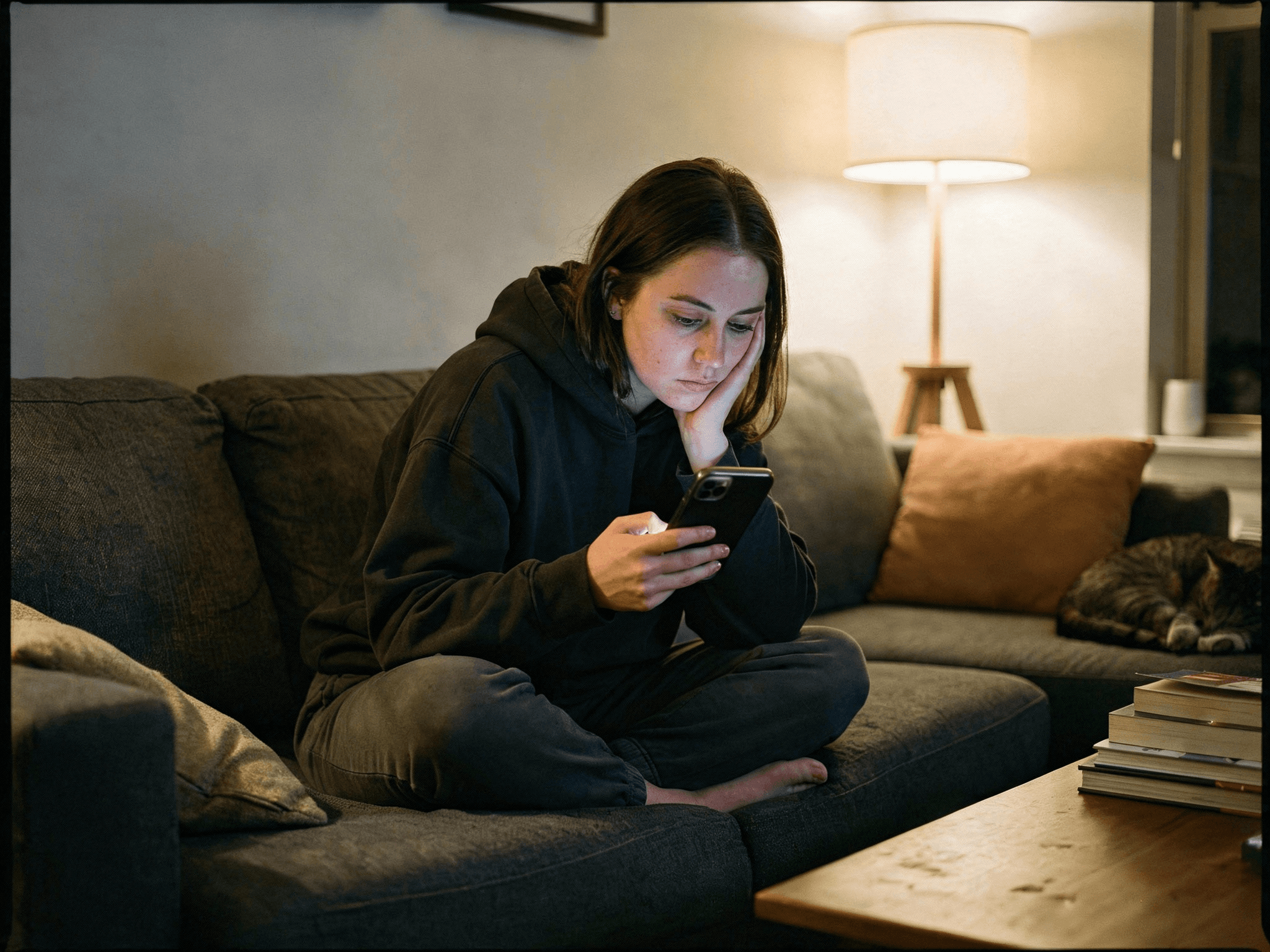
Большинство людей, переживших расставание, знакомы с этим чувством. Поздно. Вы устали. Вы сказали себе, что всё, хватит. И всё равно открываете их профиль. Бесконечная прокрутка соцсетей бывшего — одна из самых распространённых и наименее обсуждаемых преград на пути к восстановлению после разрыва отношений. Это кажется compulsive, почти непроизвольным, и неизменно сопровождается знакомой смесью негативных эмоций: болью, ревностью, тоской и новой волной горя, которое, как вам казалось, уже отступает. И всё равно люди повторяют это на следующий день. Понимание причин такого поведения, его влияния на психическое здоровье и способов избавиться от этой привычки полезнее, чем просто решение «перестать» — потому что решение без понимания редко работает.
Что на самом деле происходит с мозгом при прокрутке профиля бывшего
Прокрутка ленты — это не нейтральное занятие. Просмотр соцсетей бывшего запускает те же нейронные reward-цепи, которые когда-то активировались в отношениях. Во время отношений мозг сформировал настоящую привязанность — с реальными неврологическими следами. Увидеть человека, даже на экране, стимулирует дофаминовые пути, которые раньше надёжно активировались его присутствием.
Именно поэтому прокрутка соцсетей после расставания работает как контакт с аддиктивным веществом. Каждая сессия даёт небольшой нейрохимический «удар» — momentary удовлетворение от того, что вы их видите, знаете, чем они занимаются, чувствуете близость к человеку, которого больше нет в вашей жизни. За этим ударом следует спад: renewed осознание потери, негативное сравнение с тем, что вы видите в профиле, и стресс от повторного контакта с тем, от чего процесс восстановления требует дистанции.
Эффекты выходят за рамки одной сессии. Прокрутка профиля бывшего нарушает эмоциональную recalibration, от которой зависит восстановление. Каждое обращение к профилю перезапускает неврологический процесс dissolution привязанности — процесс, который требует consistent дистанции для завершения. Человек, который проверяет профиль каждый день, неврологически speaking, никогда не уходит дальше одного дня в процессе withdrawal.
Читайте также: Действительно ли вы хотите вернуть бывшего? Почему, скорее всего, вы этого не хотите
Исследования соцсетей и восстановления после расставаний подтверждают это. Они consistently показывают, что continued мониторинг бывшего в соцсетях связан с большим дистрессом, более медленным эмоциональным восстановлением и более persistent тоской. Эффекты не subtle. Прокрутка keeps рану открытой таким образом, который большинство людей не fully оценивают, потому что механизм invisible.
Почему вы продолжаете это делать
Понимание причин такого поведения необходимо, потому что оно не irrational. Оно имеет определённый emotional смысл, даже когда явно причиняет вред.
Неопределённость
Самая распространённая причина — потребность снизить неопределённость. Окончание отношений оставляет огромный informational gap. Вы больше не знаете, чем они занимаются, что чувствуют, скучают ли по вам. Соцсети предлагают partial решение этой неопределённости. Прокрутка их постов feels как сбор информации — как понимание ситуации, в которой вы now находитесь. Проблема в том, что информация curated, incomplete и почти всегда interpreted через lens вашего собственного emotional состояния, что приводит к misreading, а не к clarity.
Читайте также: Почему моя жена кричит на меня? 8 распространенных причин & Как это остановить
Поиск близости
Прокрутка также служит формой proximity-seeking — способом поддержания psychological близости к человеку, которого ваша nervous system ещё не accepted как потерянного. Мозг treats romantic loss similarly to physical loss. Это triggers поиск missing человека. Проверка их соцсетей temporarily удовлетворяет этот search response, поэтому urge возвращается так reliably. Вы не weak. Вы responding на biological drive, который соцсети сделали conveniently accessible.
Сравнение
Сравнение — ещё одна причина. Видеть, как бывший apparently thriving, socializing или moving on, может вызвать specific kind of anxious preoccupation. Они счастливее без меня? Они уже встретили кого-то другого? Это сравнение feeds anxiety, не resolving её, потому что соцсети показывают только то, что люди choose to show — что rarely является полной картиной.
Самонаказание
Наконец, прокрутка может functioning как форма self-punishment. Некоторые люди, особенно те, кто carries guilt или self-blame по поводу окончания отношений, возвращаются к профилю бывшего именно потому, что это hurts. Negative feelings, которые это produces, на каком-то уровне feels deserved. Это worth recognizing, потому что это указывает на что-то, что alone scrolling habits не исправит.
Читайте также: Одержимость на ранних этапах знакомства: почему это происходит и как остановить
Негативные эффекты на ваше психическое благополучие
Последствия для ментального здоровья от sustained прокрутки после расставания well-documented. Они также tend to be underestimated людьми, которые их experiencing, потому что привычка feels too small, чтобы быть источником significant distress.
Тревога увеличивается с каждой сессией прокрутки. Мозг enters состояние heightened vigilance в часы после проверки — monitoring за further информацией, replaying увиденное, constructing narratives о том, что это значит. Это состояние mental well-being disruption compounds over days и weeks. Человек, который scrolls daily, rarely traces свою persistent anxiety back к привычке, потому что связь feels too indirect.
Депрессия тоже углубляется. Ленты соцсетей создают systematically distorted picture чужих жизней. Профиль бывшего показывает моменты, которые они chose to present publicly. Сравнение вашей internal reality — grief, stress, difficulty ordinary дней — с их curated external presentation produces negative comparison, которое feels real, даже когда это не так. Это сравнение feeds чувство inadequacy, которое has no basis в accurate информации.
Читайте также: Перестаньте романтизировать своего бывшего: Понимание воспоминаний и движение вперед
Сон страдает. Прокрутка tends to happen ночью, когда defenses ниже и urge for connection сильнее. Emotional activation, которую produces прокрутка — renewed grief, anxious comparison, resurfacing longing — incompatible с physiological состоянием, required для сна. Люди, которые scroll перед сном, consistently report poorer качество сна в post-breakup периоды.
Как освободиться от этой модели
Прекращение прокрутки требует больше, чем willpower. Оно требует restructuring условий, которые делают поведение easy, и addressing emotional needs, которые его drive.
Самый effective первый шаг — создание friction. Unfollow или mute аккаунт бывшего. Это не обязательно permanent. Это просто removes one-tap доступ, который делает прокрутку path of least resistance. Большинство сессий begin thoughtlessly — не из conscious решения, а из habit. Friction disrupts это.
Читайте также: Ловушка «Магнит»: Почему суперэмпаты всегда притягивают избегающих
Замените поведение specific альтернативой. Urge to scroll обычно arrives в predictable контексте — поздно ночью, в low point или в момент loneliness. Имейте ready substitute, который immediately accessible и incompatible с прокруткой: звонок другу, переход в другую комнату, short physical activity.
Address underlying неопределённость напрямую. Если прокрутка driven потребностью знать, чем занимается бывший, спросите, действительно ли knowing поможет. В большинстве случаев ответ no. Knowing, что они были на вечеринке или seem happy, не resolves grief. Это intensifies его. Naming это clearly — «информация не освободит меня, она prolongs мою боль» — changes felt logic поведения.
Относитесь к urge to scroll как к информации, а не команде. Когда impulse arises, notice его, не acting immediately. Спросите, на что оно responding — loneliness, anxiety, потребность в connection. Затем address это состояние напрямую, а не через proxy их профиля.
Если прокрутка feels genuinely compulsive и negative эффекты на ваше mental health significant, стоит seeking professional support. Терапевт может identify emotional needs, driving поведение, и develop более effective стратегии для meeting их.
Заключение: свобода по ту сторону
Прокрутка профиля бывшего feels как staying connected к чему-то, что matters. На самом деле это keeps вас stuck — extending период acute grief, disrupting неврологический процесс dissolution привязанности и feeding цикл negative эмоций, которые healing requires moving past.
Прекращение — не о pretending, что отношения не mattered, или forcing себя перестать caring. Это о giving процессу восстановления условия, которые ему actually нужны — прежде всего, consistent дистанцию от stimulus, который keeps привязанность active.
Прокрутка не brings их closer. Она не produces answers или closure, которые promises. Она delivers момент proximity, а затем renewal боли. Recognizing это clearly — feeling это как true, а не just understanding intellectually — обычно то, что finally makes возможным остановиться.
По ту сторону этой модели — не indifference. Это gradual, uneven, genuine return себя.
Материалы носят информационный характер и не заменяют консультацию психолога, психотерапевта или другого профильного специалиста.