Portuguese
  English
  Russian
  French
  German
  Italian
  Spanish
  Polish
  Ukrainian
  Turkish
  Greek
Greek  Arabic
  Korean
  Chinese
  Japanese
  Czech
Czech 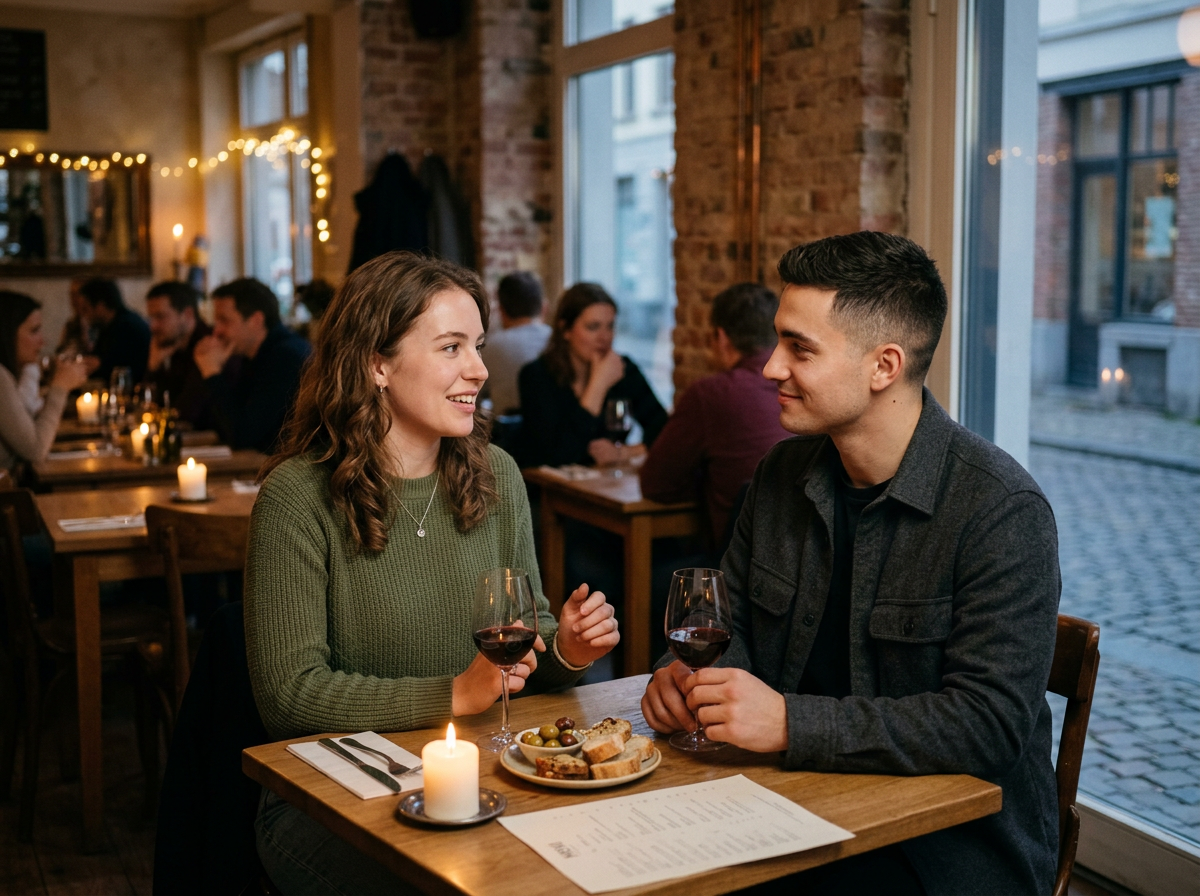

Most people spend more time choosing what to wear on a first date than choosing where to go. That imbalance reflects a widespread underestimation of how much location shapes the outcome of an early romantic encounter. First date locations are not simply logistical choices. They are the environment in which two people form their first impressions of each other — impressions that prove far more durable than the research on dating would suggest they should be. The right date idea does not guarantee connection. The wrong one can prevent it from forming at all. Understanding what makes certain locations and date ideas work — and why others consistently underperform — changes how to approach the entire first meeting.
How Location Shapes the Experience
The psychology of place has a well-documented effect on human behavior and mood. People behave differently in different environments. Loud, crowded spaces produce different conversational patterns than quiet, intimate ones. Competitive or high-stimulation settings generate different emotional states than relaxed, exploratory ones. All of these differences affect the quality of connection two people can build on a first date.
Noise is the most immediately obvious factor. A first date in a loud bar or a busy restaurant with poor acoustics forces both people to strain to hear each other. That physical effort creates a kind of cognitive load that detracts from the actual conversation. First date ideas that prioritize atmosphere over acoustics consistently produce less genuine connection than quieter alternatives. Two people who can hear each other without effort have more bandwidth available for the actual work of getting to know each other.
Lighting matters too. Research on social environments finds that dim, warm lighting reduces self-consciousness and promotes openness. The harsh overhead lighting of a cafeteria or a bright fast-food setting produces the opposite effect — a heightened awareness of being observed that makes genuine relaxation difficult. First date locations with considered, warm lighting create conditions in which both people feel more at ease.
The formality of the setting also carries weight. Highly formal first date ideas — fine dining restaurants with extensive menus, white tablecloths, and an atmosphere of visible expense — can introduce pressure that works against connection. Both people become concerned with performing correctly rather than simply being themselves. The right date environment reduces that performance pressure rather than amplifying it.
Why the Classic Dinner Date Is Often the Wrong First Date Idea
The dinner date remains the most default first date idea in most cultures. It is also, from a psychological standpoint, one of the more challenging formats for an initial meeting between two people who do not yet know each other.
A dinner date places two people face-to-face, in a fixed location, for an extended period with no structured activity beyond conversation. For established couples, this format works well. For two people meeting for the first time, it creates a pressure-cooker environment in which the conversational burden falls entirely on both people without any external focus to relieve it. When the conversation stalls — as it inevitably does at some point in any first date — there is nothing to redirect to. The silence becomes conspicuous. The discomfort of that silence registers as a lack of connection, even when the actual problem is the format.
The fixed nature of the dinner date also removes the option of graceful early exit. Both people are committed to the duration of the meal. If the chemistry is absent from the start, both people must navigate an extended and increasingly awkward shared experience with no natural endpoint. The right first date idea preserves optionality — the ability to extend easily if things are going well and to conclude gracefully if they are not.
The Best First Date Locations and What Makes Them Work
The date ideas that consistently produce the best outcomes share a set of characteristics that are worth identifying explicitly.
Activity-based dates rank among the most effective first date ideas. Mini-golf, a cooking class, a museum visit, an evening market — any date format that provides a shared focus and a source of conversation independent of the two people themselves reduces the pressure on both participants significantly. The activity gives both people something to react to, comment on, and laugh about that does not require them to be endlessly interesting on demand.
Walking dates deserve more recognition as excellent first date ideas. A walk through a park, along a waterfront, or through an interesting neighborhood provides movement, which research finds reduces social anxiety; changing scenery, which provides ongoing conversational material; and the side-by-side positioning that feels less intense than face-to-face seating. Walking dates are also naturally variable in duration — easy to extend and easy to conclude — which removes the pressure of a fixed time commitment.
Coffee dates, when chosen thoughtfully, work well for first dates precisely because of their brevity and informality. The right coffee date location — quiet enough to hear each other, comfortable enough to relax, with enough atmosphere to feel like a real setting rather than a functional stop — provides a low-pressure environment for an initial meeting. The implicit understanding that a coffee date is brief also removes the pressure that a dinner date imposes.
First Date Ideas That Consistently Underperform
Just as certain date formats produce consistently good results, others reliably create conditions that work against connection.
Movies are among the most consistently cited poor first date ideas — not because they are unenjoyable but because they eliminate conversation entirely for their duration. Two people who spend two hours in a cinema together have spent two hours in the same room without actually interacting. The connection that a first date is supposed to build cannot develop without engagement. A movie provides neither the shared focus of an activity date nor the conversation of a walking or coffee date.
Loud bars introduce the acoustic problems discussed earlier, with the additional complication of alcohol’s variable effects on first impressions. The right date idea does not require alcohol to make the situation tolerable — which is, implicitly, what a bar date often signals.
Overly ambitious date ideas — elaborate itineraries, expensive venues, activities that require significant skill or preparation — can introduce a kind of performance pressure that first dates do not need. The goal of a first date is not to impress. It is to create the conditions under which genuine connection can form. Simplicity serves that goal more reliably than spectacle.
What the Right First Date Location Actually Communicates
The choice of first date location communicates something to the other person before the date has even begun. It signals thoughtfulness — or its absence. A date idea that has clearly been chosen with care for the other person’s experience, rather than simply defaulting to the nearest restaurant, conveys attentiveness. It demonstrates that the person behind the invitation has thought about what would make for a genuinely enjoyable experience rather than simply fulfilling a social obligation.
That communicative function of the date choice matters in dating more broadly. First impressions form quickly and prove resistant to revision. A first date location that creates the right conditions — comfortable, appropriately stimulating, quiet enough for genuine conversation — gives both people the best available chance to form an accurate impression of each other. The right conditions do not create chemistry where none exists. But they remove the environmental obstacles that prevent existing chemistry from registering.
Conclusão
The right first date location is not about finding the most impressive venue or following a particular formula. It is about creating an environment in which two people can actually meet each other — without acoustic strain, without performance pressure, without the fixed commitment of a format that removes all options.
First date ideas work best when they prioritize conversation, ease, and optionality over novelty or expense. The date does not need to be remarkable. It needs to create the conditions in which two people who might be remarkable together can find out whether that is true.
That is a simple goal. The environment either supports it or works against it. Choosing the right location is simply choosing to give the date its best possible chance.