New Orleans does not date like anywhere else. The city has its own rhythm — loose, warm, and built around spontaneous social contact. Dating in New Orleans means navigating a dating pool shaped by live music, festivals, and a culture that treats the street as a social venue. For anyone looking for meaningful connections here, the opportunities are real. So are the specific challenges that come with a city this alive and this complicated.
What Makes the New Orleans Dating Scene Unique
The things that make New Orleans extraordinary also shape its dating culture. The Frenchmen Street corridor is the cultural spine of the local dating scene. Live music venues run seven nights a week across a quarter-mile stretch. This creates natural settings for organic connection — where conversation starts around shared experience rather than curated profiles.
The New Orleans scene thrives on community and creativity. Locals bond over po'boys at hidden cafes or second line parades in the Marigny neighborhood. Young professionals mingle over craft cocktails on Magazine Street. Students connect at live shows on French Quarter balconies.
Dating in New Orleans also means navigating a significant tourist presence. New Orleans hosts roughly 19 million visitors a year. Weekend volume in the French Quarter runs well above the local population in the same blocks. For locals looking for lasting relationships, this matters. Local daters who want to meet locals usually move venues to neighborhoods with lower visitor density. Bywater, Marigny back streets, Mid-City, and Bayou St. John all carry less tourist traffic and more local-on-local interaction.
The Dating Pool: Size, Demographics, and What They Mean
New Orleans offers a large and varied dating pool. The city has a population of about 350,000, with 39.10% identifying as single. That is a substantial number of single people in a relatively compact city. Active neighborhood life makes meeting new people unusually accessible.
The 30s cohort has the strongest gender ratio for heterosexual men. A 9,000-woman surplus concentrates in that decade. Black residents make up more than 60% of the city's population. This puts New Orleans among the top 10 U.S. cities for African American population share — shaping the dating market in ways most national articles flatten.
The Louisiana cultural context adds another layer. A relaxed lifestyle makes breaking the ice simple. People here are generally social and approachable. Dates happen naturally for people who show up to things — community events, second lines, neighborhood festivals, food markets. The city's social infrastructure is, in many ways, a built-in matchmaking system.
The Specific Challenges of Dating in New Orleans
Every city has dating challenges specific to its character. New Orleans has several worth naming clearly.
The tourist-local overlap creates confusion around intent. When a significant portion of the people you meet on a given evening are visiting for a weekend, clarifying the context of any connection early matters. Daters who report difficulty in New Orleans generally face an environment problem rather than a pool problem. Choosing venues with lower tourist density is a practical and effective response.
The alcohol question is another genuine challenge. 67% of Gen Z and 63% of millennials in 2025 surveys say they want to build romantic connections without relying on alcohol. New Orleans defaults to a drink as the after-work social plan. This makes the sober-curious conversation harder to have early in dating. Coffee shops on Magazine and Oak Streets, daytime second-line walks, and food-festival meetups give daters the option of meeting without leading with a cocktail.
The festival calendar also creates a specific dating rhythm. Mardi Gras and Jazz Fest produce conditions favorable to short-form connection. That is not always compatible with the longer-term relationship building many New Orleans daters actually want.
Dating Apps in New Orleans: Which Ones Work and How to Use Them
Online dating is an active part of the New Orleans scene. Several apps suit the local context well.
SoulMatcher takes a compatibility-first approach that works particularly well in a city where long-term connections compete with casual ones. Its matching process filters for genuine intent — useful in a dating market where clarity about what someone is looking for is more valuable than in most cities. For New Orleans daters who want relationships rather than encounters, SoulMatcher helps cut through the noise.
Hinge's format aligns naturally with New Orleans culture. Users answer questions about favorite Creole dishes or preferred live music venues. This makes it easier to connect over shared passions. The detail-oriented profiles attract people looking for genuine connections rather than casual encounters.
Bumble works well for people who want to establish a specific dynamic from the start. Users can filter by neighborhood — like Bywater or Uptown — to find matches nearby. The women-first messaging rule tends to attract people who take the process seriously.
In-person speed dating events in New Orleans have shown some of the fastest growth in the country in recent years. That points to an appetite for structured in-person meeting that apps alone are not satisfying. The most effective approach treats apps as a secondary channel. The city rewards people who participate in the local social rhythm rather than relying on apps entirely.
The Best Dates New Orleans Has to Offer
New Orleans provides exceptional date settings. First dates work particularly well in low-pressure, genuinely interesting environments. Meet at a laid-back lounge or coffee shop first. Get to know each other a bit before committing to a full evening.
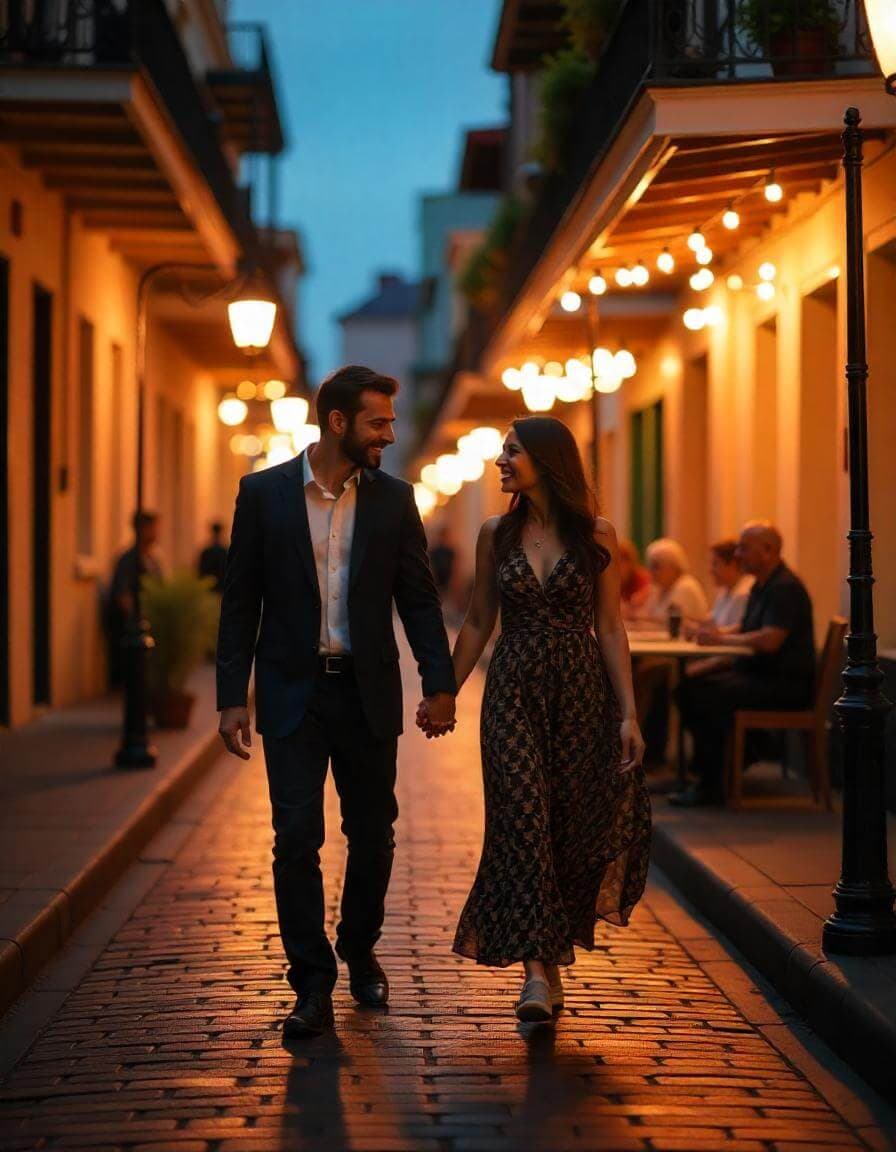
For those ready to move beyond the first meeting, the city opens up considerably. A walk through the Marigny. An evening on Frenchmen Street with live music at The Spotted Cat. A Sunday visit to the French Market. A daytime trip to Audubon Park. These things are genuinely enjoyable regardless of how the date goes. That removes the pressure that more elaborate plans tend to introduce.
New Orleans has more culinary depth per square mile than almost anywhere in the country. Exploring the restaurant scene together is a natural and effective way to find out whether someone is worth knowing better. Louisiana's food culture is its own conversation starter.
Conclusion
Dating in New Orleans is not passive. The city does not deliver connections to people who wait for them. It rewards people who show up — to neighborhoods, to events, to the cultural life that makes this town one of the most distinctive places in the country.
The challenges are real: the tourist-local overlap, the alcohol-centric social default, the festival rhythm that favors short connections. But the opportunities are equally real: a large dating pool, a genuinely social culture, exceptional date venues, and a city that insists on human connection as a way of life.
For people willing to engage with New Orleans on its own terms — choosing the right neighborhoods, mixing apps like SoulMatcher with in-person presence, and being clear about what they are looking for — the Crescent City offers a dating environment that most cities cannot match.