Romance movies have shaped how people imagine love for as long as cinema has existed. The love story is one of the oldest and most commercially durable genres in film. Audiences watch romance films in extraordinary numbers. The experience is genuinely pleasurable. The films provide vicarious access to emotional intensity and passion that daily life rarely delivers at that pitch. The question worth asking is whether the love story as romance movies tell it is producing expectations that real relationships cannot meet — and whether those expectations are doing more harm than good.
What Romance Films Are Actually Showing
The romantic movie operates on a specific narrative architecture. Two people meet. An obstacle or misunderstanding separates them or complicates their connection. Through a combination of romantic gesture and personal growth — and often a climactic scene in which someone runs, chases, or declares — the obstacle resolves. The couple arrives at a satisfying endpoint. The film ends at the beginning of the relationship's actual life together.
What romance movies consistently show is the pursuit phase — the charged, uncertain, dramatically eventful period before commitment. What they almost never show is what comes after. The relationship in its ordinary, sustained, daily form. The director who makes a romantic drama showing what the couple looks like in their third year together — managing conflict, compromise, and specific disappointments — would be making a different kind of film. The genre requires the love story to end at the point of arrival. It does not continue into the lived reality of what was arrived at.
This structural feature of the romantic movie is not incidental. It is what makes the film work as cinema. The story needs tension, uncertainty, and resolution. The script delivers those things through the pursuit phase, which contains them naturally. The sustained partnership tends not to make good drama.
The Expectations Problem
The problem with the romantic movie is not simply that it presents an idealized version of love. All fiction idealizes to some degree. The problem is the specific nature of the idealization and the specific expectations it generates.
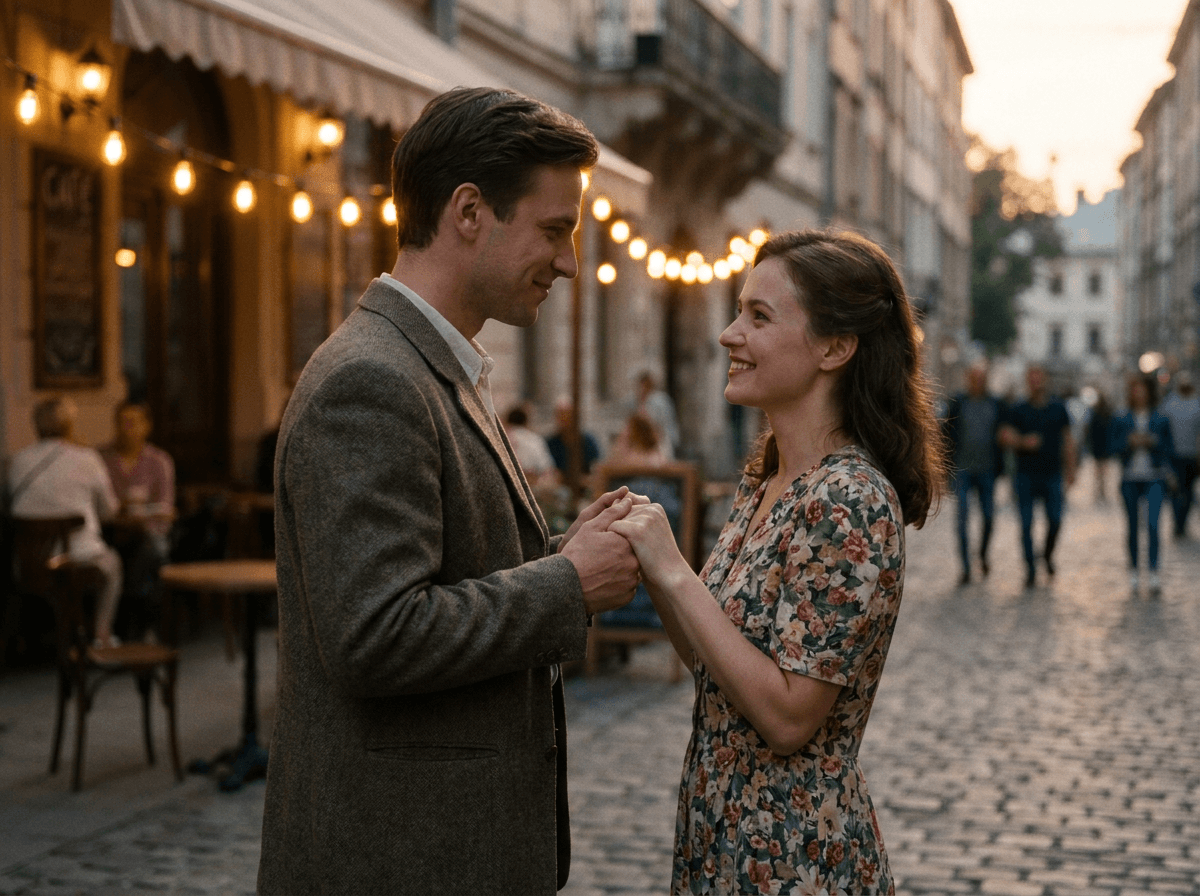
Romance movies consistently emphasize certain features of love as its defining characteristics: intensity, passion, the grand gesture, the moment of declaration. The actor who delivers the speech in the rain. The actress who runs to the airport. The scene in which everything finally makes sense and both characters understand what they feel. These moments are emotionally compelling precisely because they represent love at its most concentrated and most legible.
Real love rarely works this way. Real love tends to operate through smaller moments and less choreographed expressions. The couple who manages conflict well, who shows up reliably across years of ordinary life, who builds genuine intimacy through thousands of unremarkable interactions — this is not the love story that the romantic drama genre tells. It is, however, the love story that tends to last.
The mismatch produces a specific problem. People who watch romance films extensively tend to evaluate real relationships against a standard that real relationships cannot consistently meet. The relationship that lacks the dramatic intensity of a romantic movie may feel, to someone whose expectations were shaped primarily by that genre, like something less than love — rather than like a more sustainable form of it.
What the Research Suggests
The research on romantic movies and relationship expectations is not uniformly damning. Watching romance films does not straightforwardly damage relationships. But it does appear to shape expectations in specific and measurable ways.
Studies consistently find that heavy consumers of romantic movie content tend to hold higher idealized expectations of romantic relationships than those who watch less. They tend to believe more strongly in the idea of a perfect soulmate, that love should feel a specific way consistently, that conflict within a relationship signals fundamental incompatibility rather than the ordinary friction of two people living closely together.
These beliefs, when they encounter actual relationships, tend to produce a specific pattern. The relationship feels good during the early, charged phase — which does resemble, in some ways, the pursuit phase that romantic movie scripts favor. As the relationship matures and the early intensity reduces, the person whose expectations were shaped by cinema may experience this reduction as evidence that the love is diminishing. They may seek out the intensity — through conflict, through drama — in ways that damage what they are trying to preserve.
The Grand Gesture Problem
One of the most specific and most analyzed aspects of the romantic movie's influence on relationship expectations involves the grand gesture. The declaration of love in a public or dramatic setting. The sacrifice made to demonstrate the depth of feeling. The action that no reasonable person would take but that the film presents as the most romantic thing possible.
Grand gestures work in film because they compress emotional significance into a single, legible moment. The audience watching the scene understands immediately what the gesture means and what it costs. The emotional payoff is efficient and immediate.
In real relationships, grand gestures function differently. A partner who delivers the equivalent of a romantic movie declaration scene is performing for an audience that does not exist. They are importing a narrative structure that the actual relationship does not contain. The grand gesture in real life tends to feel either extraordinary or slightly absurd — depending on how well it maps onto the actual relationship.
More practically, the expectation of grand gestures as the primary currency of romantic expression tends to undervalue the smaller, more consistent forms of care that sustain real relationships. The partner who makes coffee without being asked, who remembers what the other person said last week, who shows up reliably — this partner is expressing something that romantic movies rarely film because it does not produce a compelling scene. It produces, over time, a relationship.
What Romance Movies Get Right
It would be inaccurate to suggest that romance movies are entirely misleading about love. The genre gets several things right.
Romance films accurately represent the emotional intensity of early connection — the specific quality of attention and aliveness that falling for someone produces. They accurately represent the passion, the urgency, and the specific vulnerability of wanting someone whose feelings are not yet certain. These are real experiences. The film captures them well precisely because they are dramatic.
Good romantic movie-making also captures something real about what love requires: the willingness to be known, to be vulnerable, to extend yourself toward another person before certainty exists. The plot of many romantic dramas turns on the moment when a character stops protecting themselves and allows genuine connection. That moment is real. It does happen. Cinema that celebrates it is not wrong about its significance.
The problem is not that romantic movies misrepresent these moments. It is that they present these moments as the totality of love rather than as one phase of it.
Conclusion
Romance movies are not the enemy of love. They are a genre that captures a specific phase of it — the pursuit, the uncertainty, the resolution into commitment — with considerable skill and emotional accuracy. The drama, the passion, the love story told in its most concentrated form: these are genuinely pleasurable and genuinely meaningful experiences that audiences have always sought from cinema.
The problem arises when the love story that cinema tells gets treated as a complete account of what love is. It is a highly selective and dramatically compressed version of one phase of what love eventually becomes. The couple who learns to watch romance films with that awareness — enjoying the genre for what it offers while holding its limits in view — is better positioned to appreciate what their actual relationship is. Rather than measuring it against what it was designed never to be.
The love story that lasts tends to be the one that the movie ends before it shows.