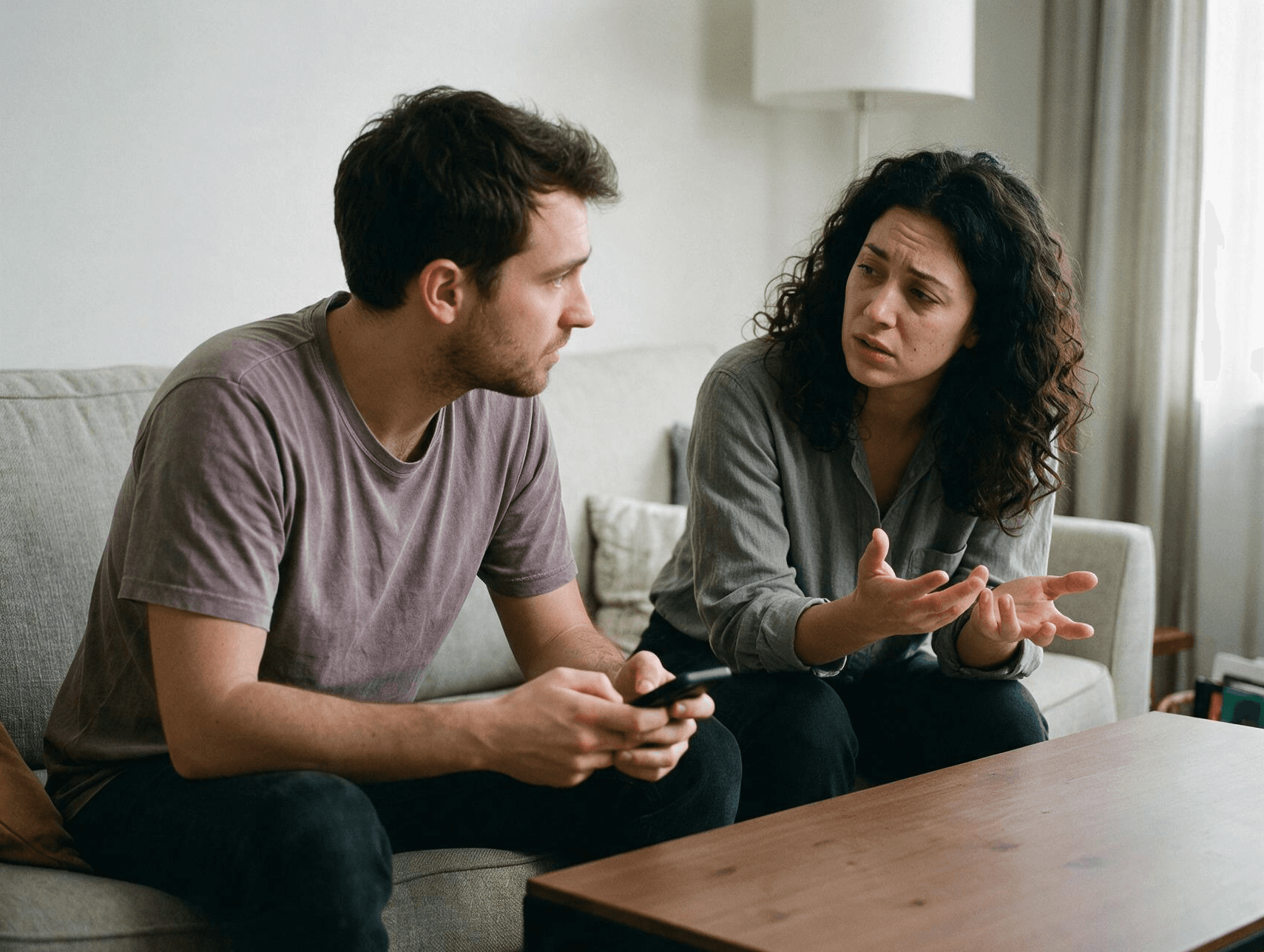
Avoidance is one of the most common and least examined patterns in relationship life. It is the decision — usually automatic rather than deliberate — to move away from something uncomfortable rather than through it. In relationships, avoidance takes many forms: not raising a difficult topic, deflecting when a conversation gets too close, withdrawing from conflict rather than engaging with it, managing emotional exposure by keeping things on the surface. Avoidance behaviors feel protective in the moment. Over time, they produce costs that are considerably larger than the discomfort they were designed to prevent. Understanding what avoidance costs in a relationship is the first step toward choosing something different.
What Avoidance Actually Is
Avoidance, in the context of relationship psychology, refers to any pattern of behavior that moves a person away from things they find threatening, uncomfortable, or anxiety-producing. In relationships, the threat tends to be relational rather than physical. It is the threat of conflict, of rejection, of being genuinely known, or of having to feel something difficult.
Avoidance coping is a well-documented mechanism in the psychology of mental health. It provides short-term relief. By not engaging with what is difficult, the person avoids the immediate discomfort that engagement would produce. But avoidance coping does not resolve what it avoids. It preserves the difficult thing in a suspended state — unaddressed, unresolved, and quietly accumulating weight.
In relationships, avoidance behaviors tend to be particularly costly because relationships are built on engagement. They require the ongoing willingness to encounter another person, to be affected by them, to raise difficult things and hear difficult things back. Avoidance moves in the opposite direction. It reduces encounter, limits affect, and systematically prevents the engagement that genuine connection requires.
What It Prevents
Avoidance in relationships is most immediately damaging in what it prevents. Several of the most important experiences that relationships can provide are specifically dependent on the willingness to engage with difficulty rather than avoid it.
The first thing avoidance prevents is genuine conflict resolution. Every relationship contains conflict. The relationship that avoids conflict does not actually have less of it — it has conflict that remains unresolved and accumulates beneath the surface of apparent calm. The problem in an avoided conflict does not disappear. It persists, often becoming more entrenched and more charged with each cycle of avoidance.
The second thing avoidance prevents is genuine intimacy. Genuine intimacy requires mutual exposure — both people allowing themselves to be seen in the aspects of themselves that feel most vulnerable. Avoidance protects against this exposure. It keeps the person safe from the specific risk of being genuinely known. But safety from that risk is also safety from the experience of deep connection that risk makes possible. The avoidant partner can have a relationship. They tend to have difficulty having an intimate one.
The third thing avoidance prevents is authentic communication. When avoidance coping patterns dominate a relationship's communication, both people adapt their expression to fit the avoidant dynamic. They learn to manage what they say and how to avoid triggering the avoidance. Genuine communication — the kind that addresses real things directly and receives honest responses — gives way to managed communication that both people maintain to preserve the surface. The relationship can become a kind of polished performance in which authenticity is the casualty.
How Avoidance Compounds Over Time
Avoidance behaviors do not remain static. They tend to compound over time in ways that make the relationship progressively harder to repair.
Each avoided conversation raises the perceived cost of eventually having it. The topic that was not raised three months ago has now become the thing that has not been raised for three months. The weight of the accumulated avoidance makes the eventual engagement feel higher-stakes than it would have been at the beginning. The avoidance produces the very conditions that make it seem justified — a situation where the avoided conversation now genuinely requires more courage and more relational investment than it would have at the outset.
Avoidance also produces asymmetric information between partners. The partner who avoids expressing feelings, raising concerns, or engaging with difficult things leaves the other partner working with incomplete information about the actual state of the relationship. The non-avoiding partner may not know that there is a problem. They may not know that their partner is struggling with something significant. They may interpret the avoidance as contentment when it is actually suppression. This information asymmetry makes it considerably harder for the relationship to address its actual difficulties.
Over time, consistent avoidance coping also tends to produce a specific relational dynamic that reinforces itself. The avoidant partner avoids. The non-avoiding partner either chases — escalating their attempts to engage in ways that make the avoidance more entrenched — or withdraws themselves, producing a relationship in which both people are managing distance and neither is genuinely present. The avoidance problem becomes the relationship's organizing dynamic.
What Avoidance Does to Each Partner
Avoidance in a relationship affects both partners — the one who avoids and the one who receives the avoidance.
For the avoiding partner, the most significant cost is the progressive narrowing of their relational world. Each avoided conversation, each managed exposure, each movement away from difficulty slightly reduces the range of what the person can engage with. They become more avoidant over time because avoidance, practiced repeatedly, becomes the established response to discomfort. The relationship offers them progressively less because they bring progressively less to it.
For the receiving partner, the experience of consistent avoidance tends to produce a specific and painful feeling: the sense of being unable to reach the person they are with. The avoidant partner is physically present but relationally remote. The receiving partner may feel lonely within the relationship — which produces its own particular kind of pain. The loneliness of being with someone who is not fully there tends to be more acute than the loneliness of being without a partner, precisely because the expectation of connection makes its persistent absence harder to accept
What Changes When Avoidance Is Addressed
Addressing avoidance in a relationship — beginning to move toward what has been moved away from — tends to produce specific and identifiable changes.
The immediate change is discomfort. Addressing avoidance behaviors requires the person to engage with the things that avoidance was protecting them from. This engagement is genuinely uncomfortable. It is also the beginning of the work that avoidance was deferring.
The medium-term change is the restoration of genuine contact. When both people engage rather than avoid, the relationship begins to carry real content again — real feelings, real problems, real concerns addressed directly. This contact is more demanding than the managed distance of avoidance. It is also more alive. The relationship that both people are fully present in feels different from the one that avoidance has hollowed out.
Therapy — particularly with a therapist who has experience in the specific patterns of avoidance coping — can help both the avoiding partner and the relationship as a whole develop the capacity to move toward difficulty rather than away from it. The work is not simply about expressing more. It is about developing the internal tolerance for difficulty that makes genuine expression possible.
Conclusion
Avoidance in a relationship is not free. It charges a price that tends to increase over time. The problem that is not addressed does not resolve. The intimacy that avoidance prevents does not develop through other means. The communication that avoidance distorts does not become genuine without genuine engagement.
The person who avoids is not typically protecting the relationship. They are protecting themselves from the discomfort of genuine engagement — at the cost of the relationship's depth, its authenticity, and its capacity to be what both people need it to be.
The cost is always paid. The only question is whether it is paid now, in the discomfort of genuine engagement, or later, in the accumulated cost of everything that avoidance prevented. The earlier payment tends to be the much smaller one.