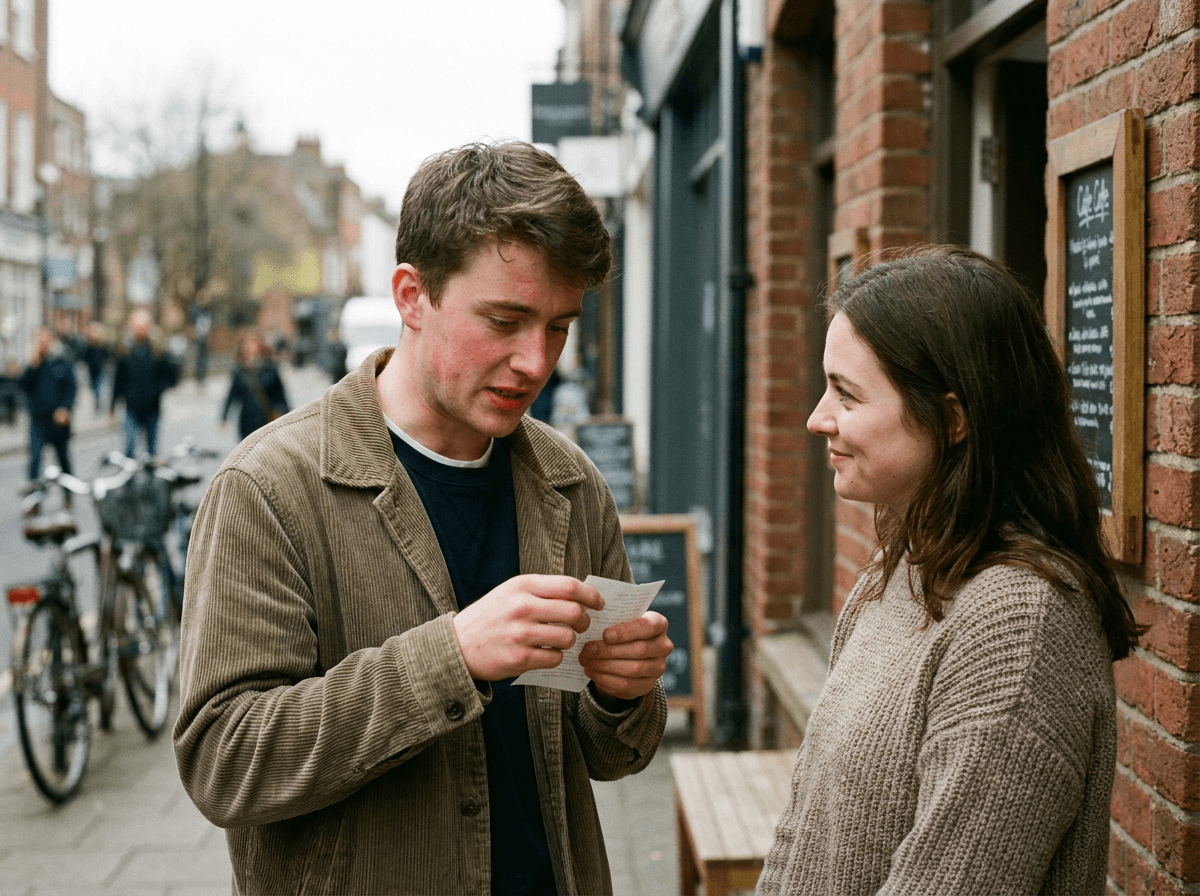

You can sense him pulling back. It starts small: texts that once arrived quickly now take hours; plans that used to be made now evaporate because he's "busy." He claims exhaustion, distraction, that he's sorting things out. But you already understand what's happening. The usual mistake many women make is to try harder. They soften, become accommodating, act as if nothing is wrong. They slip into what I call the "cool girl" routine. And that’s how you lose yourself. This can feel devastating even if you're not head-over-heels. There is something primal in the experience of being distanced — the indifference, the withdrawal, the silence — that triggers an old part of you. You might dismiss your feelings as silly or tell yourself you’re overanalyzing. You might minimize it because when you care about someone and they start treating you like an option, a yawning gap opens between what you hope for and what’s actually happening. Panic and confusion rush in to fill that space, and you begin a hundred small, automatic adjustments to stay desirable: smiling more, asking for less, trying to look better, sounding breezier. Saying, "No worries," even when you’re secretly anxious. Long ago, I dated a man I liked—very much—and at first things felt mutual. We saw each other a few times a week and I began to feel optimistic. Then he slipped away and I noticed it right away. He stopped initiating, ignored half my messages, grew distant; talks about the next time to meet stopped. Not wanting to be the woman who gets clingy or too intense, I turned on performance mode. I smiled constantly, made excuses for him, stopped bringing up my feelings. I convinced myself I was being "chill," thinking that’s what keeps men interested. In truth I wasn’t calm at all — I was pretending. And while playing it cool can extend someone's interest when they’re not truly invested, it left me feeling abandoned. So what did I do? I abandoned myself. By the time I recognized how far I'd compromised my standards, I couldn't honestly face my reflection. I wasn’t devastated over him; I was devastated that I had sold out my own needs just to avoid being left. Let me be blunt: when someone pulls away and you’re afraid of losing them, your old attachment wounds will whisper, "Say nothing. Be easy to love." That fear will murmur things like, "Don’t rock the boat. Don’t scare him off. Give him space—he’ll come back." But that voice isn’t insight or wisdom. It’s survival instinct running your nervous system. And although that mode may have protected you in childhood, it’s not helping now. It morphs you into the "cool girl" who goes with the flow and sacrifices herself. That version of you doesn’t get the relationship she wants — she ends up waiting, getting breadcrumbs, and learning that love means never voicing needs. She starts believing that her humanity is the problem: if she could just stop being herself, she would be liked. If someone you’re dating is fading, there are four decisive moves you can make. You might want to jot these down. First, stop performing the cool-girl act. It’s not admirable. Agreeability is not the same as attractiveness or genuine likability. Allowing someone to disappear gradually without naming it is not low-pressure or relaxed — it’s a recipe for long-term resentment. Be calm and kind, yes, but don’t sacrifice your needs to appear unfazed. You are not here to police another person’s emotional comfort at the expense of your own clarity or integrity. If this tendency is habitual, it may be rooted in childhood trauma. You can change it, but it begins with recognizing the signs that early trauma is steering your romantic life. There’s a list of those signs in a free download you can grab via the top link in the video’s description below. You might be surprised how much past trauma fuels self-sabotaging patterns you never realized were connected. Next, ask for clarity — once. You have the right to say, "I’ve noticed things feel different lately. Are you still interested?" You don’t need drama or accusation; ask plainly. You’re not looking to coerce a specific reply; you want to see the truth. And when they answer — even if they dodge or give a vague response — accept what they give you. Don’t keep asking. If you can’t get a clear yes, treat it as a no. Third, stop trying to prove your worth. Don’t craft long messages pleading your case, listing your qualities, or reminding him of your connection. You don’t have to pitch yourself or present a resume of reasons to stay. You don’t need to demonstrate how evolved, flexible, or emotionally intelligent you are. People either want to be with you or they don’t. If they don’t, your value remains whole. Stop handing it over to people who can’t hold it. Fourth, create a private deadline. This isn’t about ultimatums — it’s about boundaries. Tell yourself, for example, "If I still feel uncertain in a week, I will stop reaching out." This isn’t punitive; it’s a return to reality. Nothing flourishes in limbo, and hope that keeps you frozen does not heal you. You deserve clarity about where you stand. If someone can’t provide that, staying stuck becomes a kind of self-harm. If this pattern repeats — people withdrawing and you shrinking yourself to keep them — examine what’s beneath it. For many, this isn’t the first time a loved one went cold. We learned early that attention was inconsistent, that affection arrived in fits and starts. We became experts at detecting the smallest changes in tone: a late reply, a cool hug, a missed call. Our instinct became to make ourselves smaller and less demanding. This is more than a dating tactic — it’s an emotional survival system built on the belief, If I’m good enough, they won’t leave. That trauma-shaped conviction can draw you to the wrong people. I teach strategies to change this pattern in a course on dating for people with childhood PTSD; you’ll find a link to that in the second row of the video’s description below. That belief keeps you on edge, walking on eggshells, twisting yourself into knots for people who never intended to show up. That behavior isn’t love — it’s fear. You don’t have to live there. Know this: the person who genuinely wants intimacy with you doesn’t require you to earn it. They don’t need you to make yourself palatable or silence your needs. They simply want your true, grounded self. If they pull away, don’t chase. You don’t need to beg for crumbs. Observe their actions and accept them as the truth. Imagine living your life that way — not chasing, just watching. If someone drifts away, see what follows. Things might have unfolded very differently. Some people might have returned if you hadn’t chased — while others would have left regardless, and you could have conserved your time, energy, and dignity by allowing the distance to be its own answer. Don’t waste the precious love you have on someone who doesn’t want to be with you. You don’t owe explanations to someone slipping away. You don’t need to keep messaging someone who has already made a decision. You don’t have to linger in the fog of uncertainty because there was once chemistry. When distance appears, the most decisive move is to come closer to yourself. You know what genuine connection feels like, and you can sense when someone’s presence has gone even if they remain physically near. Trust that sense. Speak once, decide quietly, and move forward. If you enjoyed this video, there’s another one you’ll love right here, and I’ll see you soon. An emotionally unavailable person is typically someone in a relationship who attempts to be present but cannot truly love or be emotionally available. In other cases, it’s simply someone who’s completely unavailable.
Practical next steps you can use immediately:
- Short clarity script: "I’ve noticed you’ve been distant. Are you still interested in seeing where this goes?" Say it once, calmly, and wait for the answer.
- Boundary script if the reply is vague: "I hear you, but I need clarity. If I don’t get a clear yes in X days, I’ll stop initiating." Pick X = 3 days, 1 week, or 2 weeks depending on how invested you are.
- Self-care checklist for the aftermath: pause social media scrolling about them; schedule one enjoyable activity with friends; do a 5–10 minute grounding practice (box breathing, naming 5 things you can see/hear); sleep, hydrate, move your body.
Signs someone is emotionally unavailable or a poor match (watch for patterns, not single incidents):
- Consistent stonewalling or refusing to discuss feelings.
- Hot-and-cold behavior without taking responsibility for it.
- Frequent last-minute cancellations or disappearing after intimacy increases.
- Reluctance to make or keep future plans, or to introduce you to their inner circle.
- Avoidance of commitment language and a tendency to keep options open.
If you find this repeats across relationships, try these healing steps:
- Record patterns in a journal — what happened, how you responded, what you wish you’d done differently.
- Experiment with new behaviors in low-stakes situations: practice asking for what you need with a friend or colleague.
- Learn about attachment styles (anxious, avoidant, secure) — awareness helps you make conscious choices rather than automatic ones.
- Consider therapy (CBT, EMDR, IFS, or trauma-informed therapists) if childhood patterns are driving your choices. Group therapy or support groups can also reduce shame and isolation.
- Set 2–3 non-negotiables for future relationships (e.g., honesty about plans, consistent communication, willingness to talk about problems).
Quick emotional regulation tools for the moment you feel the pull:
- 5-4-3-2-1 grounding: name 5 things you see, 4 you can touch, 3 you hear, 2 you smell, 1 you taste.
- Box breathing: inhale 4, hold 4, exhale 4, hold 4 — repeat 4 times.
- Write a one-paragraph letter to yourself about what you deserve; don’t send it — just read it when doubt creeps in.
- Call a trusted friend and ask for perspective — outside views reduce rumination.
When to walk away decisively:
- They refuse to engage when you ask for clarity.
- They repeatedly contradict actions with words (e.g., promise to change, then don’t).
- You’re the only one making meaningful adjustments and sacrifices.
- The relationship erodes your self-worth or causes chronic anxiety.
Final note: turning toward yourself is the radical move. It looks like clear questions, quiet boundaries, and then living your life whether or not someone comes back. That combination — honesty + self-protection + full life — tends to attract people capable of real intimacy. If you want a simple starting promise to yourself: speak once, wait for the answer, and if there’s no clear commitment, protect your time and heart. You’ll feel stronger for it.