Russian
  English
  French
  German
  Italian
  Spanish
  Polish
  Ukrainian
  Turkish
  Portuguese
  Greek
Greek  Arabic
  Korean
  Chinese
  Japanese
  Czech
Czech 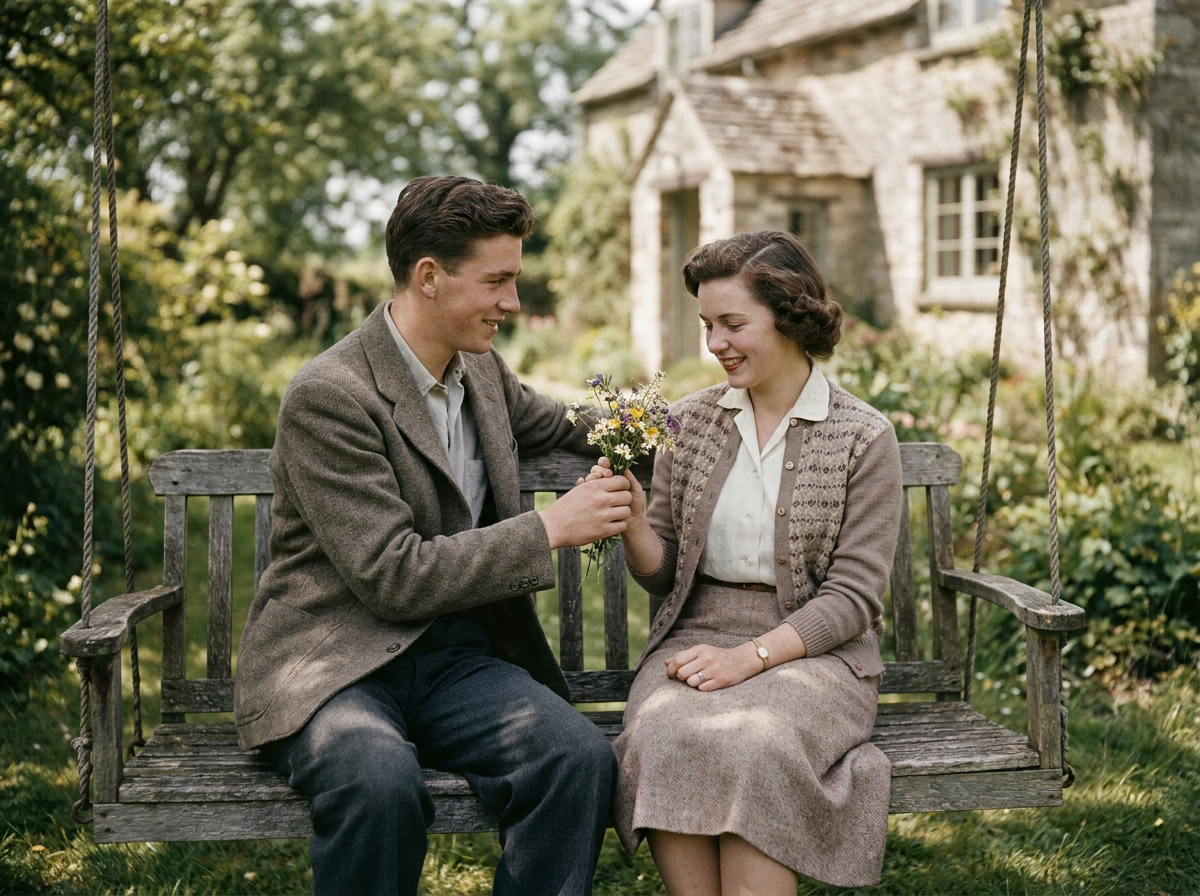

Courtship rituals have existed as long as the concept of romantic love. Every generation that has ever sought a partner has done so within a specific set of cultural rules — rules governing who may approach whom, under what circumstances, with what gestures, and toward what end. Those rules have changed substantially across time, shaped by technology, economics, social movements, and shifting cultural values. The story of how courtship rituals changed is also, in part, the story of how societies have thought about love, gender, family, and individual freedom across the centuries.
Traditional Courtship: The Parlor Era
Before the 20th century, courtship in Western societies followed a highly structured form. Prior to the early 1900s, courtship involved one man and one woman spending intentional time together to get to know each other. It was almost always done in supervised settings and with marriage as the explicit goal.
The parlor visit was the dominant courtship ritual of this period. A young man who wished to court a woman sought permission from her family, then called on her at home. Meetings took place under the supervision of parents or chaperones. Privacy was limited by design. The family’s role was not ceremonial — it was functional. Families gauged social standing, assessed financial compatibility, and protected the reputations of their daughters.
Gifts played a meaningful role in traditional courtship. Flowers, letters, and small tokens communicated interest and intent within the bounds the social ritual prescribed. These exchanges carried a weight that was legible to everyone involved. Accepting a man’s gifts was itself a communicative act — one that signaled the possibility of further courtship. Refusing them communicated the opposite.
The goal of traditional courtship was explicit. A match that satisfied both families and both individuals would eventually proceed to engagement and marriage. Romance and personal preference were factors, but they existed within a framework organized around social and economic continuity rather than individual fulfillment alone.
The Early 20th Century: Technology Changes the Game
The history of courtship shifted dramatically in the early 20th century. The change was driven by two technologies in particular: the telephone and the automobile.
The telephone allowed couples to communicate directly — without the mediation of family, without a formal call, and without any physical supervision. For the first time in the history of courtship, two people could develop intimacy at a distance and in private. The implications were significant. The relationship between the couple began to precede the family’s involvement rather than following from it.
The automobile did something more radical. It removed couples from the domestic sphere entirely. Rather than a supervised parlor visit, dating moved into restaurants, cinemas, and the privacy of a car on a dark road. The advent of the telephone and the automobile and their subsequent integration into mainstream culture are often identified as key factors in the rise of modern dating. They removed familial supervision from the dating process.
By the 1930s, the context of home and local community had shifted. Keeping company in the family parlor was replaced by dining and dancing, movies, and “parking.” The courtship ritual was moving into public — and then into privacy. The two developments together transformed courtship from a family-managed ritual into something between individuals.
A further shift occurred in the primary purpose of courtship. Before the 1920s, the primary reason for courting someone was to begin the path to marriage. By the shift of courtship into the public sphere, dating became a means to and indicator of popularity, especially in the collegiate environment. The courtship ritual began to serve social functions beyond the purely matrimonial.
Mid-20th Century: Dating as a Cultural Institution
By the mid-20th century, dating had established itself as a cultural institution in its own right. Community dances had been a key part of the courtship process in the late 19th and early 20th centuries — the community dance allowed young singles to interact with many others in one night, in some ways having much in common with the modern practice of speed dating, with a five-minute song keeping time.
The courtship ritual of the mid-20th century was more fluid than its Victorian predecessor but still recognizable in its structure. Men typically initiated. Women typically assessed. Gifts, dinners, and formal dates provided the setting. The goal remained, broadly, partnership — though the path to it allowed considerably more individual choice than the parlor era had.
The postwar period introduced new pressures. Consumer culture reshaped courtship into an activity that took place largely in commercial spaces and was organized around spending. A date meant going out, and going out meant spending money. The economy of courtship became visible in a way it had not been before.
The Late 20th Century: Individualism Reshapes Courtship
The feminist movements of the 1960s and 1970s and the broader cultural turn toward individual rights reshaped courtship rituals in fundamental ways. The assumption that men initiated and paid and women received and assessed came under sustained challenge. The expectation that courtship would lead to marriage — and specifically to a heterosexual, lifelong marriage — was also questioned with greater openness than previous generations had permitted.
The result was a courtship landscape that was considerably less scripted than its predecessors. Traditional courtship had provided clear rules. Late 20th century courtship dismantled many of them without replacing them with an equally clear alternative. The question of who should initiate, who should pay, and what the goals of courtship were became genuinely open — which was liberating for many and disorienting for others.
The late 20th century also introduced a proliferation of dating contexts. Bars and nightclubs joined restaurants and community events as courtship spaces. The social geography of where courtship happened expanded significantly. So did the number of potential partners an individual might encounter before arriving at a committed relationship.
The Digital Age: Courtship Rituals Transformed Again
The most recent and most dramatic transformation of courtship rituals has come through digital technology. Online dating, which emerged in the 1990s and accelerated through the 2000s and 2010s, fundamentally altered the mechanics of how people meet.
Today, courtship blends traditional elements with modern approaches. While some cultures still emphasize family involvement and formal rituals, others embrace individual choice and digital matchmaking — showcasing the complex interplay between tradition and innovation in mate selection.
The dating app transformed courtship from a largely serendipitous encounter into an algorithmically optimized search. Where earlier generations met through community networks, family connections, or chance encounters in shared spaces, contemporary daters can curate and filter a pool of potential partners from their phones.
This shift has produced changes in courtship that go beyond logistics. The swipe mechanic encourages rapid assessment of appearance before any other quality. The abundance of potential matches creates what researchers call “option overload” — the paradox in which more choices produce less satisfaction rather than more. The courtship ritual, which traditionally involved the gradual development of relationship across repeated encounters, now often begins with a text exchange between people who have never met and may never meet.
Modern dating has also introduced a new vocabulary of ambiguity. The situationship, the talking stage, the undefined connection that both parties understand is something but neither party names — these are contemporary courtship phenomena without strong historical precedent. Traditional courtship was explicit about its purposes. Modern courtship is often explicitly ambiguous about them.
What Has Changed and What Has Not
Across this history, several features of courtship have remained constant even as the rituals have transformed.
The desire to find a compatible partner has remained consistent across generations. The anxiety that accompanies courtship — the vulnerability of expressing interest before knowing whether it will be returned — has not diminished. The need for courtship rituals to balance individual desire with social norms has persisted even as those norms have changed beyond recognition.
What has changed is who holds the authority to define the ritual. In traditional courtship, families and community held that authority. In modern dating, the authority belongs to the individuals involved — which is more liberating and more demanding than any previous generation’s courtship arrangement.
Заключение
The history of courtship rituals is the history of societies negotiating between tradition and change, between family and individual, between security and freedom. Each generation has inherited the rituals of the one before and adapted them to the conditions it found.
Modern dating did not emerge from nowhere. It carries traces of the parlor visit, the community dance, the telephone call, and the formal date — even as it conducts much of its courtship through a screen. The forms change. The underlying human need for connection, recognition, and the gradual discovery of another person remains the same across generations and across every iteration of the ritual we use to pursue it.