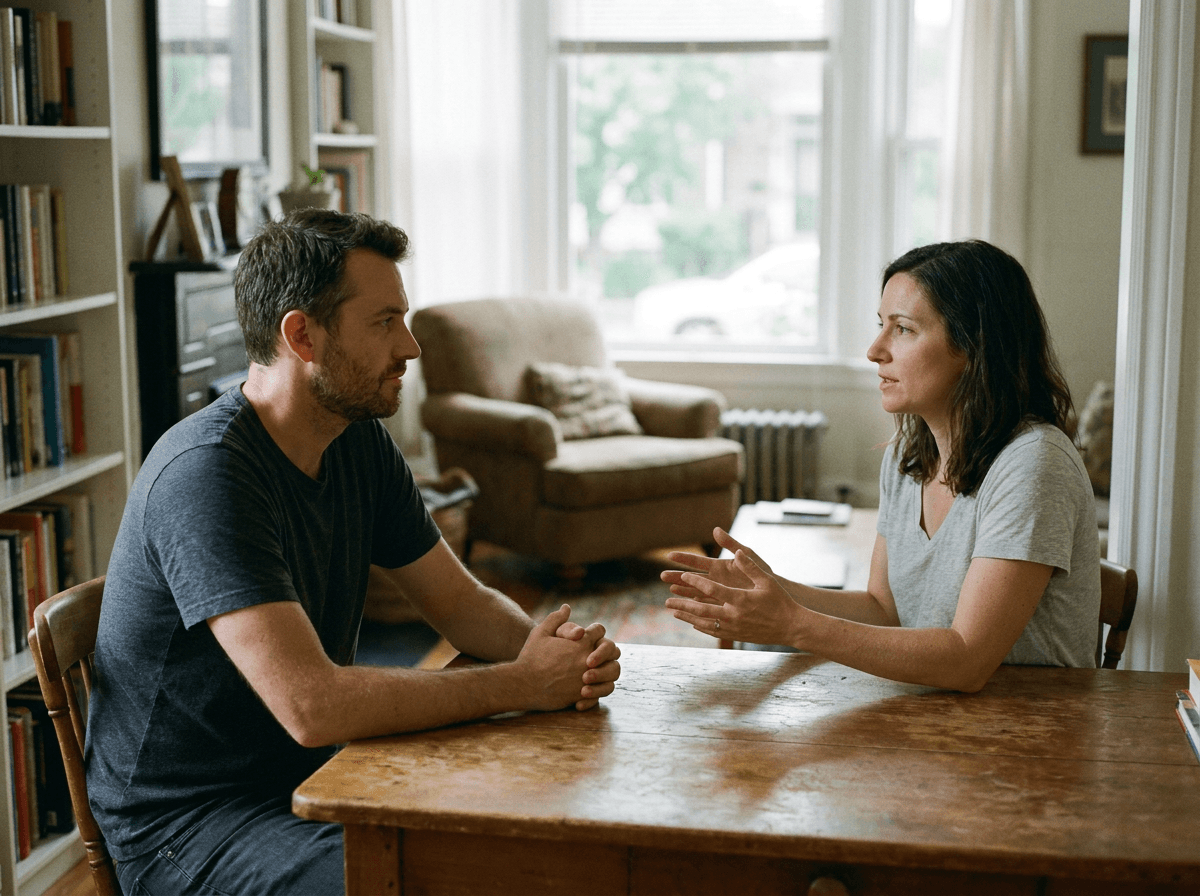
There is a version of the self that only becomes available through sustained intimate relationship. Not the self that emerges in solitude, in friendship, or in professional life. A particular configuration of qualities, capacities, and ways of being that the specific conditions of romantic partnership uniquely draw out. Understanding what people become in a relationship that they cannot access alone helps explain why these relationships matter so much beyond the obvious — why their loss produces grief that goes beyond missing another person, and why the desire to be in one runs deeper than the simple preference for company.
The Self That Requires a Witness
One of the most significant things people become in a relationship is witnessed — genuinely, consistently, and by someone who has chosen to stay close enough to see clearly.
Being truly seen is not something people can get alone, by definition. Solitude produces self-knowledge of a particular kind. Friendship offers another. But the specific form of being known that a romantic relationship produces — where another person observes you across enough contexts, enough years, and enough difficult moments — is not available any other way. That person holds a version of you that is accurate rather than idealized.
People who experience this quality of witness tend to become more settled in themselves over time. Not because the relationship tells them who they are. Because having someone who knows them well and continues to choose them produces a quality of self-acceptance that internal reassurance does not replicate. A witness who knows the truth — who has seen the difficult parts and stayed — resolves something that self-affirmation alone tends to leave open.
People in long-term relationships often describe the witnessed self as one of the things they most want and most fear losing. Not simply the other person. The version of themselves that the other person's sustained attention made possible.
The Self That Becomes Available Through Vulnerability
Romantic relationship is one of the few contexts in modern life that reliably requires sustained vulnerability. Most social contexts reward competence, composure, and the management of presentation. Romantic partnership, when it works well, requires something different. The willingness to be seen in difficulty. To ask for what is needed. To express feelings that elsewhere would be managed rather than shared.
People get access to a specific version of themselves through this vulnerability. One that is more honest, more connected to actual emotional experience, and more capable of genuine intimacy. The self that learned to ask for support, to name what is wrong, to communicate fear and need and longing directly — that self develops partly through the relationship that required it.
This does not happen automatically. Many people in relationships continue to manage rather than share, to perform rather than communicate. But the relationship offers conditions for this development that most other contexts do not. The trust a good relationship builds over time creates a specific safety. It makes vulnerability less costly. People who learn to use that safety develop a capacity for genuine emotional expression that changes how they relate to others — and to themselves.
The Self That Grows Through Conflict
Handled well, relationship conflict produces a version of the self that is more skilled, more patient, and more genuinely empathetic than the version that emerges from harmony alone.
People do not get access to this version easily or comfortably. Conflict is uncomfortable. The impulse is to avoid it, manage it, or win it. But the person who learns to navigate conflict with a specific partner develops something that extends beyond the relationship itself. The skills of staying present under emotional pressure. Of listening without defensiveness. Of acknowledging their own contribution to difficulty.
The self that can hold its own in a disagreement without becoming contemptuous. That can repair after conflict rather than waiting for the other person to move first. That can want the relationship to continue even when anger or hurt makes the other person feel like an opponent. These capacities develop more fully in people who have sustained a relationship through significant conflict than in those who have not.
Couples who only experience each other at their best — who avoid conflict in the interest of harmony — tend to remain at an earlier stage of this development. The relationship that went through something and remained intact produces people more capable, in every context, of navigating difficulty with care and skill.
The Self That Exists Only in the Specific Dynamic
Some of what people become in a relationship is not a general capacity but a specific expression. Something that exists only in the dynamic between these two particular people.
The particular humor that develops between two people over years. The specific way of being at ease that one partner draws out in another. The quality of playfulness that exists in this person's presence and only faintly elsewhere. These expressions are not general traits the person carries everywhere. They are aspects of self that the specific relationship produces — relational properties that belong to the dynamic rather than to either person alone.
This specificity is part of what makes relationship loss so difficult to process. When the relationship ends, these specific expressions lose their conditions. The self that only existed in that dynamic does not simply transfer to a new relationship. It has to be discovered, in a different form, within different conditions. Some people describe feeling, after a significant relationship ends, that a specific part of themselves went with it. That experience is accurate, not melodramatic. A part of the self did go — the part that only existed in relation to that specific other person.
The Self That Wants to Give
One of the most significant things people become in a relationship is someone oriented toward another person's wellbeing as a genuine priority rather than an occasional gesture.
Outside of parent-child relationships, few contexts reliably produce sustained other-orientation in adults. Most social contexts require considering others but within clear limits of self-interest. A romantic relationship — when both people are genuinely invested — asks for something closer to genuine care. The consistent attentiveness to what the other person needs. The willingness to inconvenience the self for the other's benefit without keeping score. The capacity to want something for another person simply because they want it, without expecting a transactional return.
People who develop this orientation within a relationship become genuinely better at care over time. More attuned, more generous, more capable of the selflessness that makes them a good partner, a good friend, and a better person. The capacity does not always transfer fully outside the relationship. But it develops within it in ways that self-directed effort alone tends not to produce.
Conclusion
What people become in a relationship is not a temporary state or a performance maintained for another person's benefit. It is a genuine — if relational — expression of self. Capacities and qualities that the specific conditions of romantic partnership draw out, develop, and sometimes integrate permanently into who the person is.
The desire to be in a relationship is partly the desire for these conditions. For the witness, the safety that makes vulnerability possible, the dynamic that produces specific expressions of self not available elsewhere.
That desire is not weakness or dependency. It is an accurate recognition that people become in relationships what they cannot become alone — and that this becoming is one of the more significant forms of growth available in a human life.