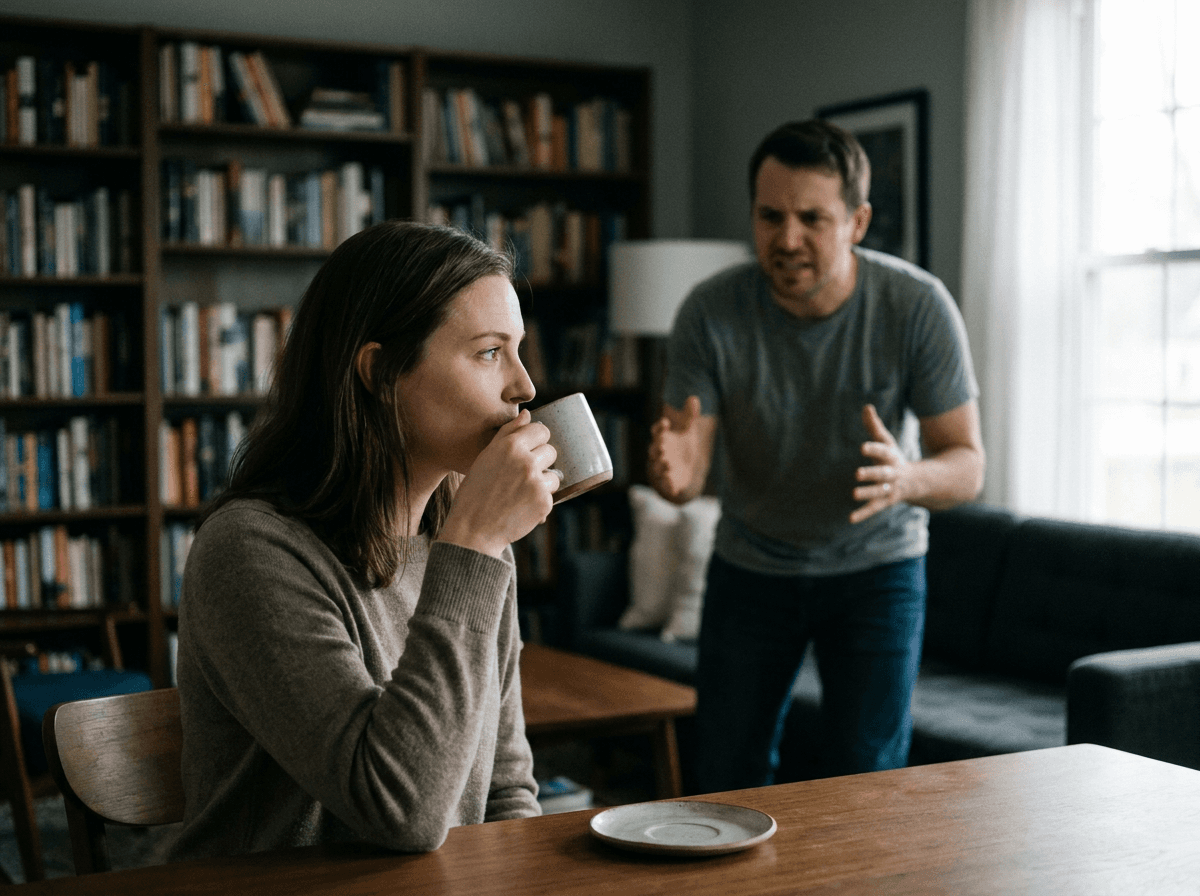
There is a version of calm in relationships that is not peace. It is a performance. One that functions as a form of control in conflict situations. Positioning the calm partner as the adult in the room while simultaneously invalidating everything the other person is expressing. The partner who weaponizes calmness during conflict does not raise their voice. They do not break things. They do not say anything that could be characterized as aggressive. And yet the person on the receiving end frequently leaves the conflict feeling destabilized, silenced, and somehow responsible for the difficulty of the entire interaction. That is not peace. Understanding what this pattern actually involves is the beginning of addressing it. And understanding why it is so difficult to name is the beginning of that.
What Weaponized Calmness Looks Like in Practice
Weaponized calmness in conflict takes several recognizable forms. They share a common feature. The appearance of emotional regulation deployed not in service of genuine resolution. But as a tool for maintaining superiority and control in the conflict.
The most common version involves the deliberate contrast between the calm partner's presentation and the distressed partner's. As one person becomes more emotional — more urgent, more frustrated, more visibly upset — the calm partner becomes more noticeably still. Deliberately so. They may slow their speech, adopt a measured tone, and begin commenting on the other person's emotional state. Rather than on the substance of what is being said. "You're getting worked up." "Let's talk when you've calmed down." "I can't have a rational conversation when you're like this."
These statements are not neutral observations. They redirect the conflict away from its actual content and toward the other person's emotional expression. That redirection is the mechanism. The substance of the grievance disappears from the conversation. The thing that was raised, the concern that caused the fight. What replaces it is a meta-conversation about how the upset person is communicating. In which the calm partner holds all the moral high ground.
The Difference Between Genuine and Weaponized Calm
Not all calmness in conflict is weaponized. Genuine emotional regulation during conflict is a genuine relational asset. The capacity to stay present, to listen, to respond thoughtfully rather than reactively. It is worth being able to distinguish it from the weaponized version. The surface behavior can look similar while the underlying function is entirely different.
Genuine calmness is oriented toward resolution. The regulated partner uses their stability to stay connected to the other person. And to the substance of what is being discussed. They absorb the other person's distress without dismissing it. They stay in the conversation without requiring the other person to lower their emotional temperature as a precondition for engagement. Their calm is a resource offered to the interaction, not a weapon deployed against the other person.
Weaponized calmness is oriented toward control. The calm partner's stillness functions as a kind of withdrawal. A way of being technically present while emotionally unavailable. It sends a clear message. I will engage with you only when you are performing the emotional register I have decided is acceptable. In couples therapy, this pattern is sometimes described as a form of emotional coerciveness. The calm partner sets the terms of the conflict in ways that systematically disadvantage the person who is more visibly distressed.
Why This Pattern Is So Hard to Name
Weaponized calmness is one of the more difficult conflict patterns to identify and address, for a specific reason: it looks like virtue.
Calm looks like emotional maturity. Measured speech looks like thoughtfulness. The refusal to escalate looks like conflict de-escalation. From the outside — and even from the inside — the calm partner appears to be doing everything right. They are not being aggressive. They are not yelling. They are not engaging in the kind of behavior that most people would identify as harmful in a fight.
The harm is structural rather than behavioral. It operates through the positioning of the distressed partner as irrational. As someone whose emotional expression disqualifies their perspective from serious engagement. This is manipulation with excellent cover. The person being manipulated is left not only distressed but also doubting whether their distress is the actual problem. Gaslighting and weaponized calmness frequently co-occur. Both function by destabilizing the target's confidence in their own perceptions.
The Impact on the Person Who Expresses Emotion
The cumulative impact of being on the receiving end of weaponized calmness in conflict is significant and often underappreciated.
Over time, the person who expresses emotion in the relationship learns a set of lessons that shape their behavior in damaging ways. They learn that expressing a concern will result in the concern being redirected into a discussion of their emotional state. That the way they feel matters more to the conflict than the content of what they are raising. They learn to suppress or minimize their emotional expression as a strategy for being heard — often at significant cost to their own emotional honesty and wellbeing.
The relationship thus becomes one in which one partner's emotional expression is continuously managed and pathologized. While the other partner's stillness is continuously rewarded and admired. This asymmetry, sustained over time, produces a specific dynamic. Research on toxic relationship patterns identifies it as one of the more reliable precursors to significant relational damage. The consistent silencing of one partner's inner life.
What to Do When You Recognize This Pattern
Recognizing that calmness during conflict is being weaponized is the necessary first step. The second step is understanding that naming it directly in the moment is often not effective. Partly because the calm partner's typical response to being called out is more of the same. Measured, reasonable-sounding, and positioned to make the naming itself look like further evidence of irrationality.
The more effective approach is to address the pattern outside of conflict — in a calm moment, when neither person is activated. The conversation works better when it focuses on the experience rather than the behavior. "When I raise concerns and the conversation shifts to how I'm expressing them, I feel like the actual issue disappears. I want to talk about how we can make sure both things get addressed." This framing creates less opportunity for the defensive withdrawal that direct accusation typically produces. Naming the experience is different from naming the person.
For couples where the pattern is deeply entrenched, therapeutic support is usually necessary. A therapist can name the pattern from a position of authority that neither partner occupies alone. Creating conditions in which the structural dynamic of the conflict becomes visible to both people simultaneously.
Conclusion
The partner who weaponizes calmness during conflict presents as the peacemaker. They are, in practice, running the conflict on their own terms — terms that consistently place the other person at a disadvantage. Real peace in relationships requires both people to have access to their emotional expression, to feel that their concerns are heard on their merits, and to experience conflict as something navigated together rather than managed by one person for the other.
Calmness, in that frame, is a contribution to the relationship. Weaponized calmness during conflict is a withdrawal from it — dressed, very carefully, to look like the opposite.