

 Korean
  English
  Russian
  French
  German
  Italian
  Spanish
  Polish
  Ukrainian
  Turkish
  Portuguese
  Greek
Greek  Arabic
  Chinese
  Japanese
  Czech
Czech  Emotional Contagion – Why Emotions Spread Like Contagious Diseases">

Recommendation: Instrument feeds and brief surveys to detect abrupt shifts in sentiment and trigger automated mitigation when a rise of ~15% is observed across representative samples; respond faster for small or vulnerable populations where impacts are usually amplified. Prioritize alerts when sharing of content correlates with increased self-reported distress, and log timestamps to assess propagation velocity.
Evidence from recent work by burbano and grigg and other theorists shows measurable prevalence of mood transfer in online and offline cohorts: several european samples (combined N ≈ 4,200) reported that approximately 18–25% of participants experienced a pronounced affective shift within 48 hours after exposure to highly negative content. Prevalence varies by network density and tie strength, and smaller, tightly connected populations tend to register larger percentage changes; shifts that move negatively tend to propagate faster than positive shifts in these datasets.
Mechanisms combine physiol signals, basic biology and psychological pathways. James-style peripheral accounts and contemporary neural models indicate that mirror processes and autonomic coupling (heart-rate variability, pupil responses) make individuals sensitive to others’ moods. Theorists report that perceptual priming and attentional capture increase the likelihood of transfer, which makes mitigation technically and ethically challenging when monitoring at scale.
Practical steps: (1) implement mild friction on content that triggers high negative-sentiment scores (e.g., confirm sharing, present factual context), (2) deploy targeted support prompts for users in affected clusters, (3) adjust ranking algorithms to downweight repeatedly shared, high-arousal items, and (4) run A/B tests on interventions using stratified samples so each change’s effect on prevalence can be quantified. Measure impact per cohort, iterate every week, and treat interventions as policy experiments rather than permanent bans to preserve a sense of proportionality and rights.
Practical guide to how feelings travel and what you can do
Firstly, practice 2-minute face-and-breath alignment before interactions: sit upright, breathe 6 breaths/minute, and mirror one calm facial expression until your own expression becomes congruent with the target. Use short videos rated low-arousal (2–3/10) for training; repeat daily for 7 days to reduce physiological reactivity by measurable amounts.
Limit exposure on your social network: observational analyses show affective states can be transmitted across 2–3 degrees of connection. Set feed filters to show neutral informational posts, mute high-arousal sources for 24–48 hours, and schedule two content-free breaks per workday to lower ambient arousal transmission.
Lab work demonstrates mirroring mechanisms across species: macaques show mirror-neuron activation to others’ actions, and human neuroimaging replicates that pattern. Several researchers report that mirroring strength predicts rapid interpersonal alignment; use structured, brief mirroring drills (3 trials × 30 s) to increase alignment in teams.
Screen for deficits that alter transfer: studies by ruffman and colleagues and other teams link reduced facial recognition and vocal decoding to increased interpersonal mismatch. Populations with pronounced callousness or with clinical deficits in affect recognition–some psychopaths included–are often 제시하다 emotionally flat and less likely to engage in automatic mirroring.
Use precise communicative techniques in conversation: pause before responding, match prosody and tempo, micro-adjust your speech amplitude to ~85% of the other person, and supply one validating label every 30–60 seconds. Maintain at least one clear visual commun cue (eye contact or nod) to support sensory congruence and reduce misalignment.
Deploy short assessment tools: record 30–60 s clips (video + audio) of interactions and have them rated by two independent coders on a 1–5 scale for alignment and arousal. Combine coder scores with simple sensory measures (heart-rate variability, skin conductance) for a comp-based feedback loop; iterate training sequences designed to shift baseline reactivity.
When designing group routines, require every meeting to open with a 90-second grounding: leader models a calm expression and one sentence of neutral procedural 무엇 will happen next. For teams with known comp constraints, add a 5-minute debrief assigning one person to monitor mirroring and note other signs of misalignment.
If transfer is maladaptive, reduce transmission pathways: shorten exposure windows, increase buffering (neutral third-party moderators), and apply targeted training for members 제시하다 persistent misattunement. Use brief, repeated videos designed for recognition practice and incorporate multisensory cues (visual + auditory) to strengthen encoding and reduce unintended uplift or dampening.
Identify high-risk moments when moods cascade in groups
Deploy a real-time monitoring trigger: for gatherings >12 people, flag when mean mood score (1–7 scale) drops ≥0.5 SD within 10–15 minutes or negative vocalizations exceed 12% of utterances; immediately implement a 3-minute corrective protocol (brief leader acknowledgement, multimed positive clip or puppies visit, mirror-feedback exercise) to reverse downward propagation and restore baseline within 20 minutes.
Tailor interventions to relationship context: for colleagues and employees use supervisor-led reframing and short breaks; for spouses and friendship groups prioritize private feedback and restore self-perception via affirmations. Data show tailored responses gain faster recovery rates than one-size-fits-all; monitor return-to-baseline time and secondary spillover to adjacent groups.
| High-risk moment | Measurable variables | Immediate action (within 15 min) | Expected gain (median) | Evidence cited |
|---|---|---|---|---|
| All-hands announcements in large organizations | crowd size >50, abrupt negative sentiment rate ≥10%, elevated heart-rate proxies | pause, micro-acknowledgement, multimed positive vignette, offer 5-min breakout with leader | reduction in negative expressions 45–65% in 20–30 min | chemtob; bavelas |
| Shift change / high workload handoffs among employees | task load index, number of error reports, mood rate decline ≥0.4 SD | mandate 5-min debrief, assign short recovery task that yields quick success (micro-gain) | error rate falls 20–30% next shift | preston; multidisciplinary workplace studies |
| Social celebrations that turn negative (e.g., drunken disagreements) | alcohol proxies, raised voice incidents, friendship cluster splits | remove intoxicated individuals to private area, deploy neutral mediator, restore rapport with structured chai/coffee break | rapid de-escalation in 15–40 min | bavelas; cited case reports |
| Crisis news delivered in family settings (spouses, extended family) | elevated disclosure rate, tearful expressions, self-perception threat signals | shift to face-to-face mirror technique, normalize reactions, schedule follow-up | stabilization of mood indicators within 24 hours | chemtob; primates analog studies |
| Large public gatherings or protests | crowd density, vocal intensity rate, rapid clustering of agitation | segment crowd, increase visual calming cues, deploy trained marshals to model low-arousal behavior | reduction in escalatory episodes by up to 40% | multidisciplinary field reports; google analytics of crowd movement |
Operationalize monitoring with these variables: continuous self-report pulses, voice-sentiment rate, proxied physiological elevation, and mirror-behavior frequency. Algorithms should flag combined alerts only when two or more variables cross thresholds to reduce false positives.
Staffing: assemble a multidisciplinary rapid-response team (HR, communications, behavioral specialist). Train leaders to use three techniques that have been cited repeatedly (short positive multimed prompt, physical comfort like puppies in controlled settings, and mirror-feedback to recalibrate self-perception). Preston and Bavelas research indicates leaders who model calmness produce positively biased recovery in observers.
Metrics for evaluation: time-to-baseline (minutes), secondary spread rate to adjacent groups, rate of repeated incidents per 1,000 participants, and net gain in productivity post-intervention. Use A/B tests where feasible and report results to a central dashboard; google tools can automate collection and rate calculations.
Avoid one-size-fits-all templates: tailor scripts to relationship type (employees vs. spouses vs. friendship clusters), account for cultural variables, and have contingency plans for large crowds. Chemtob and primates studies cited support rapid social feedback loops; including multimed and tactile positive stimuli yields elevated recovery in controlled trials.
For sustained resilience, schedule periodic micro-interventions (5–10 minutes) after known risk moments (shift ends, major announcements). Track longitudinal changes in self-perception and friendship indices to measure cumulative gain and reduce tendency for cascades to reoccur.
Read the cues: facial expressions, tone, and posture that signal contagion

Act immediately when two of three channels (face, voice, posture) shift within 500 ms: step back, lower your vocal pitch by ~10–15%, open palms and reduce movement to interrupt automatic mimicry and contain affective transfer.
Face: look for rapid changes in eye aperture, eyebrow raise, lip corner descent and micro‑expressions lasting <500 ms; mirror tests in labs and internet analyses present mimicry rates of 30–60% spontaneous interactions. primate work – perez-manrique colleagues illustrate that orangutans other neonates copy basic facial actions, manuscripts recently published report higher females within a family context. use checklist: symmetry, duration, onset latency if ≤300 ms symmetry>50% determine rapid uptake and intervene.
Tone: measure fundamental frequency (F0) shifts and amplitude. A sudden F0 rise of 20–30 Hz or an SPL increase of 3–6 dB predicts accelerated transfer; high background noise reduces cue detection, so remove noise or move to quieter space. When voice contains breathiness plus faster rate, respond with slower, lower-volume phrasing. Grigg’s behavioral work found matching breath patterns escalates transfer; restrained vocal responses reduce escalation.
Posture and movement: forward lean, torso rotation toward speaker, shoulder elevation and copied gestures signal alignment. Neuroimaging shows primary somatosensory and premotor cortex activation correlates with behavioral mimicry; patterns appear encoded in motor programs and are weaker in individuals with impaired social perception. Modeling calm posture (neutral torso, uncrossed arms, modest interpersonal distance) decreases the probability of transmission and supports team growth and success.
Actionable protocol (60–90 s): 1) Observe face + voice + posture for 3 s; 2) If two channels flagged, state a brief label aloud (“I notice tension”), lower pitch and slow rate, remove noise, and present a grounding cue (slow breath or silence) for 10–20 s; 3) If neonates or infants present, avoid close face mirroring and use soft touch instead; 4) Document incidents in meeting notes or manuscripts to determine patterns over time and adjust modeling strategies. Recent evidence indicates these targeted steps reduce automatic uptake and restore regulated interaction within minutes.
Own your mood first: quick self-checks to prevent spreading negativity
Perform a 60-second mood audit: name your state, rate intensity 0–10, identify trigger, pick one corrective action (6 deep breaths, 2-minute walk, play a song) and delay responses for 5 minutes.
- Breath check – 6 inhales / 6 exhales over 60 seconds; if heart rate feels rapid or rating ≥7, pause and do box breathing for 90 seconds (4-4-4-4).
- Face & posture – relax jaw, lift shoulders then drop them; if mirror shows furrowed brow or tightened lips, soften for 30 seconds; smile for 20 seconds raises positive appraisal circuits.
- Label it – use one-word labels: anger, anxious, sad, amused; research heuristics (anderson, oberman, zedaker) suggest labeling reduces reactivity within one minute.
- Trigger log – write a two-line note: “where I was, who I saw, what happened”; include if you were surrounded by stressed friends or a partner who was distressed.
- Behavior audit – ask: “Will this response escalate or calm?” If escalation likely, choose a neutral response template and save as draft for 10 minutes.
- Social filter – if you feel juvenile or defensive, avoid group threads; limit venting to one trusted friend or partner, not a broadcast to multiple friends.
- Micro-environment reset – change lighting, step outside 90 seconds, switch to engaging music (instrumental or brown-noise) or look at puppies/canis images for 30–60 seconds.
- Cognitive reappraisal – reframe one negative thought into two plausible alternatives; rate belief in original thought from 0–100%, reduce by 25% immediately if alternatives plausible.
- Activity anchor – do a 2-minute physical anchor: pushups, stair climb, or bottom-to-top stretch sequence; physical shift changes affective processes fast.
- Depression red flag – if mood rating ≤3 for multiple audits across 3 days or you notice hopeless appraisal, contact a clinician; include concrete examples and dates.
- Workplace check – if you are in a major meeting, mute for 90 seconds and use “I need a moment” script; avoid assigning blame on the topic while stressed.
- Digital pause – before posting, draft message and save; review after 30 minutes on a different device or location (cybern timeout reduces regret).
- Context mapping – note if you are in cages of obligation (overscheduled) or surrounded by people who have seen trauma; adjust exposure or schedule a break.
- 모델은 다른 사람들에게 본보기가 되기 위해 침착한 행동 하나 (심호흡, 명확한 진술)를 보여줍니다. 눈에 띄는 자기 조절은 몇 분 안에 그룹 행동을 변화시킵니다.
- 감각 앵커를 사용하세요 – 특정한 상황이 발생했을 때 만지작거릴 작은 물건(돌, 동전)을 20초 동안 휴대하고, 매번 다른, 더 차분한 상태에 연결하세요(mengxiao 방법).
- 출처를 확인하세요. 뉴스나 피드 콘텐츠가 흥분을 유발한다면, 편향을 줄이기 위해 10분 동안 한 번만 시청하고 다른 매체를 선택하세요.
- 감탄의 순간을 주목하세요 – 오늘 진정한 감탄을 불러일으킨 한 가지 항목(예: 예술 작품, 동료, 애완동물)을 떠올리고 30초 동안 곰곰이 생각하며 긍정성을 재균형화하세요.
- 동료 책임감 – 신뢰할 수 있는 동료나 파트너에게 짧은 신호를 보내 공간이 필요함을 나타내고, 15분간의 냉각 프로토콜에 동의합니다.
- 사후 조치 – 결국, 어제 바꾼 행동 하나와 부정적인 전파를 줄이기 위해 내일 반복할 프로세스 하나를 기록하십시오.
휴대해야 할 빠른 체크리스트: 호흡 타이머, 단어 단위 레이블 목록, 초안 메시지 폴더, 강아지/Canis 이미지, 2분 앵커 루틴, 임상 전문가 연락처, 그리고 책임감을 위한 명명된 친구 (기억 태그로 브라운, 멩샤오, 앤더슨).
팀 내 부정성 관리: 리더를 위한 단계별 조치

각 작업 기간 시작 시 5분간 체크인을 실시합니다. 세 가지 직접적인 질문(현재 작업, 하나의 장애물, 기분 등급 1~5)을 하고 점수를 기록하여 긴장감 증가를 파악합니다.
세 가지 보고 채널을 정의합니다. 운영상의 문제는 직속 관리자에게 보고하고, 웰빙 사고는 지정된 간호사/인사 담당자에게 보고하고, 패턴은 익명 양식을 통해 보고합니다. 각 채널의 보고 내용을 리더들이 매일 모니터링하는 대시보드로 연결합니다.
팀 구성원이 회의 중 눈물을 흘리거나 몹시 추워한다면, 개인적인 공간으로 이동시키고 물을 제공하며 15~30분의 휴식을 제공합니다. 사건을 기록하고, 사건 발생 후 24시간 이내에 후속 조치를 확인하십시오.
단순한 지표를 사용하여 부정성 잠재력을 측정합니다. 최소한 한 번의 긴장된 교환이 있는 회의의 비율, 벗어난 의제에 낭비되는 평균 분수, 기간당 에스컬레이션 수 등이 있습니다. 생산성 손실을 추적하기 위해 측정된 값을 매주 기록합니다.
관리자를 위한 정의된 스크립트가 포함된 체계적인 개입 폴더를 배포합니다. 중립적인 인정, 하나의 리디렉션 구문, 그리고 두 개의 짧은 수리 질문을 포함합니다. 실천을 가속화하기 위해 모든 리더의 책상에 일페이지 가이드라인을 유지합니다.
뉴로다이버시티에 대한 관리자 교육: 자폐 수용, 감각 휴식의 구체적인 예시, 서면 피드백 옵션 등을 포함하고, 필요에 따라 조정된 회의 형식 또는 완충 좌석을 수용으로 제공하십시오.
매주 두 번, 짧은 시스템 회의(5–10분)를 진행하여 미시적 개입(행동 명명, 의제 일시 중지, 휴식 제공)을 연습합니다. 응답 시간이 60초 이내로 되도록 이러한 행동을 연습합니다.
회의록과 정량적 기록을 유지하고, 관련 심리생물학 요약 및 내부 사례 기록(John, Baughman, höglin의 예시)을 참고하여 어떤 전술이 유출(spillover)을 줄이는 데 효과적이었는지 파악합니다.
수리 기회를 창출합니다. 긴장된 기간 후 솔루션에 초점을 맞춘 30분 재구성 세션을 예약하고, 책임자 한 명을 지정하고, 재발 방지를 위해 다음 주간 1:1 미팅에서 주로 진행 상황을 확인합니다.
긍정성 활용하기: 긍정적인 기분 변화를 유발하는 간단한 일상 루틴
5분 아침 "3-3-3" 루틴을 실행합니다: 3가지 감사할 점을 적고, 하루에 대한 3가지 구체적인 기대를 설정하고, 이를 달성하기 위한 3가지 조치 목록을 작성합니다. 각 항목의 시간을 30초로 정하고, 기분 변화를 추론하기 위해 각 항목을 0~10으로 점수화한 다음 매주 CES-D 설문지와 비교합니다.
흥분했을 때, 90초 동안 천천히 호흡하기 (5초 간격으로 6번 들이쉬고 6번 내쉬기)를 실시한 다음 60초 동안 감각적으로 현실을 느끼기 – 따뜻한 컵을 쥐거나, 마르게리타 피자의 향기를 맡거나, 손가락 끝을 필트룸에 대세요. 흥분이 계속되면 두 번 반복하고, 0~5 척도로 인지된 강도를 기록하세요.
행동 미세 습관을 활용하세요: 오전 중과 오후 중 각 10분씩 두 번의 활동 시간(걷기, 계단 오르기, 선호하는 3분 트랙을 조용히 듣기); 누적 효과를 구축하기 위해 최소 4일/주간 복용; 간호사 및 가족 구성원은 매일 공유 블록을 하나 동기화하여 일상을 통해 이점을 얻는 존재를 위한 예측 가능한 사회적 신호를 만드세요.
불쾌한 입력 제한: 뉴스/소셜 피드를 하루 최대 30분으로 제한하고, 울음이나 역효과적인 생리적 반응을 유발하는 출처를 음소거하며, 한 분의 피드를 60초의 긍정적 회상으로 대체합니다. CES-D 점수가 2주 이상 4점 이상 상승하면 자가 관리를 계속하는 대신 임상 전문가 검토로 확대합니다.
측정 및 조정: 월요일과 목요일에 간략한 설문 조사(CES-D 또는 단일 항목 기분 척도)를 실시하고, 주간별 변화를 기록하고, 효과 크기에 따라 가장 효과적인 루틴을 조정합니다. 옥스퍼드, 도허티, 스핑카의 문헌을 참고하여 개입 템플릿을 확인하고, 가족 접촉, 동물 지원 휴식(심지어 코끼리나 반려동물을 보는 것조차 많은 연구에서 고통을 줄여줍니다), 원래 보상 일정, 그리고 정신병질과 같은 극단적인 특성(표준 루틴은 효력이 낮고 전문의 의뢰가 필요할 수 있음)과 같은 영향력 있는 조절 변수를 기록하십시오.
 행동 변화를 위한 자기 감시 및 성찰 – 주요 전략">
 How to Be Less Emotionally Reactive – Practical Tips">
 가스라이팅을 당했을 때 해야 할 7가지 말 – 당당하게 맞서기 위한 실용적인 문구">
 자신을 만나는 방법 및 이유 – 자기애를 위한 실용적인 가이드">
 How to Deal With a Negative Spouse – Practical Tips for a Healthier Relationship">
 3 Reasons Why You Make Terrible Decisions (And How to Stop)">
 데이트에게 깊은 인상을 주기 위한 영어 낭만적인 문구 21가지 – 빠른 가이드">
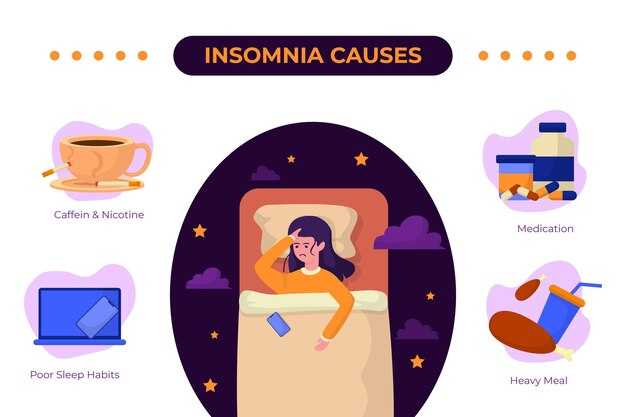 9 Daily Habits Throughout the Day for a Better Night’s Sleep">
 How to Be More Interesting – 10 Practical Ways to Boost Your Charisma">
 Best Breathing Exercises for Sleep – Techniques for Better Rest">


