There is a widespread and quietly damaging misconception about what passion looks like in a relationship. It tends to involve intensity — arguments that end in reconciliation, emotional highs and lows that confirm something important is at stake, a certain volatility that gets mistaken for depth. By this logic, a calm relationship is a passionless one. Less drama signals less feeling. Stability reads as settling. This is one of the more persistently harmful ideas about love — and one of the most worth dismantling.
Less drama does not mean less passion. It means something different is carrying the passion — something quieter, more sustainable, and considerably more real.
Where the Misconception Comes From
The equation of drama with passion does not emerge from nowhere. It gets built early, through the stories culture tells about love. Films and television consistently frame volatility as evidence of depth. The couple who fights passionately, separates dramatically, and reunites intensely is presented as more genuinely in love than the couple who navigates difficulty without theatrics.
This framing shapes expectations. People who grow up on these narratives tend to interpret emotional turbulence as a sign that love is alive. When a relationship becomes calmer — when arguments become less frequent, when ruptures become less dramatic, when the emotional temperature drops — they can interpret that shift as a fading of feeling rather than a maturation of it.
The problem is that drama and passion are not the same thing. Drama is a quality of emotional management. Passion is a quality of feeling and investment. The two can coexist. They can also exist independently. A relationship can carry enormous passion while being almost entirely free of drama — and many of the most genuinely passionate long-term relationships do exactly that.
What Drama Actually Is
Drama in relationships tends to function as a symptom rather than a feature. It signals something about how two people manage emotional experience — specifically, that one or both partners lack the tools to process and express feelings without escalation.
Recurring dramatic conflict in a relationship rarely produces resolution. The same arguments recur. The same wounds get reopened. The reconciliation after the rupture feels meaningful — and it does release genuine neurochemical rewards — but it does not address the underlying dynamic that produced the conflict. The drama continues because it is performing a function: discharging emotional tension that has not found another outlet.
This is what makes drama feel like passion. The intensity of conflict and reconciliation activates the same neurological pathways as romantic excitement. The body responds similarly to both. For people who grew up in emotionally intense environments, this activated state can feel more like love than genuine calm does — simply because it is more familiar.
Recognizing drama as a symptom of emotional dysregulation rather than evidence of passion is one of the more clarifying reframes a person can make. It does not diminish the feelings involved. It simply questions whether drama is the best evidence of their presence.
What Passion Without Drama Actually Looks Like
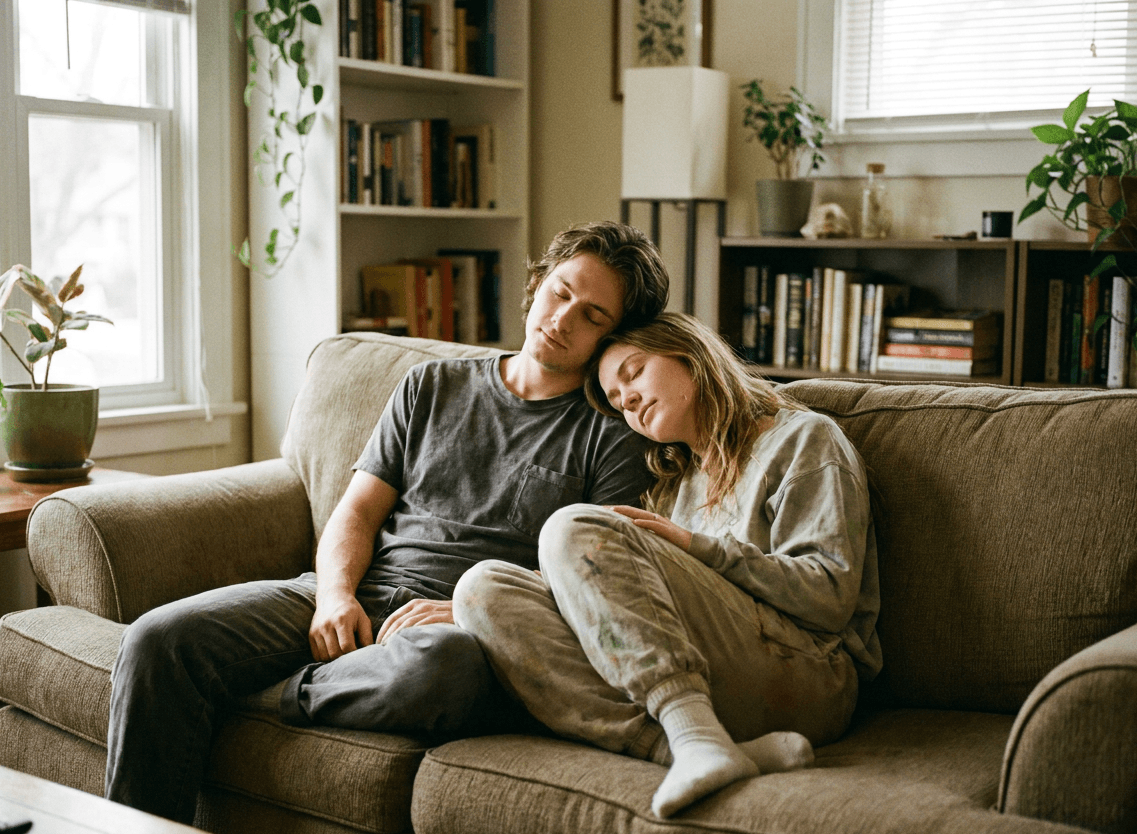
Passion without drama is harder to photograph and harder to narrate. It does not produce moments that read as clearly significant. Instead, it shows up in the sustained quality of attention two people bring to each other over time.
It looks like a partner who notices when you are struggling before you have named it. Like genuine curiosity about the interior life of someone known for years. Like investment in the other person's growth — not because it serves the relationship's narrative, but because their flourishing matters.
Couples who maintain passion without drama tend to describe their relationships in terms that sound almost unremarkable. They find each other interesting, enjoy each other's company. They are genuinely attracted to each other — not because of the tension that conflict creates, but because of the actual person they are with. This kind of passion is less visible from the outside. It is considerably more durable from the inside.
Why Calm Relationships Get Mistaken for Passionless Ones
The confusion between calm and passionless runs deep. It affects how couples perceive their own relationships, sometimes leading them to create drama to reassure themselves that something real is present.
A couple who has worked through their conflicts, developed better emotional regulation, and arrived at a place of relative stability may find that stability feels unfamiliar. If their reference point for passion is intensity — the activation of drama, the relief of reconciliation — then genuine peace can feel like absence rather than arrival.
This is one of the quieter risks of having internalized the drama-as-passion equation. The relationship has genuinely improved. Both people are more emotionally available, more honest, more capable of navigating difficulty without escalation. Yet the improvement can register as a loss — because the familiar texture of intensity is no longer present.
The reframe that helps most is asking what is actually present rather than what is absent. Is there genuine interest? Physical and emotional closeness? Willingness to be vulnerable? Investment in the other person's inner life? These are the actual indicators of passion. Their presence in a calm relationship confirms that something real and substantial is there — it simply does not announce itself through conflict.
How Emotional Regulation Enables Deeper Passion
One of the more significant insights about passion and drama is that emotional regulation — the capacity to manage intense feelings without escalation — does not suppress passion. It creates the conditions under which deeper passion becomes possible.
Drama consumes relational energy. Every cycle of conflict and reconciliation uses emotional resources that could otherwise go toward connection, creativity, and genuine intimacy. Couples who remove drama from the equation do not find themselves with less feeling. They find themselves with more capacity — more attention, more openness, more genuine availability to each other.
This is why emotional regulation is not the enemy of passion but its enabler. A person who can sit with intense feeling without immediately expressing it as conflict is a person who can bring that intensity into connection instead. The passion does not disappear. It gets redirected — from drama toward depth.
The Difference Between Settling and Arriving
One of the anxieties that the drama-as-passion misconception generates is the fear of settling — the worry that a calm relationship represents a compromise, a lowering of standards, an acceptance of something less than what is actually wanted.
This fear is worth examining closely. Settling and arriving are genuinely different experiences, but they can feel similar from the inside — particularly for someone whose reference point for passion is emotional intensity rather than genuine connection.
Settling feels like absence. There is a persistent low-level dissatisfaction, a sense that something important is missing, a resignation rather than a genuine choice. Arriving feels different. It carries a quality of recognition — this is actually what I was looking for, even if it does not look the way I expected. The passion is present. The drama is not. And the absence of drama, on examination, turns out to be a feature rather than a deficiency.
The couples who confuse arriving for settling tend to share a common background: a history of relationships in which intensity and passion were reliably paired, so that calm began to feel like its absence. Recognizing that pairing as conditioned rather than necessary is the first step toward trusting what a calmer relationship actually offers.
Conclusion
The most durable passion in long-term relationships does not tend to be the loudest. It does not live in the dramatic ruptures and reunions that culture presents as evidence of depth. It lives in the sustained quality of attention, the consistent choosing of another person, the genuine interest and desire that persist after the early intensity has settled into something more considered.
Less drama in a relationship is not a symptom of less feeling. More often, it is a sign that both people have developed the capacity to feel deeply without requiring escalation to confirm it. That capacity is not a compromise. It is a form of emotional maturity — and a foundation for passion considerably more lasting than anything drama has ever produced.
The quieter relationship is not the lesser one. It is often the one in which passion has finally found a home stable enough to stay.