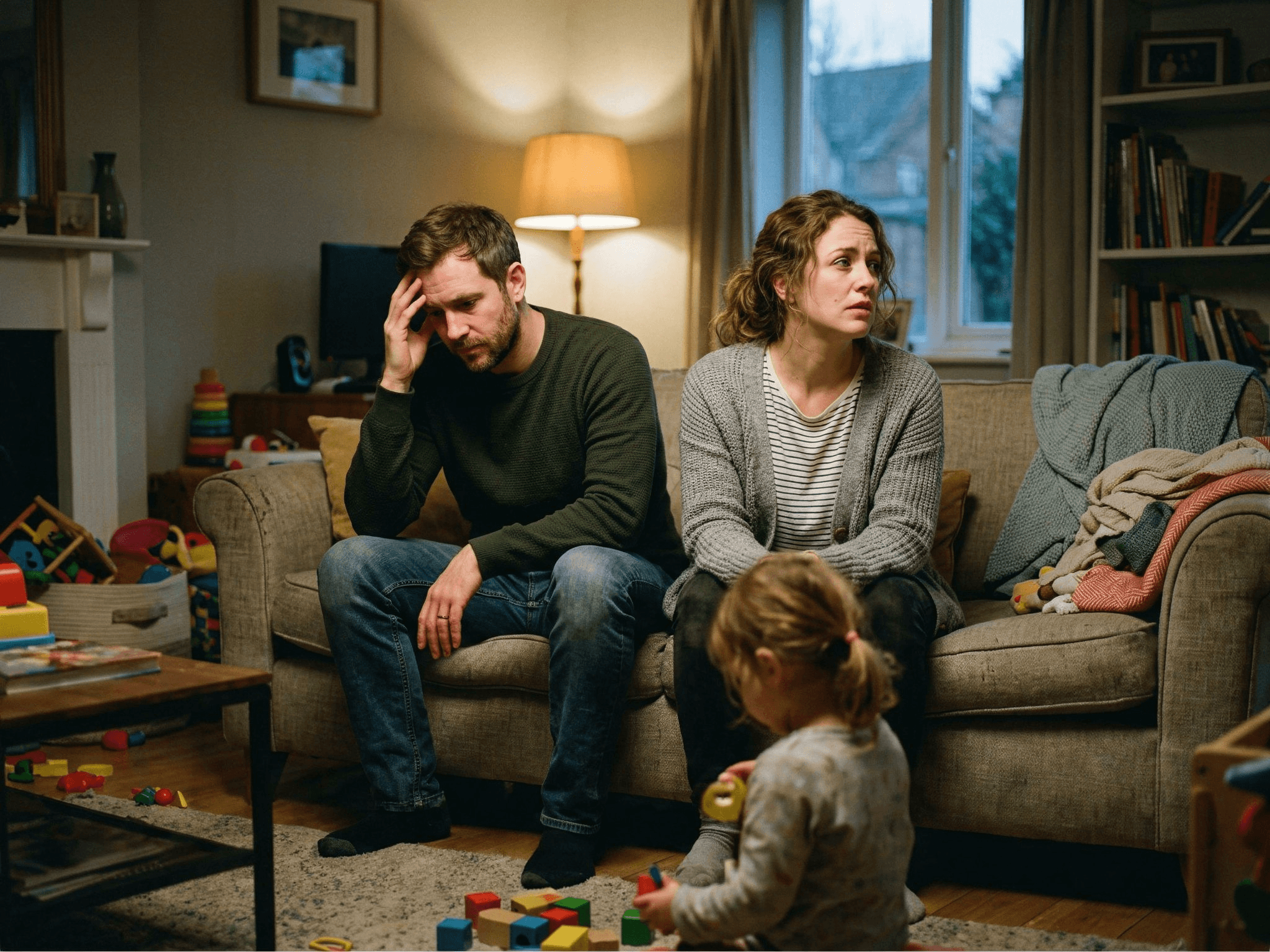
Parenthood is one of the most thoroughly mythologised experiences in human life. The cultural narrative is consistent: a baby brings couples closer, deepens love, and gives a relationship new purpose. For some couples, that narrative contains truth. For many others, it conceals something more difficult. Having children reveals everything a couple has never resolved. No other experience does this as thoroughly. The tensions that seemed manageable before kids become structural. The problems that were easy to defer become impossible to ignore. The relationship that looked functional under ordinary conditions gets tested in ways ordinary conditions never demanded. Understanding why this happens — and what couples can do — matters enormously for both the relationship and the children at its centre.
Why Parenthood Amplifies What Was Already There
A new baby does not introduce problems into a relationship. It reveals them. The distinction matters. Couples who believe having children will fix what is broken are operating on a fundamental misunderstanding of what parenthood does.
Parenthood removes the conditions under which existing problems could be managed or avoided. Before kids, a couple with communication difficulties can sidestep difficult conversations. They can fill the space with shared activities, social life, or enough distance to keep friction manageable. After the baby arrives, that distance disappears. Two people suddenly find themselves in relentless proximity. They operate on fragmented sleep. They have no external outlet for the pressure that builds. Neither person can opt out of the shared responsibility. Every dynamic that was previously contained gets released into that pressure cooker.
The problems that surface in early parenthood are rarely new. They are old ones, finally visible. The couple who never agreed on money discover that disagreements about family spending are considerably harder to defer when a baby's needs are immediate and expensive. The couple who never developed good conflict resolution skills discover that sleep deprivation removes whatever restraint had been operating in their arguments before.
The Specific Tensions That Having Children Reveals
Certain patterns of unresolved issues surface reliably in new parents. Recognising them helps couples understand that what they experience is not unique failure. It is a common exposure of things that were present before the kids arrived.
The division of domestic labour is one of the most consistent. Research across many countries finds that children shift domestic work distribution in gendered directions — even in couples who considered themselves egalitarian. Fathers do more than before a baby arrived. Mothers typically do significantly more than that. Couples who never explicitly negotiated expectations around childcare and household labour find themselves operating from unexamined assumptions. They resent each other for the gap between those assumptions and reality.
Identity is another tension. A baby changes who each person is — or at least who they have time and space to be. Someone with a strong professional identity and clear individual interests suddenly finds all of that restructured around a person who cannot yet communicate their needs. The adjustment is enormous. Couples who never discussed how they wanted to navigate this often find themselves on different pages. One person grieves the pre-baby self. The other has adapted more readily. Both may feel the loss without the language to share it.
Extended family becomes newly loaded too. Grandparents, in-laws, and the question of how much influence each family gets over how kids are raised surfaces tensions that may have been dormant during the couple years. How the baby gets cared for, who gets access and when, and whose family traditions take precedence — these negotiations are extremely difficult for couples who never done the relational work of establishing shared values.
Why Having a Baby Does Not Fix Relationship Problems
The belief that a child will rescue a struggling relationship is persistent. It surfaces in the expectation that shared love for a baby will overcome other incompatibilities. In the idea that becoming a family will bind two people together in ways their existing bond has failed to.
But none of these expectations survive contact with the reality of new parenthood. A baby does not reduce the pressure on a struggling relationship. It multiplies it. The cost of existing problems — poor communication, unresolved conflict, misaligned values, inadequate intimacy — rises dramatically when a child's wellbeing depends on how those problems get managed.
Couples who want a baby to fix things often discover, within months of becoming parents, that the problems are not fixed. They are louder. The distance that existed before now pairs with exhaustion. The conflict that was occasional becomes frequent. The intimacy that was diminishing is now, under the demands of infant care, almost entirely gone. The baby who was supposed to bring them together becomes the context in which their difficulties play out most visibly.
This is not a statement about whether having children is worthwhile. For most people who become parents, the experience ranks among the most meaningful of their lives. But meaning does not resolve relationship problems. Parenthood can be profoundly worthwhile and profoundly destabilising to a relationship that was not on solid ground before the kids arrived. Both things can be true simultaneously.
The Pre-Baby Work That Most Couples Skip
Most couples spend significantly more time planning the practicalities of a baby — the nursery, the pram, the parental leave — than they spend addressing the relational questions parenthood will force into the open.
The relational work that matters most before a baby arrives is not complicated. But it requires a willingness to have conversations that are easier to defer. What do we each expect daily life to look like after a baby? How will we divide childcare and domestic work? What happens to our connection and our time together when those resources get stretched? How do we want to handle our respective families' involvement? What happens when we disagree about parenting decisions?
These are not small questions. Their answers determine whether the transition into parenthood brings a couple closer or drives them apart. Couples who examine their assumptions and develop shared frameworks for the decisions parenthood demands are considerably better positioned than those who start these conversations only when they are already in conflict.
This does not mean couples need to agree on everything before becoming parents. They will never agree on everything. It means they need the communication skills and relational foundation to navigate disagreement productively — because that disagreement will arrive, and it will arrive when both people are exhausted and under-resourced.
When the Baby Has Already Arrived
For couples who are already parents and recognising themselves in what has been described, the question is not whether to have done things differently. It is what to do now.
The first step is naming what is happening without blame. Having children reveals things. That is not either person's fault. The problems that parenthood has made visible were present before. Acknowledging them as shared problems — rather than evidence of one person's failure — creates the conditions for addressing them.
The second step is protecting the relationship as a priority alongside the children. Couples who pour all their energy into parenting and none into their partnership tend to find, as their kids grow, that they have become roommates rather than partners. The relationship that formed the foundation of the family requires active maintenance. That is not selfish. It is among the most important things parents can do for their children, who benefit from growing up in a household where the adult relationship is functional and warm.
Couples therapy deserves explicit mention here. The problems parenthood reveals rarely resolve themselves without deliberate attention. A skilled therapist helps parents identify the patterns the transition surfaced, develop better communication and conflict resolution skills, and rebuild the connection that early family life has often eroded.
Conclusion
Having children reveals. That is the honest version of what parenthood does to a relationship. It surfaces the unresolved, the unexamined, and the unspoken. It removes the conditions under which those things could be deferred. And it demands that two people face them with far fewer resources than they had before.
This is not a counsel of despair. It is a counsel of honesty. Couples who enter parenthood with open eyes — who have done the relational work beforehand, or who do it after problems emerge, or who seek help when they cannot manage alone — find that what parenthood reveals does not have to destroy the relationship. With sufficient commitment and skill, it can become the material from which a stronger one is built.
That is what children actually offer a relationship. Not a rescue. Not a resolution. A mirror — held up with considerable force — that shows two people who they have become and what they still need to do.