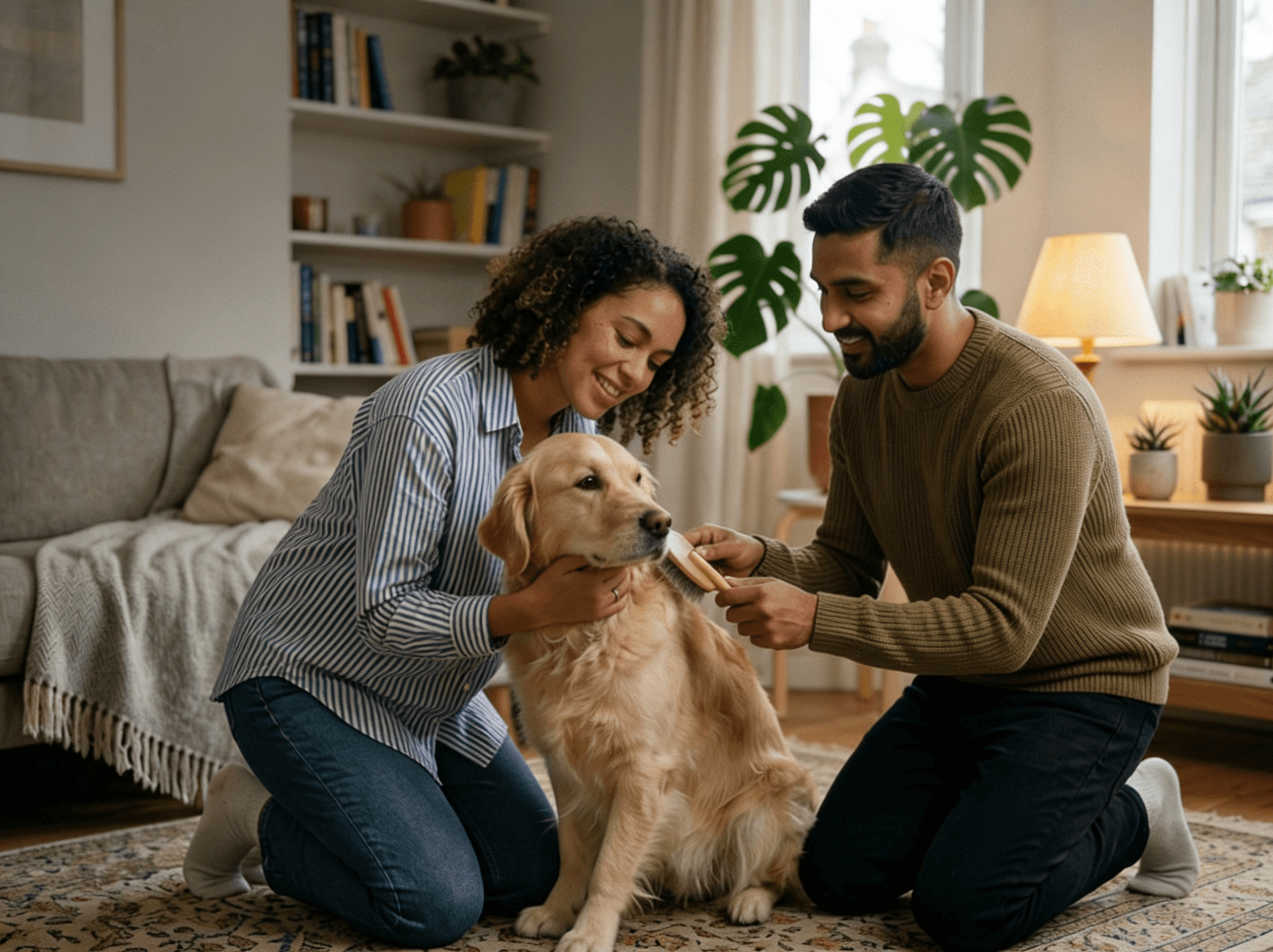
There is something quietly revealing about the way a couple handles a living thing that depends entirely on them. A pet does not care about your moods, your workload, or the argument you had last Tuesday. It needs food, attention, movement, and care — reliably, every day, regardless of what else is happening. Caring for a pet together strips away the performance that new relationships often involve and replaces it with something more honest. How two people show up for an animal tells them a great deal about how they show up for each other.
Why Pets Bring Out What Relationships Are Actually Made Of
Animals operate on need and presence. A dog does not understand that you had a difficult day. It understands that its walk is late, its bowl is empty, and you have not made eye contact with it since you came home. Meeting those needs consistently requires two people to coordinate, communicate, and make small acts of care a non-negotiable part of daily life.
That coordination is where the relationship work actually happens. Who wakes up early for the morning routine? Who researches the vet, remembers the medication, tracks the food supply? These are not dramatic questions. Over time, though, the answers to them reveal the architecture of how a couple shares responsibility.
Caring for animals together also surfaces assumptions that partners rarely discuss directly. One person may believe that pets belong outside. The other may assume the dog sleeps in the bed. One person finds training straightforward and enjoyable. The other finds it stressful and is not sure where to start. These differences, small in isolation, reflect deeper values about boundaries, patience, and the kind of home both people want to build.
The Tenderness That Pet Care Draws Out
There is a specific kind of softness that animals seem to unlock in people. It is observable, and it matters. A person who greets a dog with immediate warmth, who gets down on the floor without self-consciousness, who speaks gently and pays close attention — that behaviour does not stay contained. It tends to spill into how they treat the people around them too.
Couples who care for a pet together often describe noticing a new dimension of their partner. Watching someone comfort a frightened animal, or stay patient during a difficult training session, or simply sit quietly with a sick pet and offer presence rather than solutions — these moments build a particular kind of trust. They show emotional range that everyday adult life does not always call for.
Tenderness, like most relational qualities, develops through practice. Caring for a pet creates dozens of small opportunities each day to practise it. The morning playtime, the unhurried walk, the gentle way someone handles a pet that is nervous or in pain — all of it is tenderness in action. Couples who share those moments consistently tend to bring more of that quality into the relationship itself.
Routine as the Foundation of Both Pet Care and Partnership
One of the clearest lessons that pet ownership teaches a couple is the value of routine. Animals thrive on predictability. A dog fed at irregular times, walked inconsistently, or left without clear structure tends to become anxious or difficult. Establishing and maintaining a reliable routine is not optional — it is the basic framework of responsible pet care.
For couples, building that routine together is its own form of collaboration. It requires negotiating who does what, when, and how. It demands follow-through on the days when motivation is low. And it surfaces the question of what happens when one partner cannot or does not hold up their end — how that gets addressed, how the gap gets filled, and whether resentment accumulates or gets discharged through honest conversation.
The routine that forms around a pet often becomes a kind of glue. The evening walk, the shared responsibility for hygiene and grooming, the agreed-upon feeding schedule — these create touchpoints of cooperation that run beneath the surface of a relationship. Many couples describe their pet's routine as one of the most consistent sources of shared purpose in their daily life together.
What Pet Ownership Reveals About Conflict and Repair
Caring for an animal together will, at some point, generate disagreement. Differences in approach to training, to discipline, to veterinary decisions, to how much space a pet should have in the home — all of these become live questions. How a couple handles those disagreements reveals a great deal about their conflict style.
Some couples discover that they avoid addressing pet-related tension the same way they avoid addressing other tensions. The same patterns appear: one person withdraws, the other pursues, and the pet's needs become a proxy for the underlying dynamic. Others find that the stakes — a real animal whose wellbeing depends on their ability to cooperate — motivate them to communicate more directly than they might otherwise.
The repair process matters too. When one partner drops the ball — misses a vet appointment, forgets the food, skips the walk without communicating — how the couple handles that becomes instructive. The most resilient couples tend to address it directly, without dramatising it, and return quickly to cooperation. That pattern, rehearsed regularly in the context of pet care, transfers to the relationship more broadly.
Tips for Caring for a Pet Together Without Creating New Friction
A few practical tips go a long way in making shared pet ownership smooth rather than contentious.
Agree on responsibilities before the pet arrives home. Knowing in advance who handles morning care, who manages vet visits, and who takes the lead on training prevents assumptions from calcifying into resentment. If circumstances shift, revisit the agreement rather than waiting for one person to reach their limit.
Introduce structure early. Animals, particularly dogs, settle more quickly and behave more consistently when a clear routine exists from the start. Setting that structure together — agreeing on feeding times, walk schedules, and sleep arrangements — also sets the tone for how the two of you will make decisions about the pet going forward.
Talk about what the pet needs rather than what the other person is failing to provide. Framing care conversations around the animal's needs rather than each other's shortcomings keeps the focus productive. "The dog hasn't had enough exercise this week" is a different conversation from "you never take him out."
Offer support generously. Pet care is physical, time-consuming, and occasionally emotionally draining — particularly during illness, injury, or the end of a pet's life. Noticing when your partner is carrying more than their share, and stepping in without being asked, is one of the simplest and most effective ways to strengthen a relationship.
The Relationship That Animals Build Between People
There is a reason that couples who adopt a pet together often describe the experience as deepening their partnership. The explanation is straightforward. Caring for an animal introduces non-negotiable shared responsibility into a relationship. It creates daily rituals. It generates moments of tenderness, humour, and occasional crisis that two people navigate together.
In that sense, a pet functions as a kind of practice ground. The coordination muscles that develop around morning walks and vet appointments are the same muscles a couple will use when the challenges become larger — when they buy a home, raise children, support ageing parents, or face anything else that requires sustained cooperation and care.
Animals give back in proportion to the care they receive. In that respect, they are not entirely unlike the relationships people build around them. The couples who invest consistently — in the pet, in the routines, in the small daily acts of tenderness — tend to find that the investment returns something they did not fully anticipate: a relationship that is warmer, more resilient, and more connected than it was before a set of paws walked through the door.