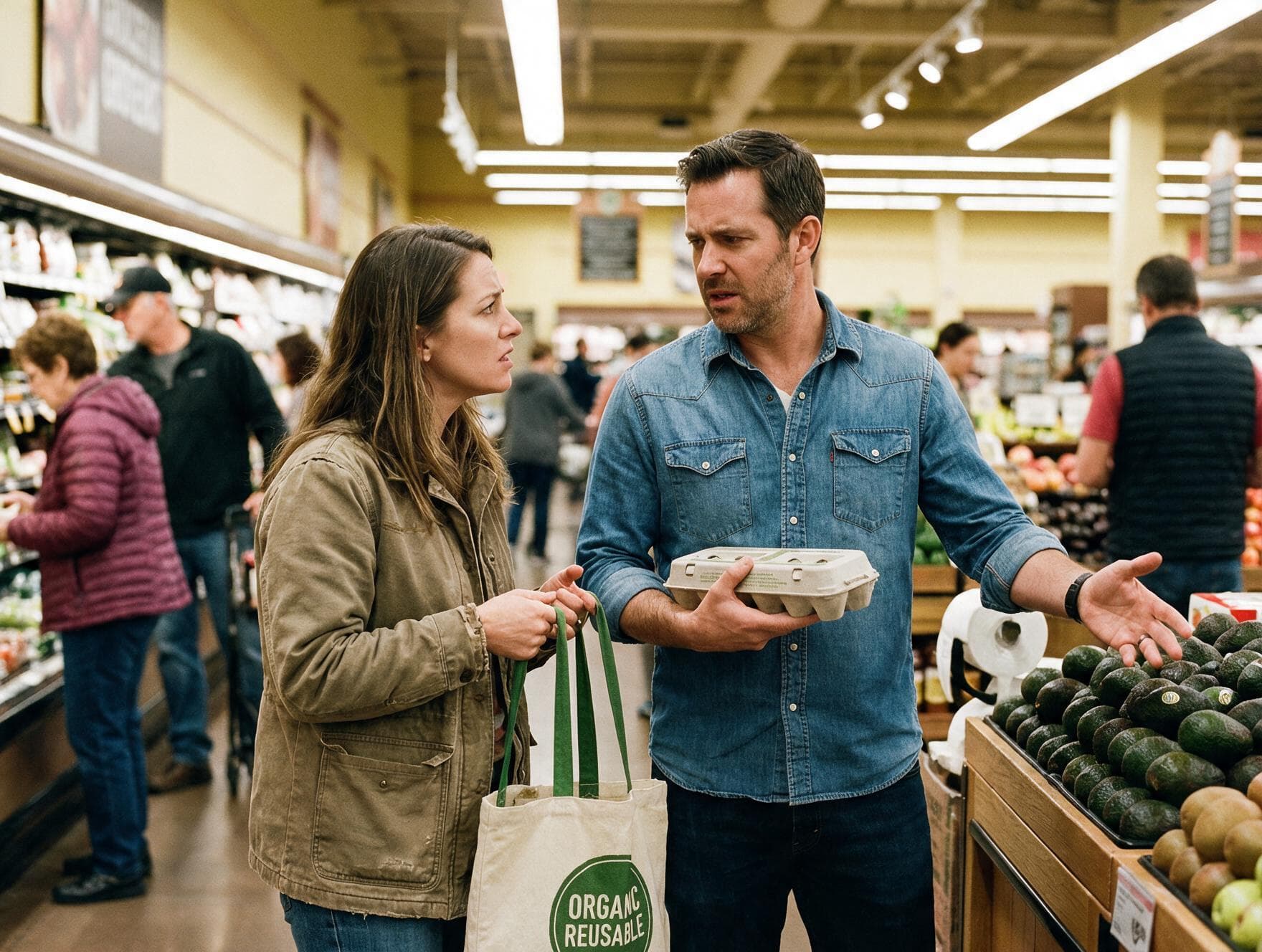
Grocery shopping is one of the most ordinary activities in shared domestic life. It is also, for a significant number of couples, a surprisingly reliable source of friction. Not the dramatic kind. The low-grade, recurring kind that builds over months and years into a persistent irritant neither person fully knows how to address. Grocery shopping styles differ more than most people expect before they start sharing a household. Those differences touch on things that matter considerably more than what ends up in the cart.
Why Grocery Shopping Generates More Conflict Than It Should
The grocery store is a small arena where a surprising number of household values collide.
Budget orientation is one of the first sources of friction. One person shops with a running total in mind, reaches for store-brand items, and leaves with only what was on the list. The other buys what appeals to them, treats the grocery run as a browsing experience, and considers good food a quality-of-life non-negotiable. Neither approach is wrong. But both people will experience the other's as irrational.
Planning orientation is closely related. The person who arrives with a detailed list and a clear sense of the week's meals tends to find the improvisational approach chaotic. The person who shops by feel finds the list joyless. The person who shops intuitively finds the list-follower's rigidity joyless. Again, neither is wrong. But both will find the other's style actively counterproductive.
There is also the time dimension. Grocery shopping, for one person, is a task to complete as efficiently as possible. For the other, it is a relatively pleasant errand with room for browsing, discovering new products, and making decisions in the moment. Combining these two orientations in a single shopping trip tends to produce tension. Often before the couple has even reached the produce section.
What the Friction Is Actually About
Different grocery shopping styles surface something larger than disagreements about food.
Budget conflicts at the grocery store are often proxies for broader disagreements about how money should be managed in the relationship. The person who reaches for the discounted alternative is often expressing a general orientation toward financial caution. The person who buys the preferred brand is often expressing a general orientation toward present-quality-of-life over frugality. The grocery store makes these orientations visible in a concrete and recurring way.
Planning conflicts reflect something similar. The person who insists on a list and a meal plan is often someone for whom predictability and structure are genuine sources of wellbeing. The person who shops by feel often finds rigid planning constraining. The grocery run, which happens weekly, keeps this difference in view in a way that more occasional household decisions do not.
The conflict couples report having most often about grocery shopping habits is rarely about specific items. It tends to be about the experience of shopping together. And feeling that the other person's approach makes the whole thing harder. The list person feels slowed down and financially unmoored by their partner's approach. The improvisational person feels supervised and joyless by theirs. Both people feel unseen in how they manage what is, for most households, a significant ongoing task.
Grocery Shopping Styles and Domestic Labor
Grocery shopping is not just a consumer activity. It is a form of domestic labor. And the way couples distribute and manage it tends to reflect broader patterns in how they handle household responsibility.
When one partner does the majority of the grocery shopping, they also carry the majority of the mental load associated with it. Tracking what the household needs, planning meals, managing a running inventory of what has run out. This is work that tends to be invisible until it is not done. And therefore tends to be underacknowledged.
Friction about grocery shopping styles is sometimes friction about this distribution of labor rather than about the shopping itself. The partner who does most of the grocery planning may find that when the other person occasionally shops, their different approach creates more work. Wrong items, missed staples, impulse purchases. Wrong items, missed staples, impulse purchases that disrupt the budget. The resentment that follows is not really about a different brand of pasta. It is about feeling that a shared responsibility is not actually shared.
This is a source of conflict that goes deeper than preference. It touches on how the couple values domestic work, how they distribute it, and whether both people feel the distribution is fair.
Shopping Together Versus Separately
One practical response to incompatible grocery shopping styles is simply to stop shopping together.
Many couples find that dividing the grocery responsibility rather than doing it jointly resolves a significant amount of friction. One person takes ownership of the weekly shop. The other takes on a different domestic task. The friction that came from navigating different styles in real time simply does not occur.
This works well when both people are genuinely willing to accept the outcomes of the other person's approach. The person who values efficiency and budgeting needs to accept that when their partner does the grocery run, the cart will look different. Different from what they would have chosen. The person who values improvisation and quality needs to accept that when their partner shops, the result will be functional rather than inspired.
What tends not to work is one person taking formal ownership of the grocery shopping. While the other regularly comments on or criticizes the results. This creates a situation in which the responsibility is nominally divided but the judgment is not. The person doing the shopping carries the labor without the autonomy, which tends to produce resentment more reliably than any difference in shopping style.
Making Different Styles Work
Couples who navigate different grocery shopping styles successfully tend to do so through explicit rather than implicit agreements.
The explicit version of the conversation sounds like: you handle the weekly shop and I will not comment on individual choices. Unless we are significantly over budget. Or: we will do a joint shop once a month for staples and you handle fill-in trips during the week. These are not romantic conversations. They are operational ones. But they address the actual source of the friction rather than treating it as a personality incompatibility that cannot be resolved.
Budget alignment is worth addressing directly as a separate conversation from shopping style. If the couple does not have a shared understanding of what the weekly grocery budget is trying to achieve, conflicts will continue. Regardless of the logistics.
Conclusion
Grocery shopping styles are an unlikely candidate for a significant source of couple conflict. But the grocery run's combination of frequency, financial visibility, and connection to domestic labor distribution makes it a reliable site for surfacing differences. Differences that matter considerably more than what ends up in the cart. Couples who take the friction seriously enough to address it explicitly tend to find that the conversation reveals something useful. Not just about shopping, but about how they manage shared life more broadly.