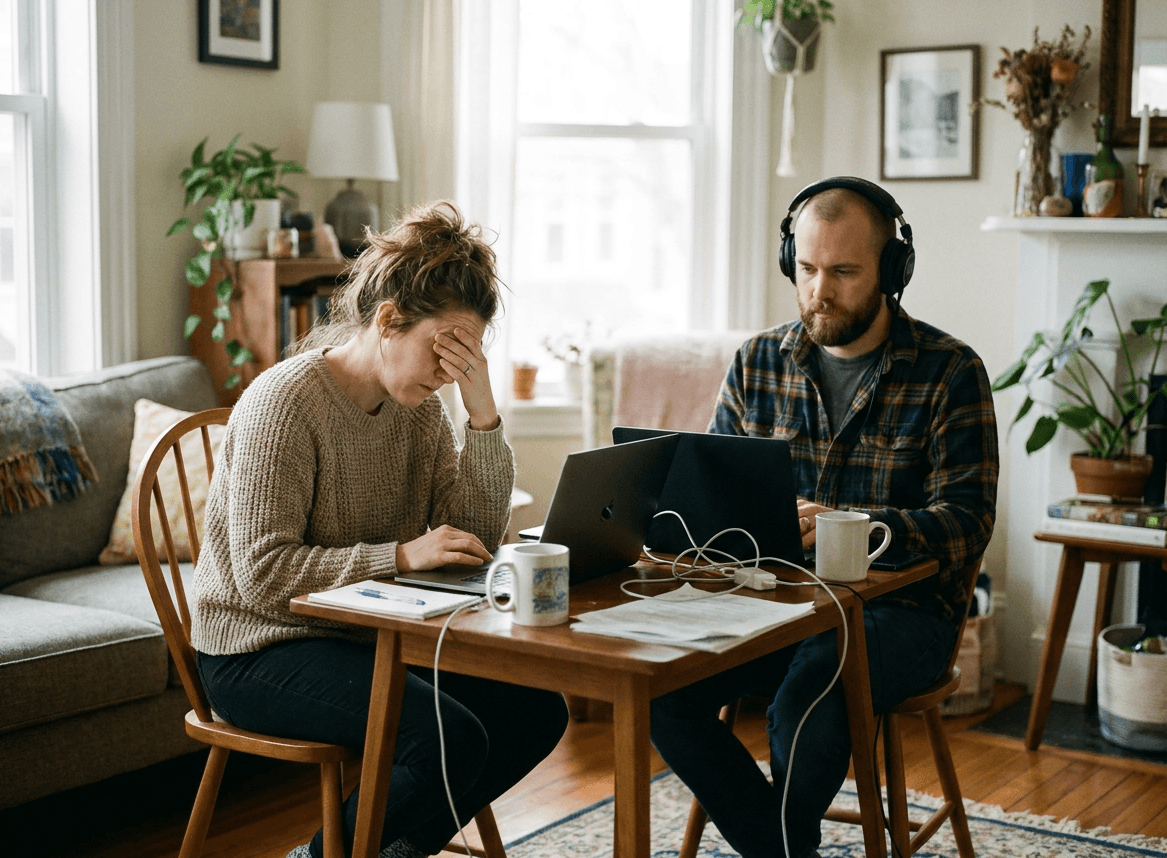
Before remote work became widespread, most couples spent a significant part of their day apart. Work provided a natural structure that separated people. It gave them independent experiences to bring back to the relationship and created the rhythm of reunion that proximity sometimes prevents. That structure has changed substantially for many couples. When partners work from home together, the relationship operates under new conditions. Or when one partner works remotely while the other is a regular home presence. Too much togetherness has emerged as one of the more quietly damaging relationship stressors of the remote work era. And it is still relatively poorly understood.
What Changes When Partners Spend All Day Together
The shift from working separately to spending much time in the same space produces changes. Easy to underestimate until they have accumulated.
The first change is the loss of independent daily experience. Partners who spend their working days apart bring something back to the relationship each evening. Observations, frustrations, stories, the texture of a world the other did not share. This input is one of the less-recognized sources of relational vitality. It creates things to talk about, perspectives to exchange. The sense that each person has a life beyond the couple.
When partners work in the same space all day, this input diminishes significantly. The relationship's conversational raw material contracts. Both people have experienced the same day, in the same environment, with the same interruptions. There is less that is genuinely new to share.
The second change is the collapse of relational distance. Time apart — even the ordinary separation of a working day — creates a mild, productive absence that makes reunion possible. When that absence is removed, the relationship operates at a constant temperature. Rather than experiencing the rhythm of separation and return. Many couples find, often to their surprise, that they connect less when together all day than they did when they spent time apart.
The Erosion of Alone Time
Alone time is one of the most undervalued relational resources available to couples. It is the condition in which each person can think their own thoughts and process their own experience. And maintain the individual selfhood that healthy relationships require alongside connection.
When partners spend much of their day together in the same domestic space, time alone becomes structurally difficult to access. The home, which was once a retreat from the working world, is now also the working world. Every room is potentially shared. The clear separation between together time and alone time dissolves.
This erosion affects different people differently — particularly along introvert-extrovert lines. Introverts, who recharge through solitude, may find that working from home with a partner produces a sustained low-grade depletion that is difficult to identify and address. They often don't recognize the source of their fatigue. The togetherness feels positive in individual moments, even as it accumulates into something draining.
The absence of alone time also increases emotional dependency, subtly and without either person choosing it. When two people are each other's primary company throughout the day, the relationship absorbs much relational need. Need that would, in a more structurally separate arrangement, be distributed across other contexts. Colleagues, commutes, external experiences. This concentration of relational need in a single source produces pressure the relationship was not designed to bear.
Conflict Patterns Unique to Too Much Togetherness
Too much togetherness produces specific conflict patterns that differ from the more typical relationship arguments about communication, commitment, or values.
The most common is friction over minor things. Couples who spend much time together often find themselves irritated by the small habits of their partner. The way someone chews, their phone habits, their background noise preferences — in ways that would not register if they saw each other less. This irritation is not really about the behavior. It is about insufficient distance from a person who is present too constantly.
A related pattern is the loss of enthusiasm. Partners who think they should be enjoying the closeness that remote work provides sometimes find instead that they don't look forward to evenings together as they once did. Not because the love has diminished — but because the relationship has not had the separation that makes togetherness feel like something rather than simply more of the same.
Couples also report spending a significant portion of their shared time in parallel activity rather than genuine connection — both in the same room, both on separate screens, neither genuinely engaging the other. This parallel presence can feel like togetherness. While providing very little of what togetherness is actually supposed to deliver.
Why This Is a New Relationship Problem
Remote work and the relationship strain it produces are genuinely new enough that most couples don't have frameworks for addressing them. There is no established playbook. Traditional relationship advice does not cover the challenges of too much time together. It was developed in response to the much more common problem of spending too little time together.
This means that couples struggling with remote-work togetherness often misdiagnose the problem. They think the relationship is weakening when what is actually happening is that the structural conditions have changed in ways that the relationship has not yet adapted to. The irritability, the reduced enthusiasm, the sense of relational flatness — all of these feel like relationship problems. They are, more accurately, problems of relationship architecture. Of how the couple's shared life is organized around time, space, and independent experience.
What Helps: Rebuilding Structural Separation
The primary intervention for too much togetherness is structural rather than conversational. It involves deliberately rebuilding the separation that remote work has removed.
Working in different spaces — even within the same home — preserves the sense of independent working lives. And reduces the accumulated friction of sustained proximity. This doesn't require physical separation. It requires a shared understanding that being home together is not the same as being available to each other throughout the working day.
Scheduled time apart provides the alone time and independent experience that the relationship needs its members to have. Time each person spends genuinely independently — outside the home, in separate spaces, or in activities that don't involve the partner.
Creating meaningful transition points helps re-establish the rhythm that too much togetherness erodes. A shared end-of-work ritual, a genuine change of context between work time and relationship time.
Conclusion
The relationship stressor that too much togetherness produces is not a sign that the partnership is in trouble. It is a sign that the partnership is operating without the structural conditions it needs to function well.
Couples who spend much time together without adequate time alone, time apart, and independent experience are not failing at closeness. They are experiencing the predictable effects of a new working arrangement. Nobody designed it with relationships in mind. Understanding this makes the solution considerably clearer: the relationship does not need more communication or more effort. It needs better architecture — more thoughtful management of how time and space are shared and separated. That adjustment, made deliberately, tends to produce rapid and significant improvement in the relationship.