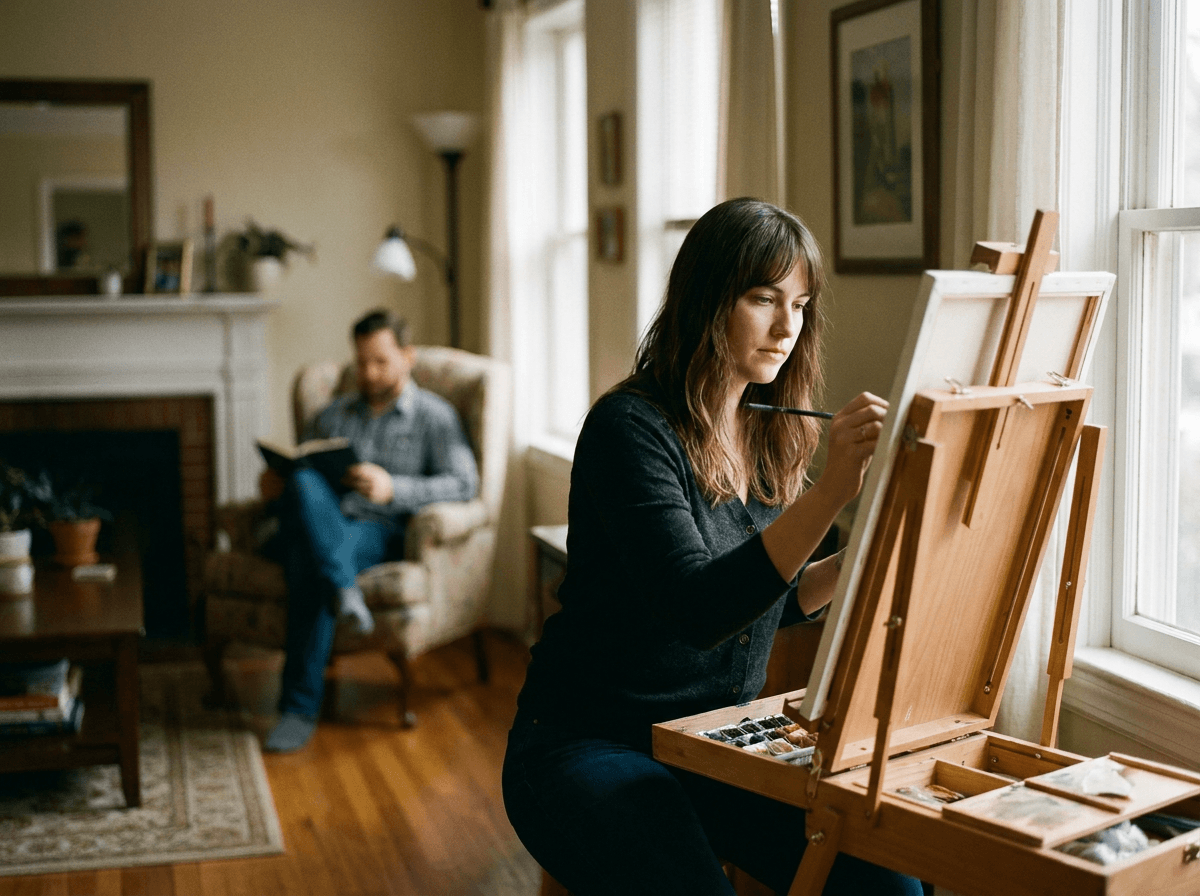
One of the quieter paradoxes of healthy relationships is that the time partners spend apart — pursuing individual interests, developing personal skills, engaging with the world independently — tends to strengthen rather than weaken what they have together. Hobbies and solo pursuits are not a threat to intimacy. They are, in significant and well-documented ways, one of its protectors. The relationship in which both people have rich independent lives and bring those lives back to each other tends to sustain connection more effectively. Than the relationship organized entirely around shared time. Understanding why makes the case for hobbies as a relationship investment, not a relationship escape.
What Hobbies Do for the Individual
Before examining what individual hobbies contribute to a relationship, understanding what they do for the person pursuing them provides the foundation.
Adult life tends to narrow. The range of experiences, skills, and identities that characterized earlier decades of life gradually gets compressed. By professional demands, domestic responsibilities, and the general weight of established routine. Hobbies interrupt this narrowing. They provide a context in which a person can explore new territory. Learning a new language, working through the problem-solving challenges of calligraphy or pottery, finding the specific focus that activities like gardening or puzzles provide.
This exploration is not simply enjoyable. It is psychologically restorative. Hobbies are one of the most consistently cited forms of stress relief in mental health research. Not because they distract from stress. But because they provide an autonomous domain of competence and experience that is separate from work and relationship pressures. The person who returns from an evening class in watercolors or a local pottery session is not simply returning with a new craft skill. They are returning with a regulated nervous system and a replenished sense of self.
New skills acquired through hobbies also contribute to self-efficacy. The general sense of being capable and effective. Which spills over into how the person approaches challenges in other areas of life, including their relationship.
What Independent Interests Contribute to a Relationship
The relationship benefits of individual hobbies operate through several specific mechanisms that are worth understanding explicitly.
The first is the prevention of over-reliance. A relationship in which both partners' needs for stimulation, meaning, and identity are met entirely within the relationship places an unsustainable burden on the couple. No relationship can be everything for everyone. When hobbies, social connections, fitness routines, community involvement, and creative pursuits provide genuine sources of meaning and enjoyment outside the relationship, the relationship is freed from pressure. Of meeting needs it was never designed to meet alone.
The second is the maintenance of distinctness. Relationship research consistently finds that desire and genuine interest between partners are sustained more effectively. When both people retain a sense of being distinct individuals. When each person continues to have a life, perspective, and set of experiences that the other person does not fully share. Hobbies make this distinctness concrete. The partner taking classes in bookbinding or learning to throw pots on a wheel, who is running with a local group or working through a book club list, is a person with an independent life.
The third is the introduction of novelty into the relationship. One of the more reliable findings in relationship research is that novelty sustains connection. Partners who individually pursue new experiences, acquire new skills, and engage with new ideas bring that novelty back into the relationship. In the form of interesting things to talk about, different perspectives, and the kind of animated engagement that shared routines alone do not produce. The person who comes home from a creative outlet — an art class or a kitchen herb-gardening project — has something genuinely new to offer the conversation.
The Specific Problem with Total Merger
Understanding why hobbies matter requires understanding what happens when they are absent. When both partners' lives become entirely organized around each other and shared activities.
The problem is not that shared time is bad. It is that total merger produces a specific kind of relational flatness. When two people's experiences are entirely overlapping, there is nothing new for either person to bring. The conversation covers the same ground because both people have been on the same ground. The sense of each person as a distinct individual — with their own perspectives, interests, and enthusiasms — gradually dissolves. And with it goes much of what made each person interesting to the other in the first place.
This is the specific relational damage that independent hobbies prevent. They are not merely fun for the individual — though they are that. They are functional. They maintain the separateness, novelty, and individual identity that a long relationship needs both people to sustain.
The adult who makes time for fitness, creative work, social play, or independent learning — who keeps books on the nightstand, joins a community class, spends a Saturday morning in nature — is doing their relationship a service. Not by escaping it, but by remaining a person who brings something to it.
When Hobbies Become a Source of Tension
Independent hobbies are not automatically harmonious with relationship life. They can become a source of tension when the distribution of time feels genuinely unequal. When one partner is pursuing independent interests at the expense of shared investment. Or when hobbies function as avoidance rather than as genuine enrichment.
The distinction between enriching independence and avoidant withdrawal is worth maintaining. A partner who pursues hobbies in ways that consistently produce a richer, more present version of themselves is using independence well. A partner who uses hobbies to escape the relationship's difficult conversations or to avoid the work of genuine connection is doing something different.
The test is relatively simple: does the independent time make the person more engaged and more themselves when they return? Or does it primarily serve to keep them from being present in the relationship? The former is the kind of independence that protects relationship health. The latter is a signal that the relationship itself needs direct attention.
Practical Suggestions for Building Independent Life
For couples who have drifted into the total-merger pattern without consciously choosing it, rebuilding individual hobbies is not complicated.
Start with something genuinely interesting, not something that seems productive. The hobby that makes the adult in the relationship feel like a person who does interesting things for the fun of it — not for the fitness benefits or the skill acquisition — is the hobby that will actually last.
Try a range of things. Pottery or calligraphy, games or gardening, art classes or a local book club, creative writing or learning a new language. What works for one person does not work for another. The category matters less than the genuine interest.
And resist the pressure to make every independent interest into a shared one. Some hobbies are better as joint activities. Others work specifically because they provide genuine solo time — the kind that makes the person who returns home someone worth coming home to.
Conclusion
Hobbies and independent interests do not create distance in a relationship. They create the separateness that genuine intimacy requires. The sense of two distinct people who have chosen each other, who continue to find each other interesting. And who bring enough of their own lives to the relationship that it never runs out of things to sustain it.
The most connected couples tend not to be those who spend the most time together. They tend to be those who spend the right time together. And who each arrive at that time as fully realized, independently interested people.