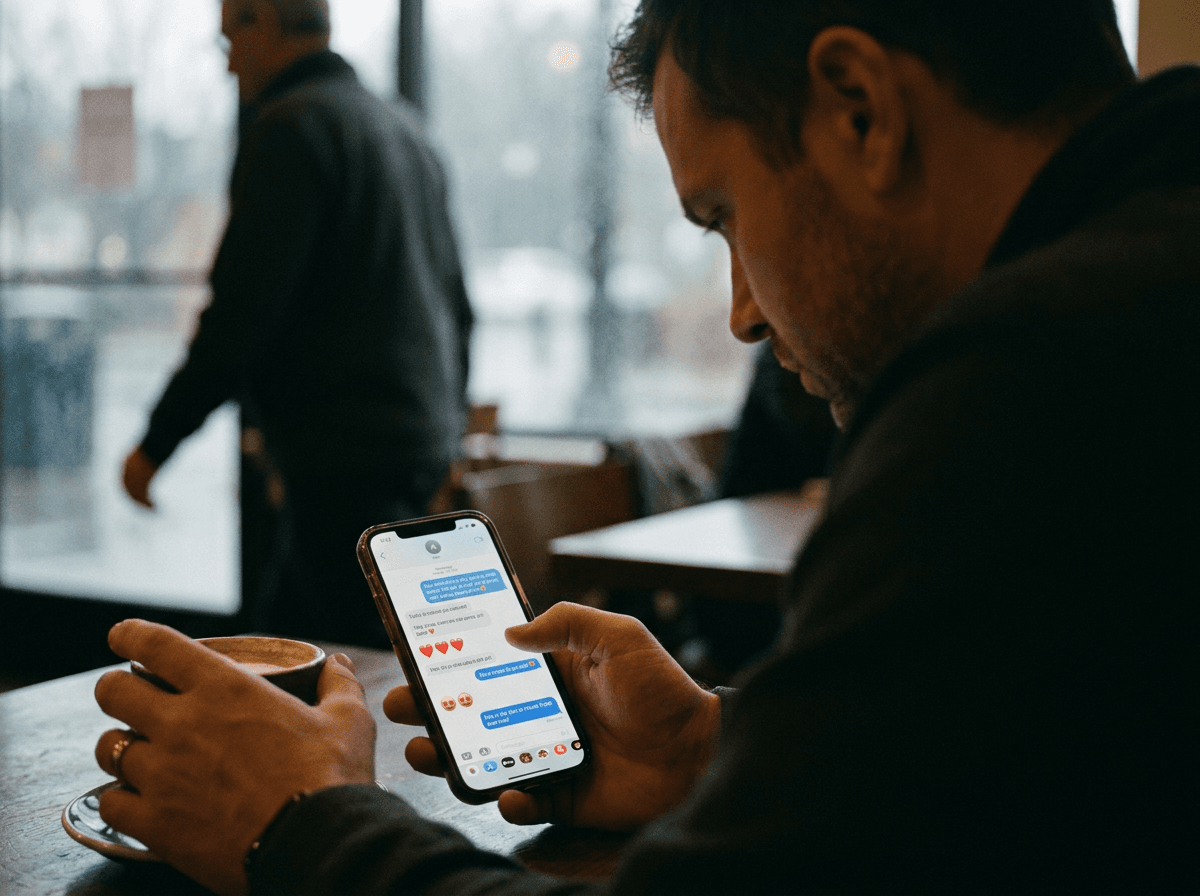
Infidelity used to be easier to define. It involved physical contact with someone outside the relationship. The line was concrete. Digital life has made that line considerably harder to locate. Digital infidelity — the range of online emotional connections, conversations, and attachments that develop outside a committed relationship — is one of the more contested and confusing domains in modern relationship ethics. It raises questions that couples find genuinely difficult to answer. When does an online friendship become something more? When does private digital communication constitute a betrayal? And why do emotional connections that involve no physical contact often feel just as damaging as those that do?
What Digital Infidelity Actually Is
Digital infidelity is not a single behavior. It is a category of online behaviors that share one defining characteristic: directing significant emotional intimacy, attention, or investment toward someone outside the committed relationship — in ways that the betrayed partner would reasonably experience as a violation.
This category includes a range of behaviors on a continuum. At one end: secret emotional conversations with an online connection that the committed partner does not know about. At the other: sustained online emotional relationships that the person actively conceals. These involve the exchange of personal feelings, produce genuine emotional attachment, and function as a parallel intimate relationship in digital form. Between these extremes sits a range of behaviors — frequent private messaging, exclusive digital relationships, the deliberate sharing of emotional intimacy with an online contact — whose status as digital infidelity depends on the specific agreements and expectations of the relationship.
The defining feature is not the platform. It is the concealment and the quality of the emotional investment. Digital infidelity tends to involve telling an online connection things the person does not tell their partner. It involves seeking from an online relationship the emotional connection that should move toward the partner. It involves the specific digital intimacy of being known by someone outside the relationship while carefully preventing the partner from knowing that this knowing is happening.
Why Online Connections Cross the Line
Understanding where online connections cross the line into digital infidelity requires understanding what committed relationships actually ask of their partners emotionally.
Most committed relationships involve implicit or explicit agreements about emotional exclusivity as well as physical exclusivity. The expectation is not simply that partners will not have sex with other people. It is that they will direct their primary emotional investment — their deepest confidences, their most significant feelings, their genuine intimacy — toward each other rather than toward outside connections.
Online connections cross the line when they begin to carry the emotional weight that the committed relationship was supposed to bear. The online connection receives the person's most honest account of how they feel. They get the late-night messages that reflect genuine vulnerability. They provide the emotional resonance and understanding that the person has stopped seeking from their partner. At this point, the online relationship has become a parallel emotional partnership. Its digital character does not reduce its significance. In many cases, the protected digital space makes it more emotionally intense than physical encounters would be.
The concealment is often the clearest indication that the line has moved. When someone begins managing what their partner sees of their digital life — deleting messages, using private modes, being defensive about who they are talking to — the behavior signals that they know the connection has moved beyond what the relationship permits.
The Emotional Impact on the Betrayed Partner
The emotional impact of digital infidelity on the partner who discovers it tends to surprise people who expected it to feel less damaging than physical infidelity. Research consistently finds that emotional infidelity produces comparable levels of distress to physical infidelity. Women in particular tend to rate emotional betrayal as more painful than physical betrayal.
The reason is not difficult to understand. What digital infidelity threatens is the same thing that makes intimate connection valuable: the sense of being the person who is genuinely known, chosen, and emotionally prioritized by the partner. Discovering that a partner directed their deepest confidences, their most authentic feelings, their genuine emotional engagement toward someone online — while withholding those things from the relationship — is a specific and significant form of betrayal. It says: you were not the person I chose to be closest to.
The discovery also tends to raise specific and painful questions about the authentic quality of what had felt real in the relationship. If the partner directed their genuine emotional life elsewhere, what was the quality of connection that remained at home? Was the emotional availability the partner showed at home genuine? Or was it the managed residue of a person whose real emotional engagement pointed toward an online connection?
Why Digital Infidelity Is So Easy to Rationalize
One of the more significant features of digital infidelity is how readily the person engaging in it tends to rationalize the behavior — to themselves and to their partner when it is discovered.
The rationalizations are consistent. Nothing physical happened. It was just conversation. The online connection understands me in a way my partner does not. I was not looking for this — it just developed. I have not done anything wrong. Each of these rationalizations has a surface plausibility that makes them difficult to challenge directly. Nothing physical did happen. The conversations were just conversations.
What the rationalizations omit is the deliberate concealment, the direction of genuine emotional intimacy toward someone outside the relationship, and the specific way the online relationship substituted for something that should have moved toward the partner. The rationalization focuses on what technically did not happen rather than on what actually did. A genuine emotional connection with someone outside the relationship, maintained in deliberate secrecy, at the expense of the committed partnership.
The modern digital environment makes this particularly easy. Online connections develop gradually, in private, in spaces that feel separate from daily life. The line crosses incrementally rather than in a single dramatic moment. By the time the connection clearly constitutes digital infidelity, the person has already committed enough emotionally that acknowledging the line-crossing feels threatening.
Where Couples Disagree About the Line
One of the more practically significant features of digital infidelity is that couples often hold genuinely different views about where the line between acceptable online connection and betrayal falls.
Some people treat any sustained private emotional connection with someone outside the relationship as a violation of the relationship's terms. Others allow significant emotional friendships online and consider the line to cross only when explicit romantic feelings enter the picture. Still others draw the line at concealment — treating any online connection that the person feels they must hide from their partner as betrayal, regardless of its specific emotional content.
These different frameworks produce genuine and often painful disagreements when digital infidelity is discovered. The partner who believed nothing happened — because nothing physical happened and because they did not experience the online connection as romantic — and the partner who experienced the discovery as a devastating betrayal may both operate from consistent internal frameworks. Their frameworks simply do not match.
This is part of why explicit conversations about the terms of digital fidelity within a relationship are more important in modern relationships than they were before digital life created the range of intimate online connections that now exist.
What Digital Infidelity Requires to Repair
Repairing a relationship after digital infidelity requires the same basic elements as repairing it after any form of betrayal — and several that are specific to the digital context.
The general requirements: genuine acknowledgment by the person who crossed the line that the betrayal was real and that the partner's distress is legitimate. A willingness to understand specifically what was harmful about what happened rather than defending the behavior's technical legitimacy. And the sustained commitment to change that genuine repair requires.
The digital-specific requirements include transparency about ongoing online connections — access to the relevant digital spaces, genuine rather than performed openness about who the person is in contact with and what those contacts involve. They also include an honest conversation about where the relationship's terms around digital emotional connections actually fall. Both people need to operate from a shared understanding rather than from frameworks that diverge significantly.
Conclusion
Digital infidelity reflects a genuine evolution in the ways that intimate connection and betrayal can occur. The line has moved. It is harder to locate than it was when all significant intimate contact required physical proximity.
But the line still exists. And its location, for any specific relationship, depends less on universal rules about what counts as digital infidelity than on the specific agreements — explicit or implicit — about emotional exclusivity that the two people in the relationship have made. Understanding where the line falls requires the conversation that most couples avoid until the line has already been crossed. Having it earlier is considerably better than having it after.