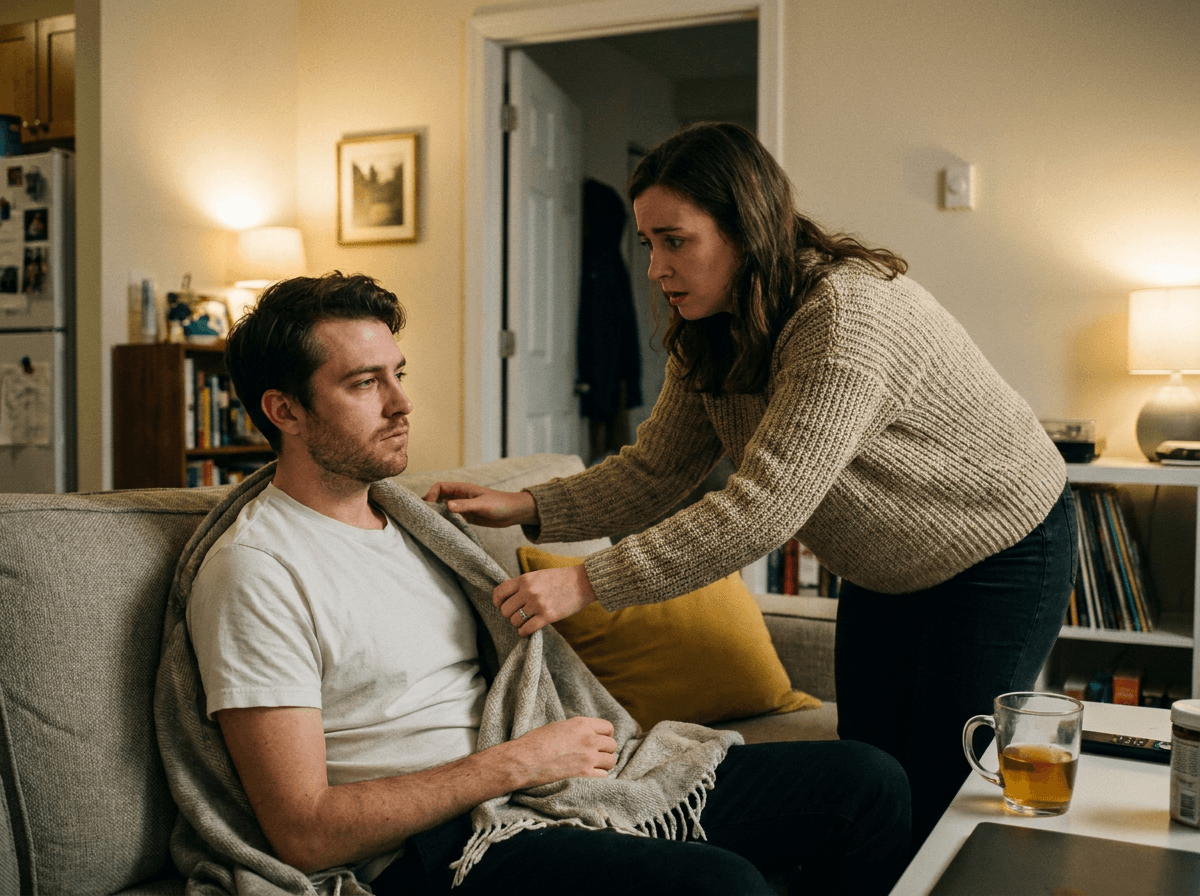
Some relationships fail from neglect. Others fail from something less obvious — too much tending. Over-tending is the pattern of attending to a relationship with a level of care and management that exceeds what the relationship actually requires. It looks like love. It feels like investment. But tending too closely, too frequently, and without adequate space for independence can slowly suffocate the thing it intends to sustain. Understanding what over-tending actually does — and why it is so difficult to recognize from the inside — is essential for anyone who has wondered why more effort seems to be producing less connection.
What Over-Tending Actually Looks Like
Over-tending does not announce itself as a problem. It arrives wearing the language of care, commitment, and dedication to the relationship.
The over-tending partner checks in frequently. They process the relationship extensively — reviewing interactions, analyzing meaning, raising concerns before they have fully formed. Every fluctuation in the other person's mood or availability registers as information to be addressed.
Each of these behaviors, taken alone, looks like attentiveness. Together, over time, they create a specific and recognizable relational atmosphere: the feeling of being watched, monitored, and managed. The partner on the receiving end of consistent over-tending often struggles to articulate exactly what is wrong. The person tending the relationship is clearly trying. They are clearly invested. Yet the relationship feels, paradoxically, less comfortable and less free than both people would like it to be.
Why It Develops
Over-tending typically develops from one of several sources — and rarely from a simple desire to control.
Anxiety is the most common driver. The person who tries too much is often, at their core, a person managing significant anxiety about the relationship's stability. Each check-in, each processing conversation, each monitoring behavior serves a function: it reduces, temporarily, the anxiety generated by uncertainty. If the other person responds warmly to a check-in, the anxiety quiets. If they respond with engagement, the monitoring feels justified. The tending behavior is not primarily about the other person. It is about the relief of not having to tolerate uncertainty.
Love expressed as service is another driver. Some people learned, early in life, that care is demonstrated through action and vigilance rather than through presence and ease. Their model of loving involves perpetually attending to the needs of the person they love. It is their love language. They do it without recognizing that tending without rest can tip into something the other person experiences as weight rather than warmth.
Fear of loss also produces over-tending. The person who has experienced significant relational loss — through abandonment, through relationships that ended without warning — often develops a compensatory pattern of close monitoring. If they can see what is happening, they reason, they can prevent what happened before. The tending is a protective strategy. It feels like care. Its effect on the relationship is closer to surveillance.
What It Does to the Relationship
The effects of over-tending develop gradually. They usually become visible only after the pattern has shaped the dynamic.
The first and most significant effect is the erosion of independence. A relationship that flourishes requires both people to maintain genuine individual lives — interests, friendships, and the particular quality of self each person brings to the partnership. Consistent over-tending narrows this space. The partner who is frequently checked on and frequently asked to process the relationship spends an increasing proportion of their time in relational mode rather than in their own. The independence that both the individual and the relationship require begins to shrink.
The second effect is a pressure the other person cannot name but clearly feels. Couples where one partner over-tends often describe a quality of low-level obligation — a sense that the other person's visible, constant investment implies a reciprocal demand. The targeted partner may feel guilty for wanting time to themselves. They may feel that enjoying their own independence is somehow a commentary on the relationship. This guilt produces resentment that has nothing to do with the tending partner's intentions and everything to do with the atmosphere their excessive effort creates.
The third effect is a progressive reduction in mystery and attraction. Attraction requires a degree of separateness. The other person becomes less compelling when every thought is shared, every fluctuation is addressed, and no space exists for the quiet accumulation of individual experience that makes each person interesting to the other. Tending without restraint eliminates the gaps that genuine curiosity requires. The relationship becomes transparent in ways that remove the particular quality of not quite knowing what the other person is thinking — which is, for many couples, part of what keeps interest alive.
Why the Over-Tender Cannot See the Problem
One of the more disorienting features of over-tending is that the person doing it often has no idea the pattern exists. They experience themselves as attentive, invested, and loving. They experience the relationship's difficulties as arising from the other person — their unavailability, their emotional distance, their failure to match the investment the tending partner is clearly making.
This blindness is understandable. The over-tending partner is doing what they believe caring looks like. The feedback they receive is often ambiguous — the other person may not name the problem directly, partly because naming it feels like rejecting the care itself. Instead, the partner who receives too much tending withdraws slightly, asks for space in general terms, or becomes gradually less available in ways that the over-tending partner reads as problems to tend more urgently.
This dynamic creates one of the more common and painful loops in relationship difficulty: tending produces withdrawal, withdrawal produces more tending, more tending produces more withdrawal. Both people end up in a cycle neither fully understands. Both attribute the problem to the other person rather than to the dynamic between them.
What Healthy Tending Looks Like
Tending is not itself a problem. All relationships require care, attention, and deliberate investment. The question is whether the tending serves the relationship's actual needs or the tender's anxiety.
Healthy tending is calibrated. It responds to what the relationship needs rather than to what the tending partner's anxiety is generating.
Healthy tending includes the capacity to not tend. To be comfortable in the relationship without checking, monitoring, or initiating. To trust that the relationship is there even when it is not being actively maintained. Tending that cannot rest is tending that has become something else — a management strategy for anxiety rather than an expression of genuine care.
Independence within a relationship is not a threat to its intimacy. It is a condition of it. The couple that can be genuinely separate within their togetherness — who maintain individual lives, individual interests, and individual space — tends to bring more to the relationship than the couple whose tending has collapsed the separateness that genuine attraction and genuine curiosity require.
How to Shift the Pattern
Shifting from over-tending to healthy tending is not primarily a behavioral change. It is an internal one.
The over-tending partner needs to develop the capacity to tolerate the anxiety that less tending produces. Not to ignore the anxiety, but to experience it without immediately acting on it. The check-in impulse can be noticed without being followed. The monitoring response can be recognized as a response to anxiety rather than a response to the relationship's actual state.
This development takes time and often benefits from therapeutic support — particularly for people whose over-tending is rooted in early relational experience or significant relational loss. The goal is not to stop caring. It is to develop a form of caring that creates space rather than filling it — one that trusts the relationship to exist without constant maintenance, and that allows both people the independence that genuine intimacy, paradoxically, requires.
Conclusion
Over-tending a relationship is not a failure of love. It is often an expression of profound love — expressed in the only language the tender currently knows. The problem is not the caring. It is the absence of rest in the caring.
Tending well means knowing when to step back. Knowing that the relationship continues to exist in the spaces between the tending. Knowing that independence, both for each individual and for the relationship itself, is not the opposite of intimacy but one of its most important conditions.
The relationship that thrives is the one that two people can trust enough to leave briefly, return to fully, and find still there — held by its own roots rather than by the constant labor of someone who cannot stop tending.