
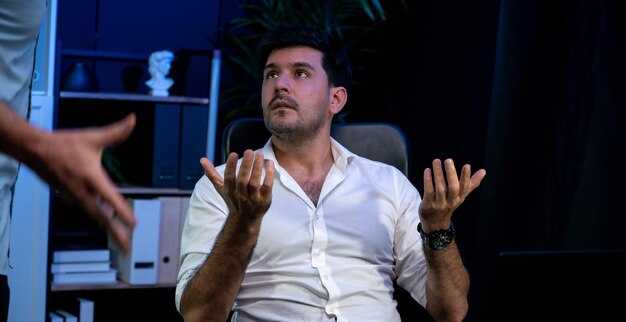
Alright — let’s get into this now. Do you want to know what the most devastating form of rejection is for that avoidant-dismissive person in your life? You probably think you know. You imagine it’s that ten-page drunk text you sent at three in the morning — the one laying out every mistake they made, every promise they broke, every moment they let you down. You picture the screaming in the car, the crying, the begging. You think it was slamming the door. You assume it was the moment you finally blocked them everywhere.
Do you really believe that’s what broke them? No. Far from it. All that chaos only feeds the narrative they’ve been living — it proves you’re the emotional one and they’re the calm, composed party. It validates their decision to pull away. It frees them from responsibility. Want to know the rejection that really shatters their system? The one that haunts them in the quiet hours months or even years later, when distractions fade? It’s your silence. Not the angry silence — not the “I’m punishing you until you apologize” kind. That’s just another manipulation, another power play, still part of the chase. I’m talking about the silence of peace, the silence of indifference: the silence that arrives when you finally stop trying.
The kind of silence that says, “I’m not insane. I’m not waiting. I’m not playing. I’m done.” That is the emotional nuclear bomb. Later on, the psychological mechanics of why that silence undermines them completely will be unpacked. Step by step, their thoughts when the chasing finally ends will be analyzed. Most importantly, you need to see that the reason you caused the one rejection they never expected wasn’t vindictiveness — it was self-respect. Let’s dive in. Before we inspect their operating system, we have to look at you, because where you are emotionally matters. You’ve likely spent months, maybe years, feeling like too much. Too emotional. Too needy. Too complicated. That’s what they told you — or at least that’s how they behaved.

They sighed when you wanted to talk. They pulled away when you needed reassurance. They made you feel like your basic human needs for communication, care, and consistency were an unbearable burden. And you bought into it. You began to believe you were the problem. Let’s talk about Sarah. Sarah is a client in her early forties — wildly accomplished, intelligent, radiant, running an entire department at her company. Yet in her relationship, she felt like a twelve-year-old begging for attention.
She was the one always sending “good morning” texts. She was the one who organized the dates. She was always the one checking in after two days of the silent treatment. Who was going to break first? She would send that text — “Hey, are we okay?” — and get a reply six hours later: “Yeah, just busy.” He made her feel crazy. He made her feel desperate. He made her feel needy. Now listen closely — and let this sink in: you are not needy for wanting that. You are not too much. You were trying to draw water from a completely dry well. You were asking for a normal, healthy amount of human connection from someone who simply couldn’t or wouldn’t provide it. This isn’t neediness; it’s human.
You were living on emotional crumbs for so long that you mistook them for a feast. Sarah told me one thing I’ll never forget: “One Tuesday he brought me coffee without me asking.” She clung to that small kindness for two weeks. She analyzed it. She told her friends. She treated it as proof of his interest. That is emotional hunger. When you’re starved, the tiniest things feel like major victories. So you turned into a love archaeologist — your job became scavenging through the ruins of their indifference, hunting for the smallest fragments of proof that they cared. A like on your Instagram, a text longer than three words, a one-off “I miss you” after six months — you hoarded these scraps like gold because you were starving. When you’re hungry, you’ll eat anything.

Let’s be honest about what that does to a person. It drains you. It erodes your self-worth. It makes you question your own reality. You start censoring yourself. You type a text — “Hey, thinking of you.” Then you stare at it. Then you delete it. Why? Because you’re scared of being too much again. You’re afraid of bothering them. You’re afraid that asking will prolong the silence. So you make yourself smaller. You quiet your needs in the hope that offering less will finally earn you more. And it never works. Did you do that? Okay — hear this again, and take a deep breath as you accept it: the problem wasn’t that you needed affection. The problem was their avoidance. The problem wasn’t that you asked for too much; it was that you tolerated too little for far too long.
That overwhelming exhaustion — that terrible tiredness from trying — is what ultimately gave you the strength to do what needed to be done. That’s the reason you stopped. And that is exactly where their psyche begins to unravel. So what is really happening in their minds when you stop trying? Let’s examine it. To truly heal and reclaim power, you can’t move forward without understanding. You cannot heal what you don’t comprehend. That means we have to step inside their head for a moment. We have to understand their operating system. Let’s enter the fortress they’ve built around themselves.
This is the single most important rule you must accept: if you take away everything else, remember this. For the avoidant-dismissive person, their core, unshakeable belief is this: intimacy equals danger. Vulnerability means losing control, losing oneself. Let’s be very clear about one thing: they are not afraid of you. They aren’t frightened of your success, your looks, or your kindness. What terrifies them is what you represent — need. They fear what love does to them. To them, closeness feels unsafe. It feels suffocating. It feels like a commitment that will eventually demand more than they can give and expose the parts of themselves they’d rather keep hidden. It feels like losing themselves.
We don’t have time to go back two decades into childhood here, but here’s a thirty-second version: somewhere along the way they learned a brutal lesson. Relying on anyone else is unsafe. Dependence brings disappointment and pain. Emotions are messy and dangerous. So they concluded the only person they can truly depend on is themselves. They built a fortress. The first rule of that fortress: I am self-sufficient. I don’t need anyone. I’m fine alone. They live inside that castle, and their emotional strategy depends on controlling one thing above all: the environment. They must control distance. They control the pace. They control how much affection they give. They control how much time you spend together. They keep you on an emotional diet — giving just enough to keep you alive, but never enough to make you feel secure.
Here’s the key insight — the “aha” moment: for that whole system to function, they need you. They need you knocking at the outside of their fortress. You’re the one who keeps knocking. You’re the one chasing them. Your anxiety — the “are we okay?” texts — serve two critical functions for the avoidant person. First, it proves they are desired. It feeds their ego. It validates them. It makes them feel wanted and important, all without requiring the messy labor of a real, committed relationship. They get all the confirmations with none of the risk. And second — and even more importantly — it proves they are in control. As long as you are the one who wants more, as long as you’re the one requesting conversation, as long as you’re the pursuer, they hold the power. They can grant access or withhold it. You are predictable. Your pursuit acts as a strange kind of safety net for them because as long as you’re chasing, they know they’ll never be abandoned. They maintain the privilege of leaving first. They can have you nearby, but behind thick glass. They can look at you. You look wonderful. They’re pleased you’re there, but they never actually have to touch you or let you in. Your chasing is that painful pane of glass. It keeps you at a perfectly safe distance.
So that whole push-and-pull that drove you insane wasn’t a real relationship at all. It was a script. They wrote it and performed it. They started right where the role required you to be: the one who wants them — until the day you stop knocking.
We’ve explored their fortress and their script. We understand the why. Now comes the hard part, and this is where you need to breathe because this involves you. We must be brutally honest. Why did you keep knocking for so long? Why did you agree to play that part? Why did you stay for months or even years while you were starving emotionally? Here’s the reason: the distance between you triggered your deepest, oldest fear — the fear of abandonment. This wasn’t just a relationship. It wasn’t merely love. It was a trauma dance. That’s what it is. And here’s how the dance goes. Nod your head if this rings true: when you approach them, they feel you closing in.
Their fear of suffocation and loss of control is triggered. What do they do? They pull away. They create distance. They go cold. They become “busy.” But that distance — that silence — instantly sets off your abandonment alarm. Your nervous system goes red-alert. So what do you do? You don’t stay still. You don’t step back. You move forward. You chase harder. You send the text. You call. You ask, “Are we okay?” You try to fill the gap as quickly as possible because that gap feels like death. But the more you chase, the more claustrophobic they feel. The more they run, the more you panic and chase — do you see it? It’s a loop.
A vicious, exhausting loop. A feedback loop from hell. And that’s the biggest lie you told yourself during that dance. You misunderstood all of it — the anxiety, the panic, the gnawing ache in your stomach. You mistook intensity for intimacy. You thought, “Wow, this must be real love because I feel it so strongly.” You told yourself, “God, I’ve never felt this for anyone. This must be a soulmate connection because it hurts so much.” Stop. Right there. That wasn’t love. It was activation. It was your nervous system, your inner child, screaming, “Danger, danger. I’m about to be abandoned again. Do something. Fix it. Don’t let them leave.” You weren’t addicted to them. You were addicted to the chase. You were hooked on intermittent rewards, the crumbs. You were chasing the chemical spike from the one time they finally came back — just enough to survive the next emotional drought. Why did you keep playing? Because, at the deepest unconscious level, you were trying to repair the past. You were trying to win a game that can’t be won. You believed that if you could get that distant, unavailable, withdrawn person to finally choose you, to finally open up, to finally see your worth, it would heal all the other times you felt invisible. It would prove once and for all that you are deserving of love. You weren’t only after their affection. You were trying to validate your own worth. You were performing for a role that was never meant to pick you. And you kept auditioning. You kept knocking. You stayed hungry. You exhausted yourself, convinced that one more try, one more perfect text, one more demonstration of understanding would be the thing that finally opened the door. Until one day it didn’t. Until the day came when the pain of staying the same became greater than the fear of leaving. That’s the day everything shifted. That’s the day you stopped. And then, one day, it happened. It wasn’t
some dramatic cinematic moment. There was no thunderstorm. You didn’t fling a glass across the wall. There was no final tear-filled showdown where you screamed, “It’s over.” No — it was much quieter. It was the morning you woke and the first thought wasn’t about them. Or maybe it was: your thumb hovered over their name on your phone, and for the first time, you felt nothing. Not anger. Not hatred. Something truer: finality. Not a feeling, just a click — an internal, gentle release where the part of you that was clinging let go. It was the sound of your exhaustion finally outweighing your hope. Take Sarah for example. She described that exact moment to me. “Mel,” she said, “I was in my car composing the perfect text — no pressure, just checking it, the one I spent twenty minutes writing so it would sound casual.” She read the words on the screen and realized she was done. She was so tired. She deleted it. Then she didn’t send another message. That was it. That was the moment. She stopped. She didn’t stage a spectacle. She didn’t write a long declaration. And here’s the crucial point: she didn’t even block him — blocking is still an emotional reaction; it’s a shout. Blocking says, ‘You hurt me so much I had to build a wall.’ No, she did something far more powerful. She simply let the thread fall to the bottom of her inbox. She didn’t check his social feeds. Not because she had superhuman willpower, but because she suddenly realized, ‘It doesn’t matter what they do. What matters is what I do.’ She redirected all that force — all that fierce, beautiful energy she had been smashing against their fortress — inward. She enrolled in a pottery class. She called a friend. She went for that hike. She bought the book. She started the podcast. She kept living. And she didn’t do it as a tactic. This is the crucial distinction. She didn’t do it to snag his attention or to mount some silent no-contact strategy. She did it because she was finally ready to give herself the care she deserved. She took back the one thing they never thought you would take: your attention. And in that quiet, in that new space where the knocking used to be, their whole system starts to malfunction. Now,
this is the part you’ve been waiting for. This is the most important bit: what exactly happens inside their fortress when the knocking stops? What’s the slow manipulation of their mind? Let’s return to Mark, our classic avoidant, and to Sarah, who just deleted that text and went silent. Phase one: relief. The first week or two, Mark feels relieved. He thinks the pressure is off. Finally, she “gets it.” He relaxes. He stretches out. He focuses on work, hits the gym, spends time with friends. He feels free. He starts to rationalize his own behavior. He tells himself, “See, I was right. She was too needy, too much.” Now that she’s backed off, things are fine. He feels powerful, in control. He thinks he’s won. He believes the distance worked. Phase two: confusion. Around week three or four, the silence grows louder. The sharpness of the missing messages blurs into a low hum of absence. Wait — why didn’t she text? She always texts, even when she’s upset; even then she’d send a message about being angry. That pattern is gone. He checks his phone: nothing. He posts a story on Instagram because he knows she used to react. He scans the viewers list; she’s not there. The certainty begins to cloud. He can’t predict you anymore. For an avoidant who relies on control and predictability, this is disturbing. He’s not panicking yet, but he feels the ground beneath his feet
go a little soft. Phase three: panic. This is after month two — the moment confusion curdles into a chilling, creeping fear. The glass doesn’t just fog; it shatters. He realizes, “Oh my God, she’s not playing a game. She’s not waiting. She’s gone.” And that is the cruelest rejection he can face. You didn’t scream. You didn’t beg. You didn’t give him anything to react to. You didn’t hand him the usual lines to dismiss you as crazy or overemotional. You didn’t give him the chance to be the one to push you away. By leaving calmly, you reversed the script. He was supposed to be the one in charge of the distance. He was supposed to decide how close or far. He was the leaver — but now you left. You didn’t even slam the door. You
simply disappeared. You stole his power. You took control away from him. You forced him to confront the one thing he had spent his life fleeing from: being left behind. He wasn’t merely rejected; he became irrelevant. And the realization — that he wasn’t the reason you left because you were too much, but because he arrived too late — that is the panic. That is the void. That is the moment he understands he didn’t lose you because you were flawed; he lost you because he delayed. And friends, that is the most devastating rejection. It isn’t your anger. It isn’t your tears. It isn’t a ten-page text. It’s your healing indifference. It’s the moment they see the performance has ended. The script is torn up; you are no longer an audience for their drama. That is the real power shift. And I want you to get this: your power was never in changing them. It was never about being good enough, perfect enough, calm enough to make them finally open the door. Your power was always in loving yourself enough to walk away. You stopped trying to make them recognize your worth, and
instead you became that worth. You embodied it. You turned and took all that light, all that energy, all that warm goodness with you — their fortress is now a cold, empty box because you were the one bringing the warmth, and they treated it as a given. Now they are haunted, but not by what you did; by what they lost. They are haunted by the “what ifs.” What if I had opened the door? What if I had tried? What if I had been brave enough? Here’s the beautiful consequence: you are no longer haunted. You’re not dissecting their texts. You’re not waiting by the phone. You are healing. You are living. Now listen closely — because this is what comes next. They will come back. Oh, absolutely. They will. When that panic reaches its peak, when that emptiness feels unbearably cold, your phone will buzz, just like Mark’s. Maybe six weeks, maybe eight weeks later, when he can’t stand the silence anymore. Mark’s message arrives: maybe a check-in, maybe a “this song came on and I thought of you,” or simply a casual text. And you — the old you — will feel that rush, right? That spike of adrenaline. He’s back. He cares. But you, the new you, the one who’s been doing the work and refilling your own cup —
you will feel none of the old knots in your stomach. Sarah told me she looked at Mark’s text and, for the first time in their whole relationship, felt no anxiety. No pangs. Not even excitement. She felt peace. She read the message for exactly what it was: not love, not a deep change, not a heartfelt apology. It was a check — a test. It was his panic — seeing if you’re still knocking. It was an attempt to see if he still had control. He was trying to pull you back into the same old dynamic, on his safe terms. And in that moment you finally see the deep difference between being desired and being cherished. What this act of rejection did for you wasn’t retaliation. Hear this: it wasn’t about getting even. It was evolutionary. It was an act of self-recognition. You didn’t do it to punish them. You did it to save yourself. You stopped denying your own needs to be accepted by someone who can’t even accept themselves. You didn’t just reject an avoidant person. You rejected the pattern. You rejected the dance. You rejected the old version of yourself who was willing to stand out in the cold begging for crumbs. And that’s the real work. The work isn’t about how they come back. The work isn’t about winning a breakup. The work is about how you never
lose yourself again. Keep doing this work.