The slow fade is one of the more common and least honest ways that relationships end. It is not a single event. It is a process — a gradual withdrawal of energy, attention, and investment from the relationship over a period of weeks or months, until the connection has diminished so significantly that the ending is almost fait accompli before either person has said anything directly. The slow fade happens when one person begins to disengage without the confrontation that a direct conversation would require. Understanding what the slow fade looks like, why it happens, and how to respond to it offers a significant relational advantage for anyone who has sensed the shift but could not quite name it.
What the Slow Fade Actually Looks Like
The slow fade has a recognizable signature. Not every sign in isolation is definitive — life gets busy, people have difficult periods, communication naturally fluctuates. It is the pattern across time that signals something more significant.
Response times to messages lengthen. Not occasionally but consistently. The person who used to reply within minutes now takes hours. The hours sometimes become days. The quality of the response changes too — shorter, more perfunctory, less engaged.
Energy and enthusiasm in the relationship diminish. Plans feel harder to make. When they do form, they often feel rescheduled or arrive with less of the warmth and investment that plans earlier in the relationship carried. The person seems distracted or less present, even when physically there.
Future plans stop emerging. Early relationship energy tends to produce spontaneous forward-looking references — "We should go to that place," "I'd love to do this together sometime." During the slow fade, these references slow or stop. The other person seems to be planning their life without including you in it, even implicitly.
Physical and emotional warmth diminish together. The specific quality of attention that the person brought to the relationship earlier is less present. Conversation moves toward the surface. Genuine sharing diminishes. The connection that had built begins to feel thinner.
Why It Happens
Understanding why the slow fade happens — rather than simply what it looks like — changes how it is interpreted and how it can be addressed.
The slow fade is almost always avoidance of something uncomfortable. The person doing the fading has typically decided, at some level, that they want to move out of the relationship. But the direct conversation that ending the relationship requires feels too confrontational, too risk-laden, or too unkind. The slow fade offers a way of achieving the same outcome without the direct difficult conversation.
This avoidance tends to come from one of several sources. Fear of conflict is the most common — the person doing the fading does not want to cause pain, does not want to be the bad person in the story, and does not feel equipped to handle the other person's emotional response to a direct ending. Ambivalence is another driver — the person is genuinely uncertain whether they want to leave, and the slow fade allows them to test the withdrawal without fully committing to it. Sometimes the slow fade reflects genuine external circumstances — a period of stress, depression, or overwhelm that produces withdrawal from everything, including the relationship.
What makes the slow fade particularly difficult for the person on the receiving end is that it denies them the information they need to respond appropriately. The direct ending — however painful — provides clear information. The slow fade provides ambiguity that the receiving person tends to fill with self-questioning. Am I doing something wrong? Is something wrong with them? Is the relationship salvageable? The absence of clear communication leaves these questions unanswered.
How to Recognize If You Are Experiencing a Slow Fade
The slow fade can be difficult to recognize from the inside precisely because it happens gradually. Each individual instance of reduced communication or withdrawn energy has a plausible explanation. The pattern across time is what matters.
The most reliable signal is the sustained directionality of the change. If the relationship energy has been consistently moving in one direction — less contact, less warmth, less investment — over several weeks, that directionality is more informative than any individual fluctuation. The relationship is not in a temporary dip. It is in a slow pull toward less.
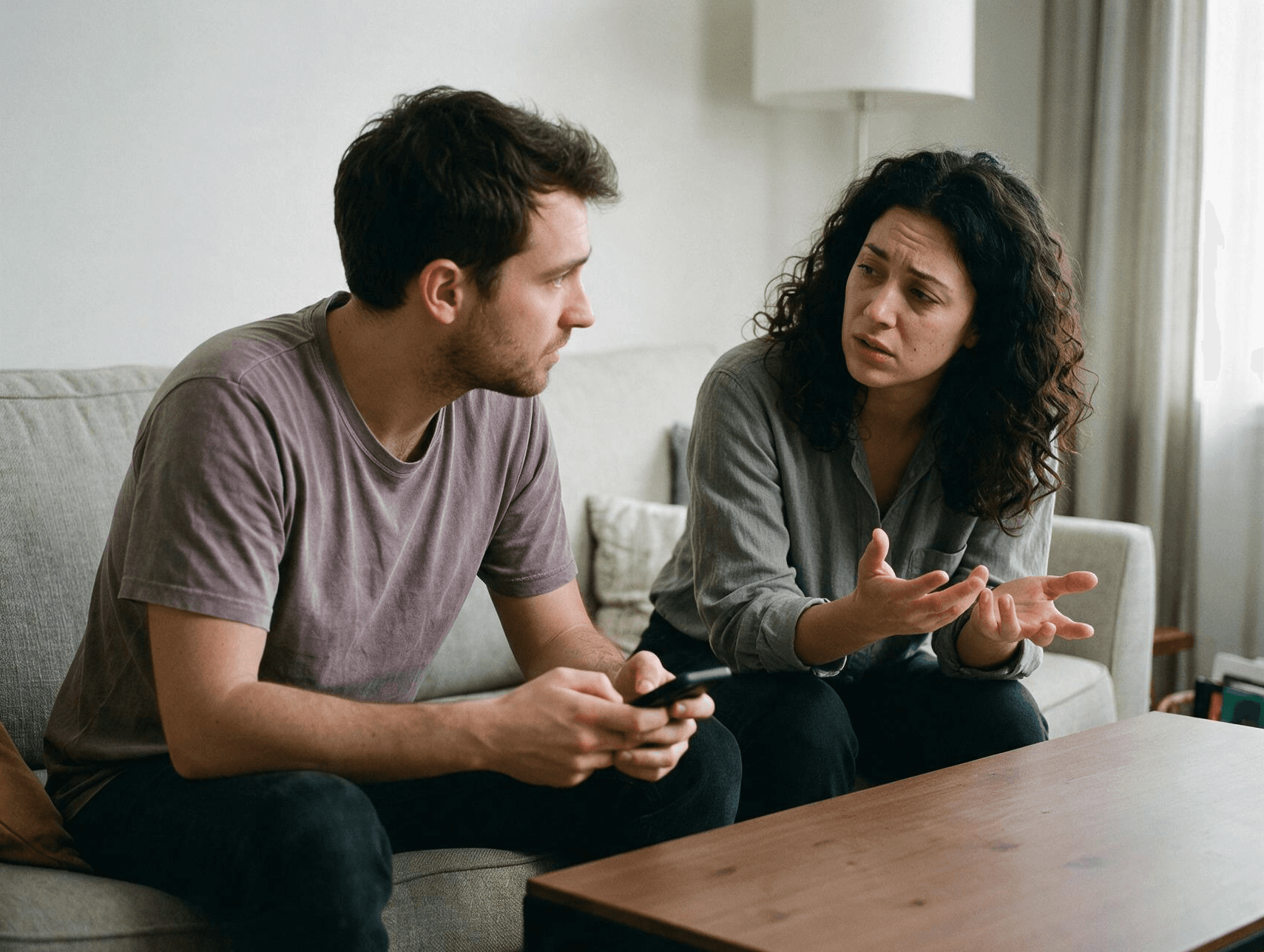
Another signal is the asymmetry in effort. The slow fade tends to produce a situation where one person is putting significantly more energy into the relationship than the other. One person initiates, follows up, makes plans. The other responds without initiating, agrees without enthusiasm, participates without investment. This asymmetry is not sustainable. It also tends to accelerate the fade — as one person invests more, the other often pulls further back.
A third signal is the change in the quality of communication rather than simply its quantity. Less frequent contact that retains genuine warmth and engagement is different from less frequent contact that also feels thinner, less personal, and less present. It is the quality shift — toward the surface, toward brevity, toward what feels like maintenance without genuine connection — that signals the slow fade most clearly.
What You Can Do
Recognizing the slow fade creates a choice. Some people prefer to pull back themselves and allow the fade to complete without confrontation. This is a valid choice — it avoids a painful conversation and allows the relationship to end by mutual withdrawal rather than by formal conclusion.
The alternative is to name what is happening. Not accusatorially, and not in a way that demands a particular outcome — but directly and honestly. Something like: "I've noticed things have felt different between us recently, and I'd like to understand what's happening." This kind of direct communication serves the person experiencing the slow fade in several ways.
First, it provides information. The response — or non-response — to this kind of direct check-in is itself highly informative. A genuine explanation and engagement suggests a temporary situation worth navigating together. Deflection, defensiveness, or the perpetuation of ambiguity suggests that the fade is intentional and that a clearer ending would serve both people better than continued uncertainty.
Second, it preserves the person's self-respect. Waiting indefinitely for someone to pull back enough that the relationship dissolves by attrition is painful and passive. Naming the dynamic — even at the risk of a difficult conversation — is an act of self-respect that the passive wait is not.
Third, it creates the possibility of resolution. Not necessarily the resolution of the relationship continuing — but the resolution of clarity about what is happening and what comes next. That clarity, even when it is not the news the person hoped for, tends to produce better outcomes than the prolonged ambiguity that the slow fade sustains.
Conclusion
The slow fade is not a kind way to end a relationship. It presents itself as kind — as sparing the other person the pain of a direct rejection — but it actually produces a different and often more damaging form of uncertainty and self-questioning.
Naming it, for the person experiencing it, is the first step toward responding to it on their own terms rather than simply being carried along by someone else's gradual withdrawal. The relationship may or may not be salvageable. What is not sustainable is the slow fade itself — the specific uncertainty of a connection that is ending without ever saying it is ending. That deserves honesty. And the person experiencing it deserves clarity.