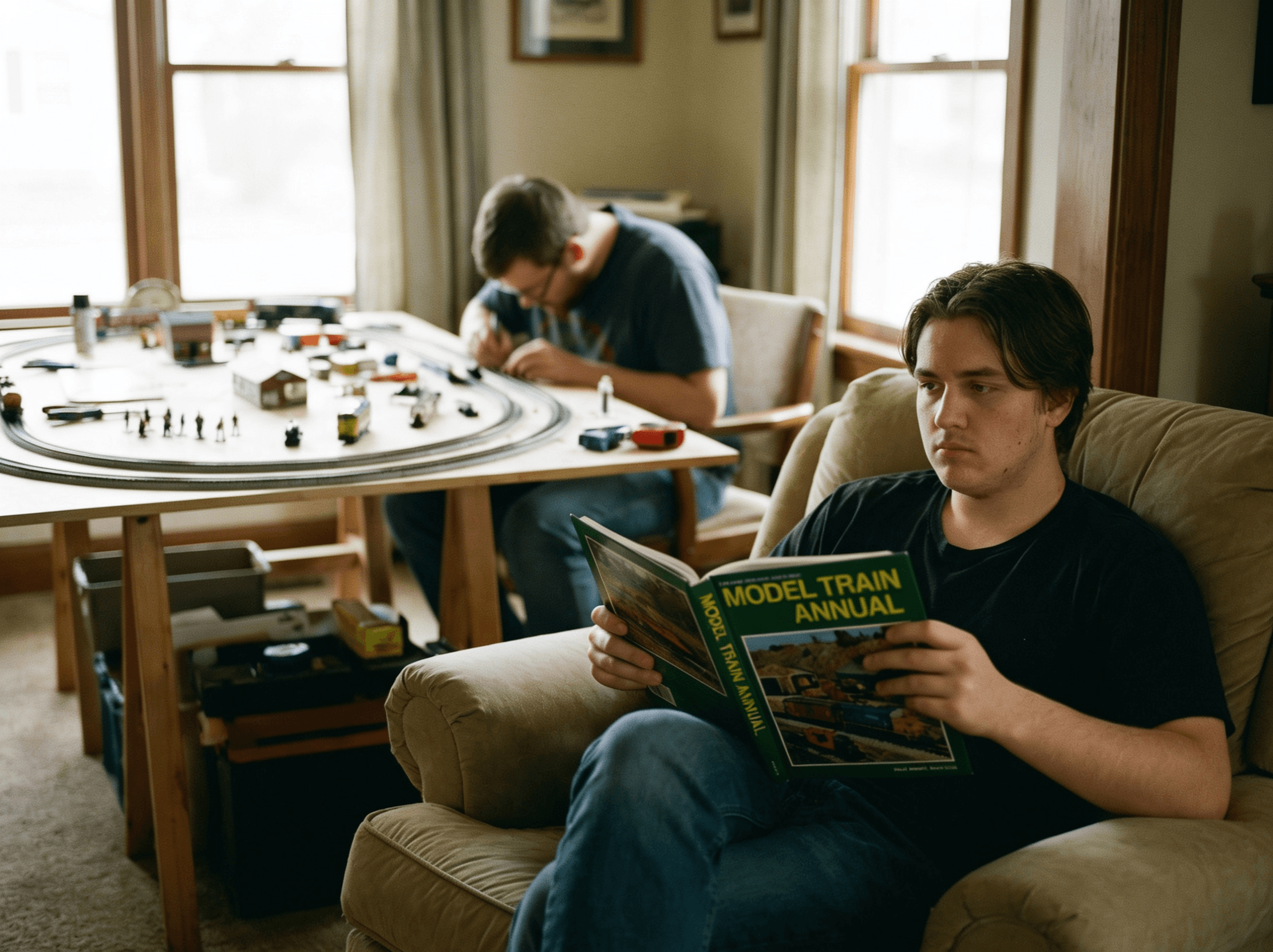
Every couple eventually encounters the same situation: one person is passionate about something the other finds entirely uninteresting. It might be photography, hiking, a particular genre of film, or something more obscure that defies easy categorization. One partner's face lights up. The other partner's... does not. How couples navigate the hobby gap matters considerably more than whether the gap exists in the first place. The way each person handles a partner's interests reveals something important about the quality and direction of the relationship. Especially the interests they do not share.
Why the Boring Hobby Question Is Actually Important
The question of how to handle a partner's hobby you find boring is not a trivial one. It touches on some of the more significant dynamics in a relationship. The balance between togetherness and autonomy. The degree of genuine care each person shows for the other's inner life. And the negotiation of shared time when preferences diverge.
Research on long-term relationship satisfaction consistently identifies mutual support for individual interests as a significant contributor to relational health. Not shared hobbies — support for individual ones. Couples who feel that their personal interests receive genuine acknowledgment from their partner report significantly higher satisfaction. Than those who feel their interests are merely tolerated.
This is not about feigning enthusiasm you do not have. It is about the difference between active disinterest and engaged acknowledgment. Active disinterest sends subtle signals that what matters to your partner does not matter to you. Engaged acknowledgment means showing up for the other person's enthusiasm even when you do not share it.
The way you handle a boring hobby communicates something your partner hears clearly. Whether or not you intend it that way.
The Difference Between Participating and Attending
There is an important distinction that couples often miss. The difference between genuinely participating in a partner's hobby and simply going along with it.
Most people, when asked to engage with something they find boring, do the minimum. They physically attend. They sit through the activity. They do not complain — at least not audibly. And they consider this sufficient.
From the partner's perspective, it rarely is. The partner who loves film is not looking for someone to sit next to them in cinema — just someone to watch. They are looking for someone who is genuinely present with the experience — who will watch the movie and have something to say about it afterward. The partner who loves hiking is not looking for a companion who endures the trail. They are looking for someone who brings their actual self to the experience. Someone who can find something to appreciate about being outdoors.
The distinction matters because the boring hobby is not really about the hobby. It is about whether the partner feels accompanied. Whether their enthusiasms are met with genuine interest rather than polite endurance. Polite endurance is detectable. It produces a specific kind of loneliness in the person whose hobby is being endured.
How to Be Honest Without Being Dismissive
Pretending to love something you find boring is not sustainable and not recommended. Honest navigation of a partner's hobby involves acknowledging your actual level of interest while communicating genuine care for the person who holds that interest.
"I don't love photography the way you do, but I want to understand what draws you to it" is a very different statement. Different from "I'll come if you want, but it's really not my thing." The first positions the partner's enthusiasm as worth exploring. The second positions it as something to be accommodated.
Genuine curiosity about what a partner finds compelling in their hobby is one of the more underrated acts of love available in a relationship. Even when you cannot access the same enthusiasm yourself. You do not need to love traveling to be curious about what your partner experiences when they travel. You do not need to share the interest to care about what it means to the person who holds it. Curiosity is enough.
This kind of curiosity is not manufactured. It comes from caring about the person more than you care about your own assessment of the activity.
Finding the Thing You Can Enjoy About It
Most activities, however boring on the surface, contain something that can be genuinely appreciated by someone who does not love the activity itself.
Hiking might not interest you as exercise. But the conversation on a trail is often different from conversation anywhere else. Unhurried, less mediated, produced by shared movement and shared landscape. Film might not be your natural interest. But a partner who loves cinema offers a perspective on movies that makes the watching of them richer than it would be alone.
The way to find enjoyment in a partner's hobby is not to perform enthusiasm for the hobby itself but to look for what the hobby opens up. Traveling together creates conditions that do not exist at home. When you learn together — even something you care little about — it produces a shared experience with its own value. These are the things worth finding, because they are genuinely there.
Setting Honest Limits Without Shutting the Door
Genuine engagement with a partner's hobby does not mean unlimited availability for activities you find draining. Couples need to be able to set honest limits around this. To say "I'll come to this event but I'll need some recovery time afterward" without it feeling like a referendum on the partner's interests.
The key is separating the limit from the judgment. "I find this genuinely hard to enjoy but I want to support you in it" is a way of maintaining honesty while keeping the door open. Honest and caring in equal measure. It preserves the partner's sense that their hobby is not being dismissed. That the person they love is trying, even when trying has a natural ceiling.
This separation also makes it possible for couples to develop genuinely shared activities — things neither person brought to the relationship but that emerged from the negotiation of difference. These shared discoveries hold a particular significance. Both people came to them together rather than one person importing them.
Conclusion
The boring hobby, in the end, is not really about the hobby. It is about the relational negotiation it represents — the daily practice of showing up for a person whose inner life is genuinely different from yours.
Couples who navigate this well are not those who happen to share all their interests. They are those who have developed genuine curiosity, honest communication, and fundamental care for each other. That makes the navigation of difference feel like something shared rather than something endured. That is the fun part. And it is available regardless of how you feel about hiking.