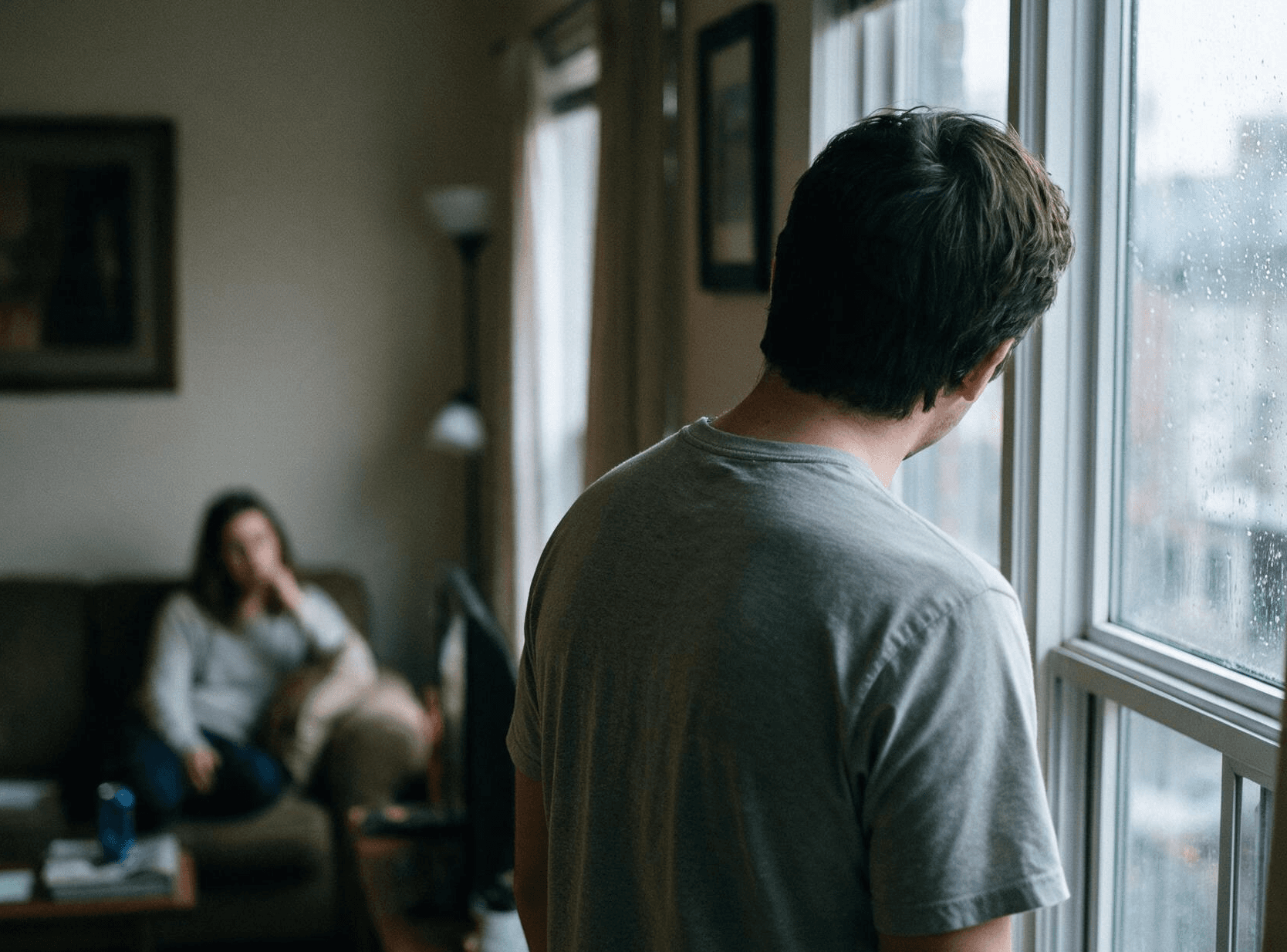
People who consistently choose emotionally unavailable partners tend to describe the pattern with genuine bewilderment. They are not looking for emotional unavailability. They are looking for love. And yet the partners they find themselves drawn to, again and again, turn out to be the ones who cannot fully show up for real intimacy. Understanding why this happens requires looking past the surface of individual choices. And toward the underlying emotional logic that makes unavailability feel, on some level, like safety. Choosing unavailable partners is rarely a conscious strategy. It is an unconscious way of having relationships while avoiding the vulnerability that genuine connection requires.
What Emotional Unavailability Actually Looks Like
Emotional unavailability takes many forms, and not all of them are immediately obvious.
The most visible kind is the partner who is explicitly closed off. They deflect emotional conversations, resist vulnerability, and communicate through behavior rather than words that depth is not available here. Recognizing this kind of emotional unavailability tends to be straightforward, at least in retrospect.
But emotional unavailability also appears in subtler relationship dynamics. The partner who is available in some ways but not others. The person who is warm and engaging in the early stages of dating but becomes less accessible as real intimacy approaches. The partner who is technically present but emotionally elsewhere. The person who is genuinely invested in certain parts of the relationship while being consistently unavailable for the parts that require real vulnerability.
What these forms share is a structural limit on how close the relationship can get. The emotionally unavailable person may care. They may even love. But there is a ceiling on depth that the relationship cannot move past. And for someone unconsciously seeking safety from genuine intimacy, this ceiling is not a flaw. It is a feature.
The Unconscious Logic Behind the Pattern
Choosing an emotionally unavailable partner does not feel like self-protection in the moment. It feels like attraction.
The person who grew up in an environment where emotional closeness was unsafe, unpredictable, or reliably followed by pain tends to develop an attachment style that equates distance with safety. And closeness with threat. For this person, the emotionally unavailable partner activates something familiar. The push-pull dynamic, the hope that things will open up, the sense of working toward something that is just out of reach all of this registers as meaningful, as charged, as the way love is supposed to feel.
A genuinely available partner, by contrast, may feel flat. Too easy. Not quite real. The absence of the familiar tension can register as the absence of real connection. When in fact it is the absence of the particular emotional danger the nervous system has come to associate with intimacy.
This is the core of the pattern. Emotional unavailability in a partner creates conditions in which genuine intimacy is structurally impossible. And for someone whose mental health and attachment history have made genuine intimacy feel threatening, this impossibility is a relief. At some level. The relationship provides the experience of wanting connection without the risk of actually having it.
What Choosing Unavailability Protects Against
The way this pattern functions as protection becomes clearer when you look at what emotional unavailability in a partner actually prevents.
It prevents full vulnerability. You cannot truly open up to an emotionally unavailable person, because the openness will not be met. This feels painful on the surface. But it also means that the deepest, most tender parts of yourself never need to be offered. And for someone with significant insecurity around being fully known and still accepted, this is a form of safety.
It prevents the specific rejection that intimacy makes possible. Being rejected by an emotionally unavailable partner, or failing to get close to one, does not carry the same meaning as being seen clearly and rejected anyway. The emotional unavailability provides a reason for the distance that locates the problem outside the self. It is not that I am unlovable. It is that they are unavailable.
It prevents the discomfort of being genuinely loved. This is perhaps the most counterintuitive protection. For people with low self-esteem, whose relationship with their own worth is genuinely shaky, being loved by a stable and available partner can feel threatening. The love feels unearned, or temporary, or based on a version of them that the partner has not yet fully seen. An emotionally unavailable person cannot love them in the way that would produce this particular discomfort.
How Denial Sustains the Pattern
One of the most significant features of this pattern is how successfully it conceals itself from the person living inside it.
Denial plays a central role. The person choosing unavailable partners rarely understands themselves as avoiding intimacy. They understand themselves as unlucky in love, as repeatedly meeting the wrong people, as someone whose relationships simply have not worked out yet. The pattern tends to be visible from the outside long before it is visible from the inside.
This is partly because the desire for connection is entirely genuine. The person is not pretending to want love. They want it. But wanting it and being able to tolerate it in a form that actually requires vulnerability are different things. The genuine desire for connection coexists with an equally genuine fear of the depth that real connection involves.
The pattern also sustains itself through the specific emotional experience it produces. The pursuit of an emotionally unavailable person generates intense emotional states hope, longing, frustration, the occasional breakthrough. These states feel like the experience of love, and in some ways they are. But they are also a way of being perpetually in motion toward something. Without ever arriving at the vulnerability that would make connection real.
Recognizing and Shifting the Pattern
Recognizing this pattern requires a kind of honest self-examination that most people resist because it challenges the story of bad luck.
The question worth asking is not why do I keep meeting emotionally unavailable partners, but what is it about emotional unavailability that keeps drawing me in? This reframe locates the pattern inside rather than outside, which is uncomfortable but necessary. It is the beginning of understanding the relationship dynamics that have been governing the choices all along.
Therapeutic support tends to be genuinely useful here. A therapist can help identify the attachment history that established the original equation between unavailability and safety. And can help develop the capacity to tolerate intimacy in a form that actually requires vulnerability. This is slow work. The nervous system does not update quickly. But the update is possible.
What shifts first is usually recognition. The person begins to notice the familiar pull toward an emotionally unavailable person and to identify it as a pattern rather than simply as attraction. Over time, that recognition creates a gap between the pull and the choice the beginning of choosing differently.
Conclusion
Choosing emotionally unavailable partners feels, from the inside, like a series of unfortunate coincidences. From the outside, and in time from the inside too, it looks like a consistent response to the perceived danger of real intimacy. The relationship that actually offers depth, vulnerability and genuine emotional availability does not feel safer. It feels riskier. Learning to tolerate that risk, and to understand it as the cost of genuine connection rather than a threat to be avoided, is the work that changes the pattern.