
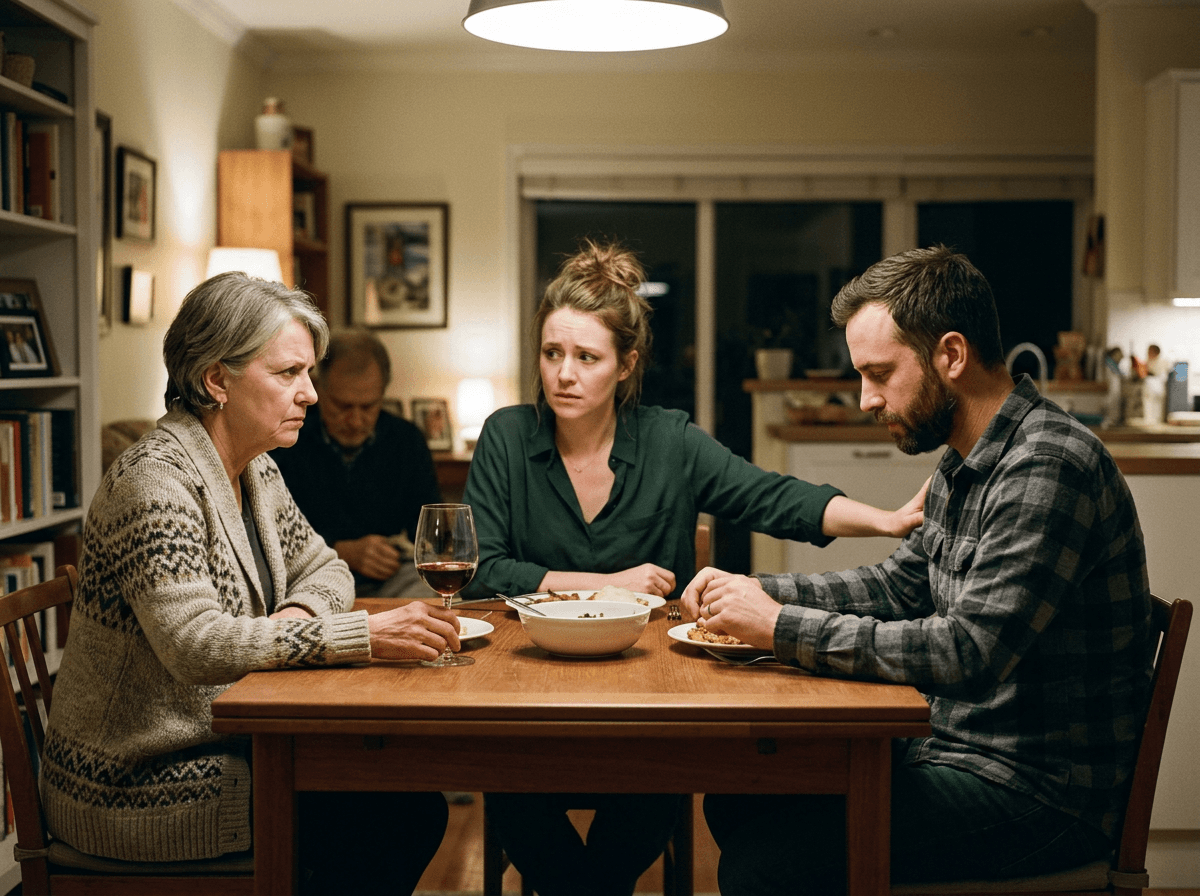
Most couples enter marriage knowing that in-laws come with the territory. What fewer people anticipate is how profoundly in-law dynamics can shape the quality of a marriage over time, often without either spouse identifying the source of the tension. The problems rarely arrive dramatically. They accumulate quietly, through repeated small moments of displaced loyalty, unspoken resentment, and the gradual erosion of the boundary that a married couple needs to build and maintain around their partnership. Understanding which dynamics create the most damage is the first step toward addressing them before they reach a point that feels beyond repair.
The Enmeshed Parent Problem
One of the most damaging in-law dynamics involves parents who have not emotionally separated from their adult child. That separation — the natural developmental transition that allows a son or daughter to build a primary loyalty with their spouse: requires active work from both the parents and the adult child. When it does not happen, the marriage pays the price.
The signs tend to be consistent. A husband who calls his mother before discussing a significant decision with his wife. A wife whose father still expects to be consulted on financial matters. Parents who treat their adult child's home as an extension of their own household, dropping in without warning, offering unsolicited opinions on how the couple manages their life, or creating expectations around holidays and traditions that leave no room for the couple to build their own.
The in law problems this creates are not always obvious to the partner caught in the middle. To them, their behaviour feels like normal family loyalty. To their spouse, it feels like a signal that the marriage is not the primary relationship. That perception gap generates hurt and resentment that tends to compound over time.
Read also: The Perception Gap: Why You and Your Partner Remember the Same Relationship Differently
Healing this dynamic requires the adult child to take an active role. A partner who leaves the work of managing their parents to their spouse creates a situation that builds hopelessness in the relationship. It is not the spouse's job to manage someone else's family of origin. The husband or wife whose parents create tension must be the one to set and maintain the boundaries required.
The Critical In-Law
Some in-laws express their feelings about their child's spouse directly and persistently. They are critical of the partner's background, their choices, their parenting, their career, or simply the person they are. That criticism may be delivered openly or through implication — the slightly dismissive comment at dinner, the comparison to an ex, the consistent failure to acknowledge anything the spouse does well.
A spouse on the receiving end of consistent criticism from their partner's parents carries that experience into the marriage. They become wary of family gatherings, dread the holidays, and feel like an outsider in their own family structure. Over time, that feeling generates either withdrawal or conflict, and either response creates tension in the marriage itself.
Read also: Common Red Flags: How to Spot Relationship Warning Signs Early
The challenge for the partner whose parents behave this way is significant. Defending a spouse against a mother or father requires real courage. It means disrupting a family dynamic that likely grew over many years. Many people find ways to avoid that confrontation — minimising the criticism, asking their spouse to be more understanding, suggesting that the in-laws "don't mean it that way." Those responses protect the parents at the spouse's expense. Repeated often enough, they constitute a choice about whose feelings matter more.
Competing Traditions and Holiday Tension
Holiday traditions create some of the most consistent and underestimated in-law conflict in marriages. Both families grew up doing things a particular way. Both sets of parents expect those traditions to continue. When a couple forms, two sets of strong traditions and expectations collide, and there is rarely enough holiday time to satisfy everyone.
The conflict this creates is not really about holidays. It is about belonging, priority, and respect. When a husband always spends Christmas with his parents and his wife negotiates around that as a fixed point, the message to her family, and to her, is that her family of origin matters less. That message accumulates. The wife who feels her family is consistently deprioritised begins to carry resentment that has nowhere to go except into the marriage.
Read also: Signs of Insecure Men: Red Flags to Spot Early in a Relationship
The Partner Who Will Not Take a Side
Perhaps the most corrosive in-law dynamic is one that receives the least attention: the spouse who refuses to set boundaries with their own parents, leaving their partner isolated and undefended.
This dynamic is common and genuinely destructive. The mother who makes critical comments about the couple's parenting choices. The father who undermines his son's decisions in front of the children. The in-laws who share strong opinions about the couple's marriage that they have no business sharing. In each case, the question of what the spouse does in response is the defining one.
A partner who listens to their parent's attacking behaviour and says nothing communicates something important to their spouse. They communicate that keeping the peace with their parents matters more than protecting the marriage. The spouse who consistently receives that communication begins to feel profoundly alone, not just in the presence of the in-laws, but in the relationship itself. That loneliness, if left unaddressed, tends to trigger a slow withdrawal from the marriage that can eventually lead to separation or divorce.
Read also: In-Law Relationships: Setting Boundaries Without Causing Division
How to Address In-Law Dynamics Before They Become Marriage Problems
Addressing in-law problems in a marriage requires communication between partners that is honest, specific, and ongoing. Discussions about in-law behaviour are among the most sensitive that couples have. They require one partner to hear criticism of people they love, and the other to raise that criticism without it feeling like an attack on their family.
A few principles tend to make those conversations more productive. Talk about the behaviour, not the person. "When your mother makes comments about how I run the household, I feel dismissed and disrespected" is a different conversation from "Your mother is critical and controlling." The first invites a response. The second triggers defensiveness.
Address the dynamic early rather than waiting for a crisis. In-law problems that build over years develop significant momentum. Raising them when they are still manageable — before the resentment has calcified into something harder to reach: creates far better conditions for genuine change.
Read also: What is a Break in a Relationship: Dynamics of Taking a Break
Agree on shared boundaries as a couple before communicating them to the family. A couple who presents a unified position to their in-laws sends a different message than one where each partner separately manages their own family. The unified position signals that the marriage is the primary relationship. That signal matters: both to the in-laws and to the couple themselves.
The Marriage That Holds Its Ground
In-law dynamics carry a particular challenge because they involve people who love their children and generally mean well. The damage they cause is rarely intentional. It accumulates through patterns that nobody designed and that often nobody fully sees.
The couples who protect their marriage from these dynamics tend to share one quality above all others. They treat the marriage as the priority relationship, and they back that treatment with consistent behaviour rather than just intention. The in-laws remain loved and respected. The family relationships stay intact. The difference is that those relationships exist around the marriage rather than inside it — and that boundary, maintained with care and without hostility, is what allows both to thrive.
Healing the damage that in-law dynamics have already caused takes time and sustained effort from both partners. It requires honest talk about what has been difficult, genuine change in how each person manages their family of origin, and the patience to rebuild trust that eroded gradually. None of that is easy. All of it is more achievable than the alternative.
These articles are for information only. They are not a substitute for consulting a psychologist, psychotherapist or other qualified specialist.