
By Natalia Sergovantseva, Anastasia Maisuradze, SoulMatcher
In a world where authenticity and emotional intelligence are increasingly valued, being open about your mental health journey can give you a distinct edge in the dating scene. According to a survey conducted by the dating app SoulMatcher, which polled 1,500 members of its community, mental health is no longer seen as a taboo or a red flag. In fact, it’s now viewed as a desirable quality—one that can not only spark more genuine connections but even turn up the heat.
Mental Health: The New Language of Love
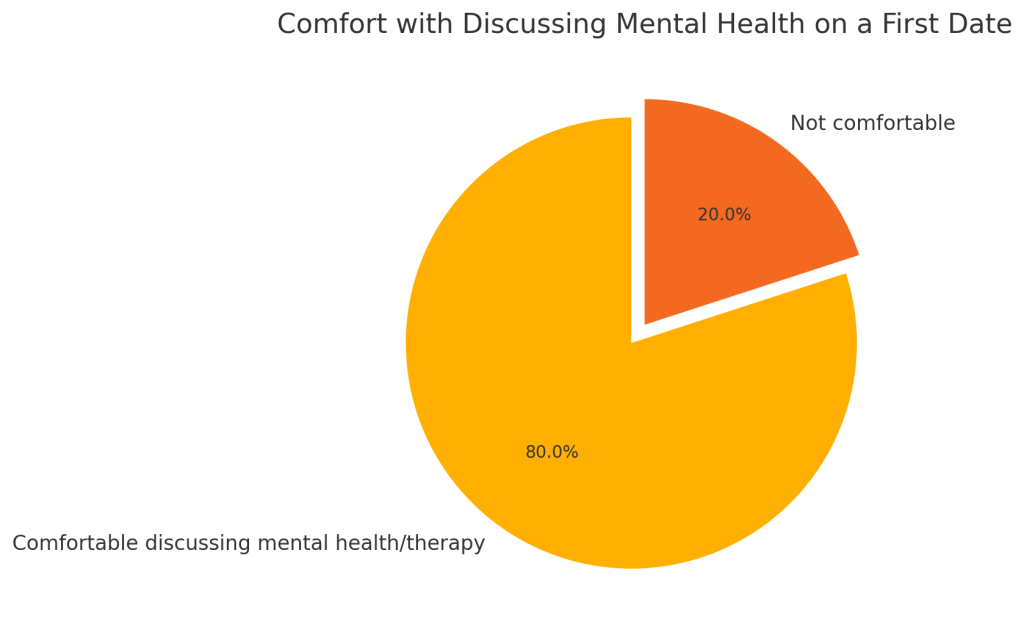
Long gone are the days when therapy was whispered about behind closed doors. Today, our willingness to speak openly about our struggles, anxieties, and emotional well-being is transforming first-date conversations. The SoulMatcher survey found that 80% of respondents are comfortable discussing mental health and therapy on a first date, reflecting a massive cultural shift toward acceptance and understanding.
More tellingly, about 50% of those surveyed now find mention of therapy a turn-on, shattering the old misconception that vulnerability equals weakness. As mental health expert Dr. Andrea Bonior, a licensed clinical psychologist, notes in her book Detox Your Thoughts: “Showing genuine vulnerability can help foster deeper intimacy and understanding in personal relationships” (Bonior, 2020).
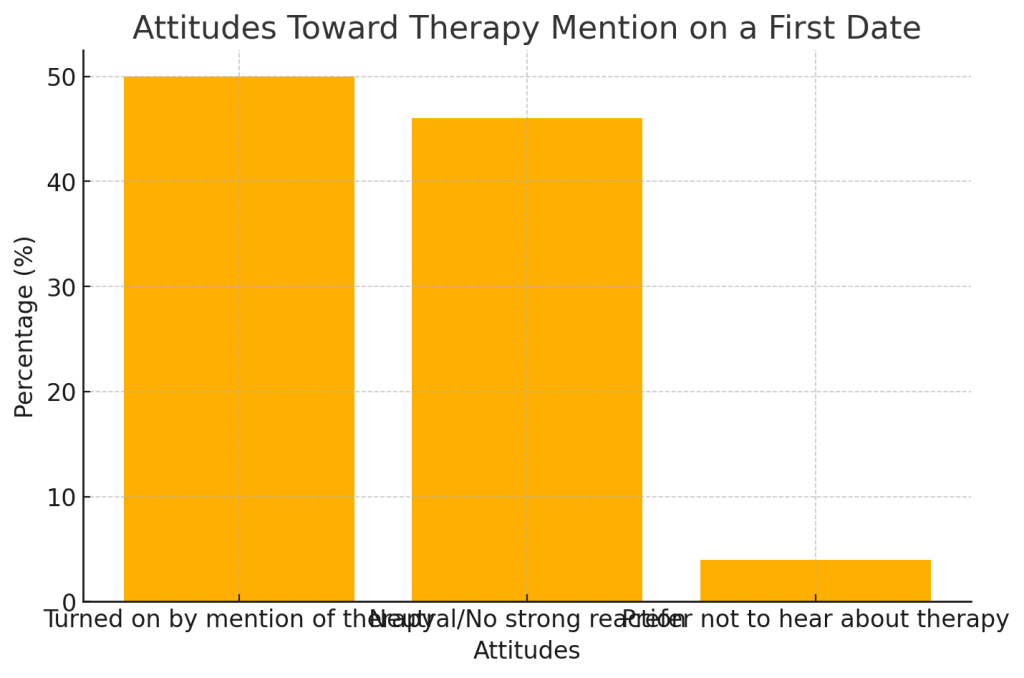
Rather than focusing on projecting an airbrushed version of yourself, acknowledging that you see a therapist can convey self-awareness, personal growth, and emotional resilience. These are traits that many modern daters find appealing. In other words, dropping your therapist’s name might just lead to dropping a few more guardrails—and maybe even getting that elusive second date.
Evidence From the Global Dating Scene
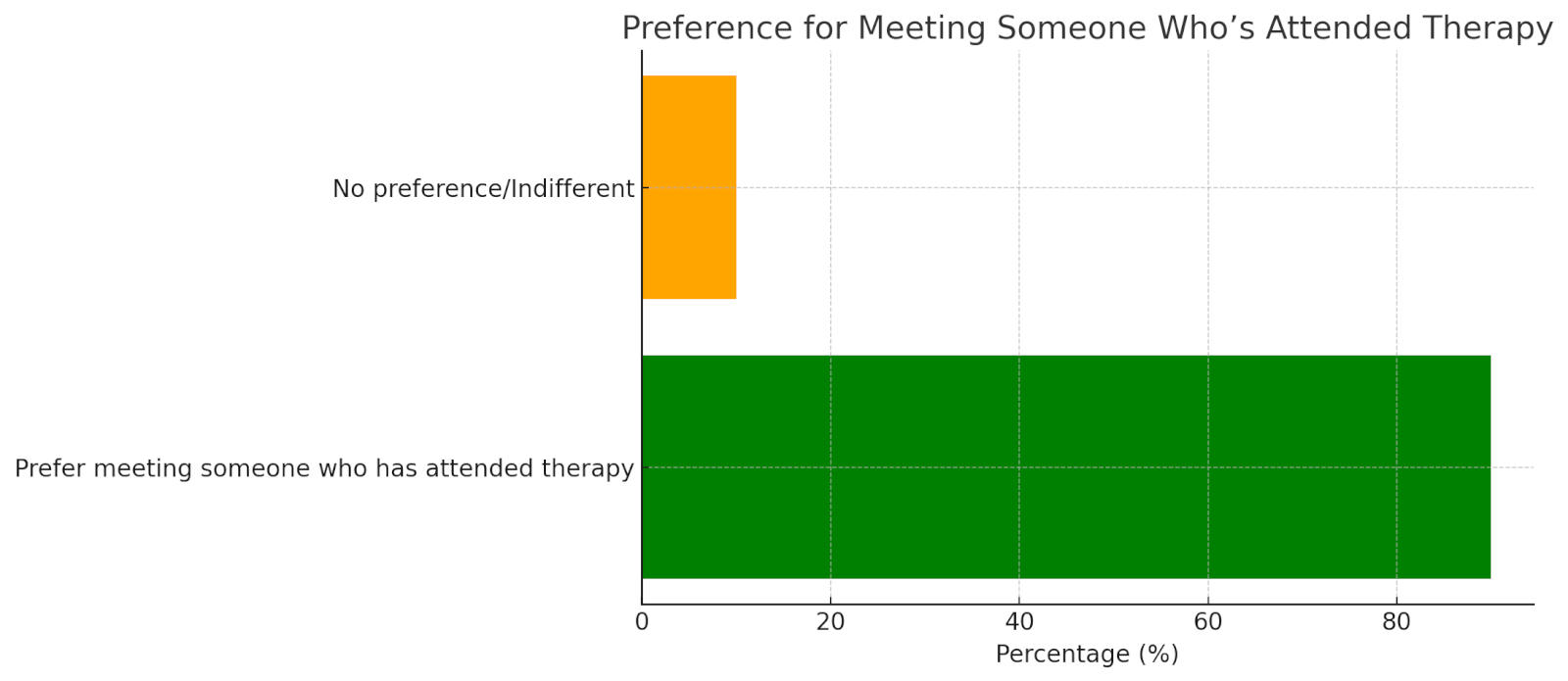
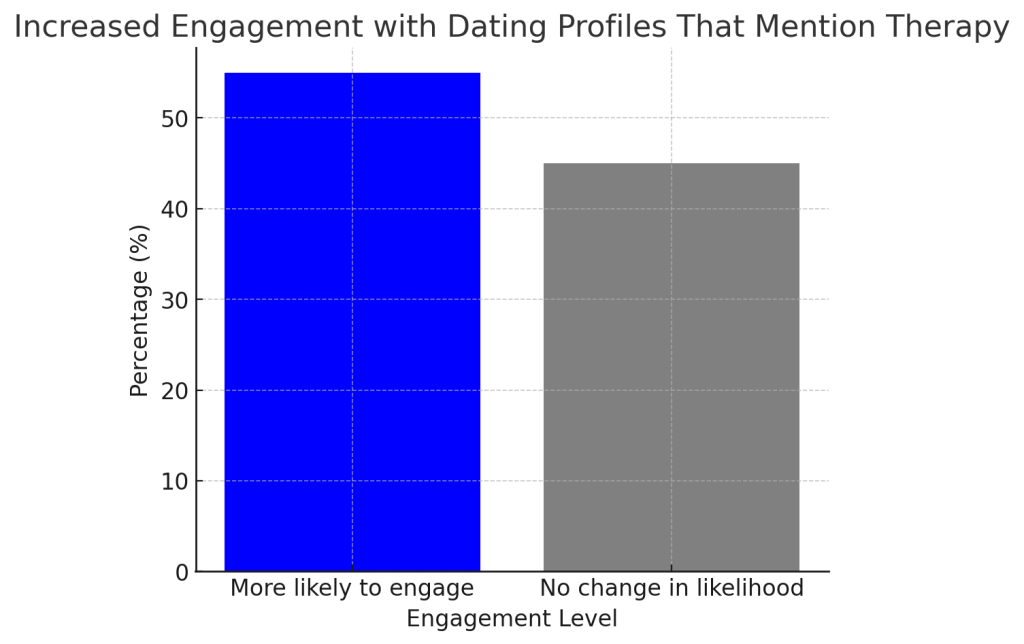
Your open admission of going to therapy could also boost your online dating profile’s appeal. According to the SoulMatcher data, 55% of users are more likely to engage with profiles mentioning therapy, and a staggering 90% say they’d prefer to meet someone who’s attended therapy in the past. These figures echo a growing global trend where mental health maintenance is seen as an attractive quality rather than a detriment.
This shift aligns with findings from reputable mental health organizations. The World Health Organization (WHO) has noted a decline in mental health stigmas, as more people understand that mental health care is part of routine self-care rather than an indicator of instability (WHO, 2021).
Does Therapy Improve Dating Etiquette?
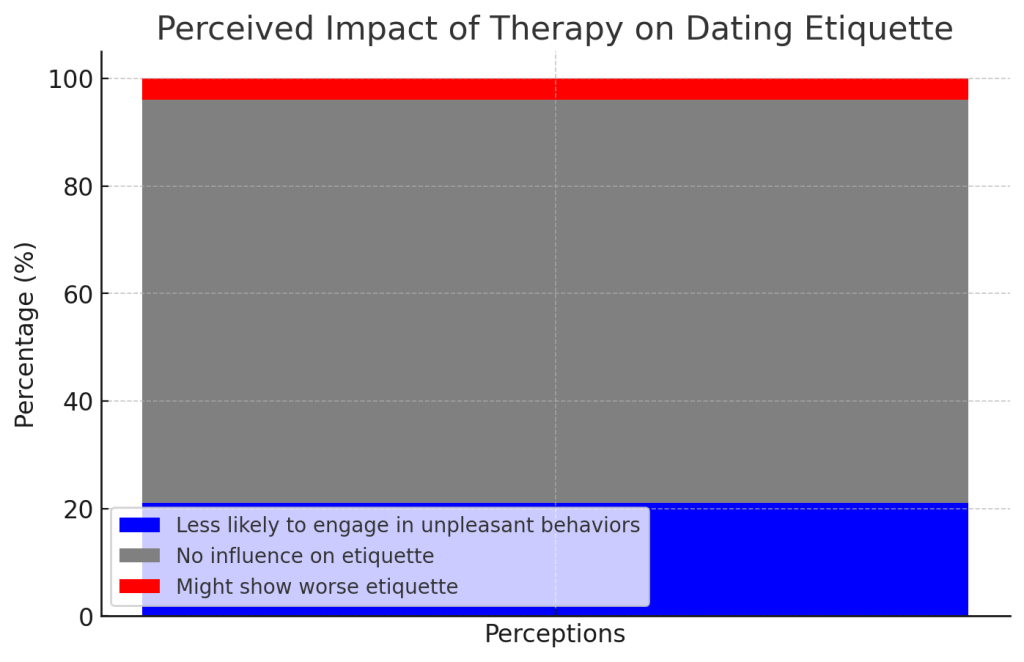
One might assume that therapy leads to better behavior in romantic encounters. After all, therapy often teaches communication skills, empathy, and emotional regulation. According to the SoulMatcher survey, 21% of participants believe therapy-goers are less likely to engage in unpleasant dating behaviors like ghosting.
Read also: Internet Dating Etiquette: A Comprehensive Guide
However, it’s not a universal rule. Three-quarters of the respondents say that therapy attendance doesn’t definitively predict better or worse etiquette. As Dr. Kristin Neff, a pioneer in self-compassion research, explains in her work Self-Compassion: The Proven Power of Being Kind to Yourself: “Therapy can enhance empathy and understanding, but individual differences still matter a great deal” (Neff, 2011). In other words, while therapy can provide tools for healthier interactions, personal maturity, character, and chemistry between two people remain pivotal.
How SoulMatcher Helps You Bring Emotional Intelligence to Dating
In a dating landscape that values authenticity, platforms like SoulMatcher are stepping in to help users highlight their emotional depth and psychological compatibility. Rather than matching individuals solely on superficial traits, SoulMatcher uses psychological insights to align partners based on core values, emotional tendencies, and personal growth goals. As mentioned in their platform materials:
• Psychological Matching: By assessing dimensions like empathy, narcissistic tendencies, and emotional resilience, SoulMatcher ensures that its users are paired with those who share a similar approach to emotional wellness.
• Integrated Professional Support: SoulMatcher goes beyond a simple swipe. Users can access mental health professionals directly through the platform, providing guidance for those working through dating anxiety or relationship challenges.
• Community and Courses: Recognizing that mental health is a journey, SoulMatcher also offers relationship education and a supportive community. Users can learn from experts, share experiences, and foster genuine connections—all while normalizing conversations around mental well-being.
These features echo the modern ethos that emotional intelligence is a cornerstone of healthy, lasting relationships. By embracing therapy and mental health discussions as part of your dating narrative, you’re more likely to find someone who appreciates the real you.
Embrace Openness and Authenticity
If the thought of mentioning therapy on a first date still makes you nervous, consider this: In a dating world that’s becoming increasingly saturated with curated images and superficial interactions, authenticity stands out. Sharing your mental health journey—even in small doses—can humanize you and invite deeper trust.
Read also: First Date: Things You Should Not Say
As SoulMatcher’s survey suggests, vulnerability doesn’t scare people off. In fact, it often has the opposite effect. It paves the way for meaningful conversations, mutual understanding, and a level of comfort that can help both parties see if they’re truly compatible.
Conclusion
The dating landscape is evolving, with mental health conversations shifting from taboo territory to the forefront of first-date chatter. Surveys, psychological literature, and the success of emotionally intelligent platforms like SoulMatcher all point to one truth: Being open about your mental well-being isn’t just acceptable, it’s attractive.
Rather than perfecting an unattainable persona, embrace your authentic self—the one who attends therapy, confronts challenges head-on, and values emotional growth. In doing so, you might just find that the path to genuine connection becomes clearer, warmer, and infinitely more rewarding.
References:
• Bonior, A. (2020). Detox Your Thoughts: Quit Negative Self-Talk for Good and Discover the Life You’ve Always Wanted. Chronicle Prism.
• Neff, K. (2011). Self-Compassion: The Proven Power of Being Kind to Yourself. William Morrow.
• World Health Organization. (2021). Mental health: Strengthening our response. https://www.who.int/health-topics/mental-health
• SoulMatcher (Platform details and features.)
• SoulMatcher Survey Data (2024) Provided by SoulMatcher dating community.