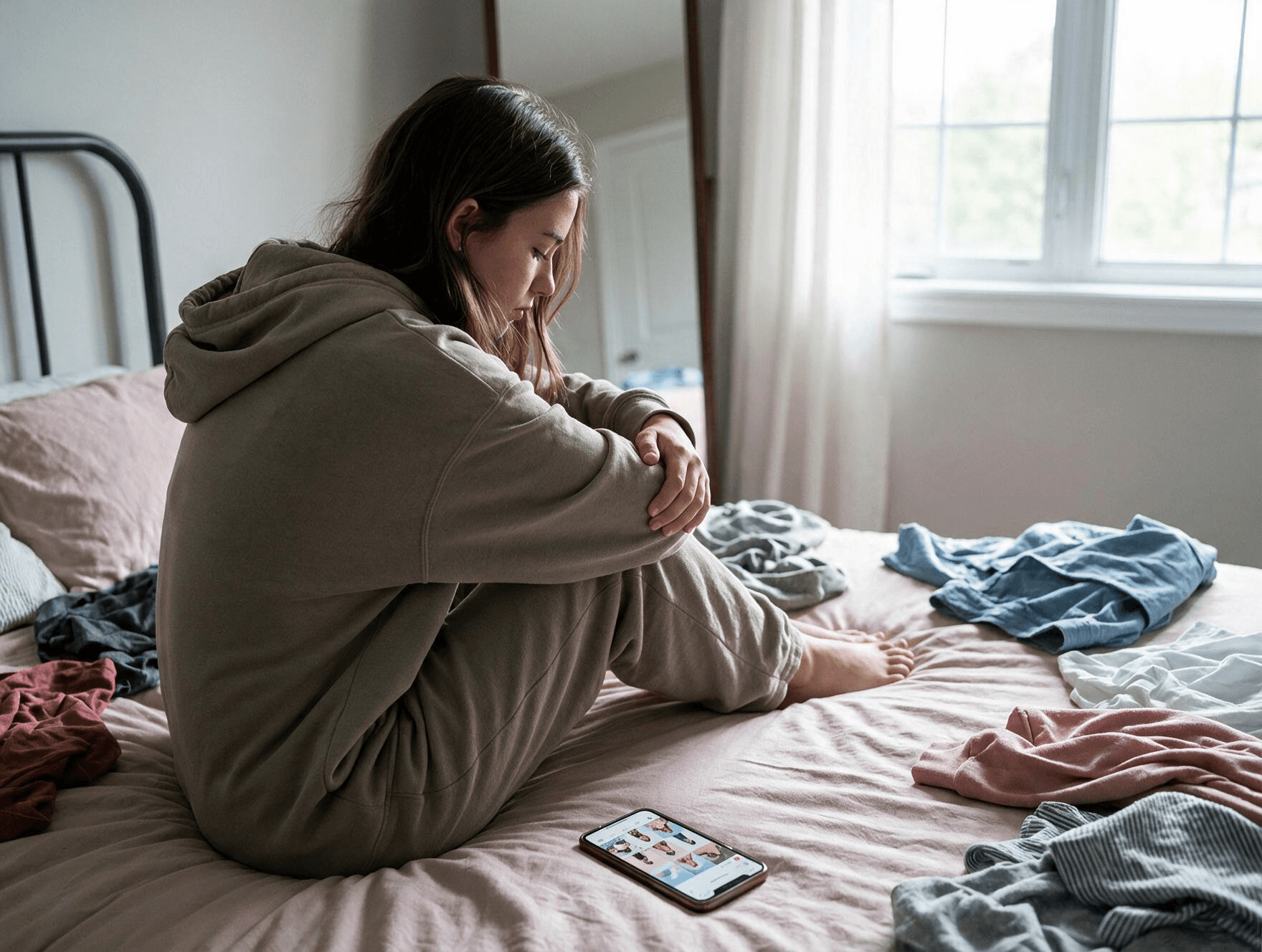

One consequence of past trauma is that it can shape behaviors—often around sex and money—that society judges harshly. Those actions can create stigma that follows you into new relationships. Many people, as they recover, change those survival behaviors, rebuild their lives, and leave that stigma behind. Still, a difficult dilemma appears when you start dating again: how much of your history should you reveal? On the one hand, dumping a catalogue of painful experiences on someone you’ve just met can easily scare them off; trauma dumping or oversharing early on is common. On the other hand, hiding important parts of your past from someone who might become a lifelong partner is also problematic. So what’s the right approach? Today’s letter comes from a woman I’ll call Moren. She writes: Hi Anna — I started stripping very young. How can I learn to feel close to men again when I’m emotionally shut down from abuse, and so much of my interactions with men have been transactional? I’ll underline a few things to revisit, but here’s Moren’s story. She describes a childhood of severe physical and emotional abuse and being abandoned at 12 to fend for herself. After a distressing time in foster care, she left to survive on her own. She began stripping at 14 using forged papers and continued in that work until she was 33. At 21 she gave birth to a daughter by a man she believes is a psychopath, and she fled him shortly after becoming pregnant. She never felt safe enough to pursue other work then—she was just trying to keep a roof over their heads and food on the table. Sixteen years ago her apartment burned down. Miraculously her child was at school and no one was physically hurt, but two cats died and they lost everything. Finances were dire and options were limited; she couldn’t even get a job at the grocery store. Desperate for money to secure housing, she and her daughter had to stay with family who made it clear they were unwelcome. To get enough cash for an apartment, a car, and some basic furniture, she worked as an escort for about five months. She did it with almost no emotion and never looked back after reaching her financial goals. Afterward she needed steady work and chose to become a nanny. Some people might not understand that choice after sex work, but she needed only a few references, no degree, and could start immediately. She’s a very good nanny; the pay isn’t enormous, but it covers the bills and gives her a semi-stable life. She’s tried dating but finds she doesn’t respond in the ways men expect. She struggles to act or speak in ways that make her life seem “normal.” Attraction to men is hard to feel, and she quickly loses patience with questions that feel like interrogations. Much of her life feels stigmatized, so she resists oversharing with people she barely knows. She wants to be honest without unloading everything on a new acquaintance. She’s tried half-truth narratives but knows that isn’t a solid foundation for a real relationship. Thousands of current or former sex workers probably face the same problems; many of them carry complex PTSD and live with intense stigma. She rarely hears guidance about how to move forward, how to treat oneself with compassion, or how to set emotional boundaries when most of the boundaries people know how to set are financial. Any insights would be greatly appreciated. Moren, there’s deep compassion for everything you’ve accomplished to survive childhood and raise your child. What you did to protect yourselves was often the only option available. It’s heartbreaking that some people get trapped in survival mode and struggle to connect, but what’s important here is that you’re working on it—you’re at the point of wanting emotional boundaries, not only financial ones. That experience with boundaries is meaningful; many people with trauma lack any boundaries at all. You are on a path and you’ve achieved a great deal—acknowledgment is due. Stigma exists, and while not always fair, certain realities deserve honesty—if someone is currently involved in sex work, that is essential to disclose. Since this is part of your past, you have more control over how and when to share it. Anyone who might be a lifelong partner does need to know who you are, but you can reveal those parts in stages. Not everyone you meet will accept every aspect of you; relationships only work with some people and certain facts will be deal-breakers for others. That’s true for everyone, not just you. For that reason, moving slowly in new relationships is wise. If real love is possible, it will grow as the other person notices many qualities they value in you before they learn of anything more difficult in your history. If someone truly cares for you, that context will make the harder truths easier to handle. You mentioned feeling “not normal,” which reflects a lack of self-acceptance. It’s normal for everyone to have past experiences they feel embarrassed by or fear will be rejected. Your responses are understandable given an abnormal childhood and extreme circumstances. How you survived—making hard choices to keep yourself and your child safe—is not a character flaw; it’s evidence of resilience. If a man cannot appreciate that, he is not right for you. There are people capable of empathy who will admire what you endured and what you accomplished. Being abandoned at 12, surviving foster care, and beginning work at 14 were not your fault. Adults failed to protect you, and it’s painful that those were your only options. Having a child with someone you now view as a psychopath illustrates how hard it can be to read people when you’ve had to harden yourself to survive. Healing often involves creating a softer, more secure phase of life where you can start experiencing people and activities anew. Working with a therapist can provide a trustworthy person to process reality and help re-learn how to read and trust others. People who’ve been through trauma are often hardest on themselves. Hearing “it was not your fault” can be profoundly relieving—so many hold that guilt alone. Acknowledgment from another human can unlock long-held grief. You are a survivor, and that resilience is remarkable. The right moment to disclose difficult parts of your past is when you feel ready and when you sense enough trust and understanding from the other person. A story worth remembering: before marriage, a mentor suggested that each partner share any embarrassing secrets or things they feared would drive the other away. Sharing those fears can deflate them. Often long-held secrets have more power over us than they deserve; once told, they’re frequently received with far less drama than we imagined. Keeping a secret can inflate it into something monstrous. Being honest before making a deep commitment serves both people so nothing blindsides them later. You are lovable—very much so. Your strength in raising a child, recovering from the fire, and surviving your family of origin will be seen and appreciated by people who truly care. When potential partners ask intrusive questions, it helps to have prepared responses. If someone presses—“Did you ever do something really unusual?”—a graceful reply can be, “Maybe I will tell you someday, when I know you better.” Saying it with warmth honors your boundaries. You aren’t obligated to reveal everything before you’re ready, and choosing when to disclose is a way of honoring yourself, not manipulating. There is encouraging news: you’ve likely progressed further in your healing than you realize. Giving yourself credit matters. A list of common signs of healing can help you recognize that progress—some items may already fit you, others you’re partway to achieving. If you want that checklist, it’s available as a free download by clicking the link. Wishing you continued strength and growth—see you very soon.
Practical steps and tools to move forward
Below are concrete, trauma-informed strategies you can use when dating, deciding when to disclose, and rebuilding trust and intimacy at your own pace.
Read also: Why Less Drama Does Not Mean Less Passion
Deciding when and how to disclose
- Use staged disclosure: share smaller, less triggering truths first to test empathy and reliability before revealing more painful material.
- Choose context and timing: disclose when you’re calm, not during or after conflict; a quiet conversation over time is better than a sudden confession in front of others.
- Sample scripts: “I want to be honest about something that’s part of my past; I’m not asking for an answer now — I just want you to know as we get closer.” Or, “There are parts of my past I’ll tell you when I feel safe with you. I hope that’s okay.”
- If you’re currently involved in sex work or in an arrangement that affects safety or household logistics, it’s important to disclose earlier so boundaries and risks are clear.
Practical safety and boundaries
- Set clear boundaries around what you will and won’t discuss early in dating (for example: “I don’t discuss finances or certain past details on a first few dates”).
- Watch for red flags: shaming, coercion, attempts to control or isolate you, threats about your child or livelihood — these are reasons to step back immediately.
- Test empathy with small disclosures: someone who listens without judgment and asks caring follow-ups is more likely to handle bigger truths well.
Rebuilding closeness and sexuality gradually
- Start with non-sexual intimacy: shared activities, holding hands, slower physical touch, and conversations about values and interests build safety without pressure.
- Practice “micro-trust” experiments: let someone help with a small task, or share a minor vulnerability, and notice how they respond.
- Consider somatic practices: gentle bodywork, yoga, or trauma-informed movement can help re-associate the body with safety and pleasure outside transactional contexts.
Therapies and supports that help
- Seek a trauma-informed therapist experienced with complex PTSD and survival behaviors. Useful approaches include EMDR, Cognitive Processing Therapy (CPT), Somatic Experiencing, and sensorimotor psychotherapy.
- Group or peer support: survivors’ groups and communities of current/former sex workers can reduce shame and provide practical advice and solidarity.
- If therapy access is limited, look for low-cost clinics, online therapists who specialize in trauma, or community mental health services. Many directories let you filter for trauma-informed clinicians.
Emotional regulation tools to use in dates and arguments

- Grounding: 5-4-3-2-1 sensory technique (name 5 things you see, 4 you can touch, 3 you hear, 2 you smell, 1 you taste) to return to the present.
- Breathing: box breathing — inhale 4 seconds, hold 4, exhale 4, hold 4 — helps reduce panic and reactivity.
- Self-soothing: carry a small object that comforts you, create a pre-date ritual (tea, music), and give yourself permission to leave if you feel unsafe.
Handling rejection or stigma

- Prepare emotionally for some people to walk away — their leaving is not evidence you’re unworthy, only that they weren’t a match.
- If you face shameful responses, protect your energy: disengage or set firm boundaries. If someone stigmatizes your past, it’s a valid reason to end things.
- Practice self-compassion: remind yourself that survival choices were made under extreme pressure. Journaling short affirmations (e.g., “I did what I needed to survive”) helps reframe shame.
Practical resources and next steps
- Look for local survivor services, sexual health clinics, and legal aid if you have concerns about custody or safety.
- Search for trauma-informed therapists and support groups online; directories often allow filtering by specialty.
- Join peer communities (in-person or online) for people with similar histories — shared lived experience reduces isolation and offers practical dating strategies.
Final note: moving at your own pace is both a protection and part of healing. You don’t owe anyone a complete biography on the second date, but you do deserve to find someone who can meet you with empathy once you choose to share. Small, consistent choices — saying no when something feels wrong, testing trust gradually, and seeking supportive therapy — will change how you experience closeness over time. You’ve already shown resilience; now give yourself permission to choose safety, compassion, and the relationships that reflect your worth.