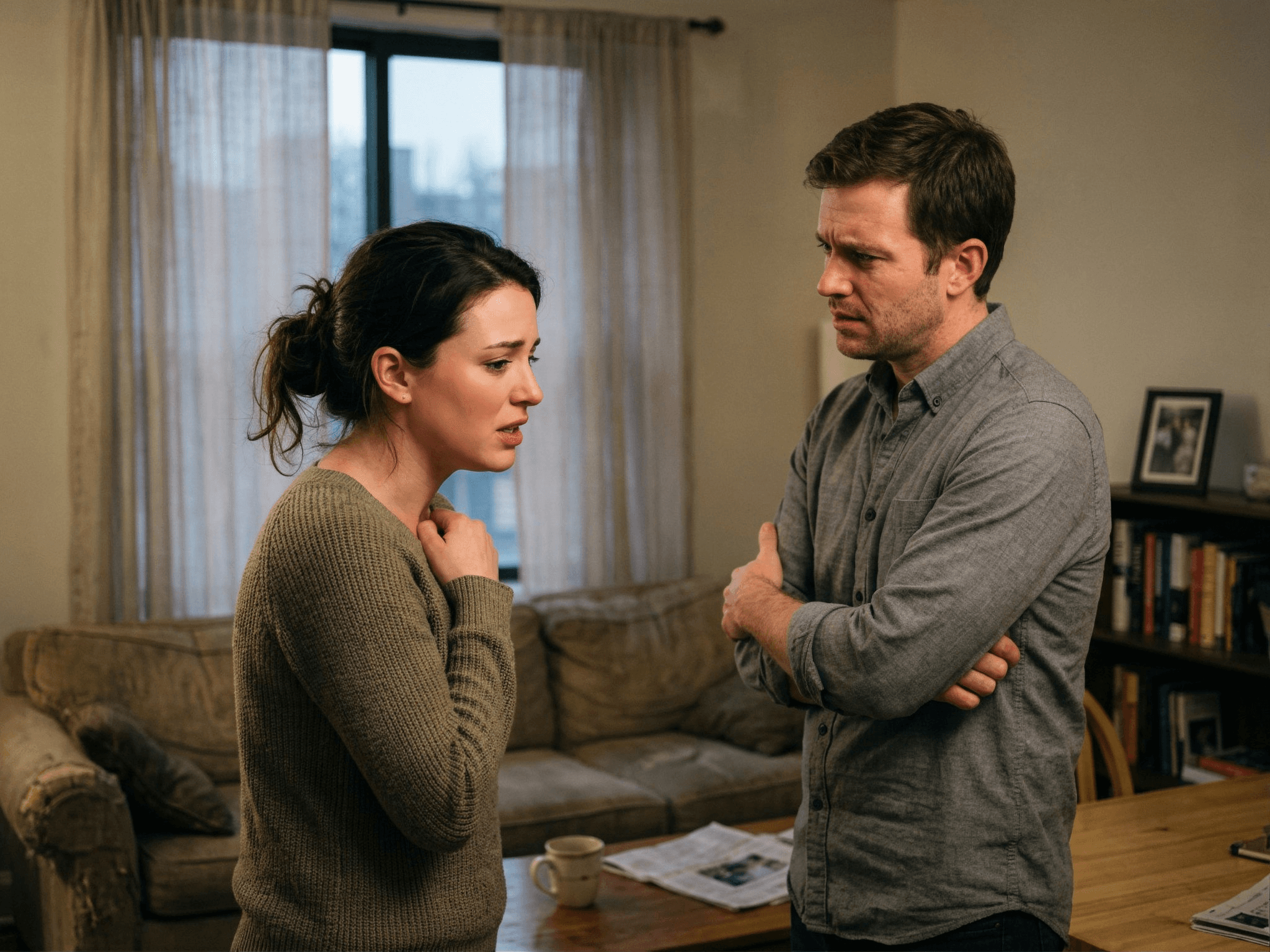
Anger is one of the most visible emotions in a relationship. It arrives loudly, takes up space, and demands a response. Couples fight about practical things — the dishes, the plans, the tone of a text message — and the anger feels real and specific. Sometimes, though, the anger is not about what it appears to be about. Sometimes it is grief that has not found another way out. Recognising when that is the case changes everything about how a couple can actually address what is going wrong.
Why Anger Is Often Easier to Express Than Grief
Anger and grief are not opposites. They frequently occupy the same emotional territory. In many people, anger arrives first — faster, louder, and more socially legible than the sadder emotions beneath it.
Grief asks something most people find difficult. It requires vulnerability, acknowledgement of loss, and the willingness to sit with feelings that carry no energy or forward momentum. Anger, by contrast, generates energy. It creates a sense of agency. When you are angry, you push back against something. That push feels better, at least in the short term, than the helplessness that grief tends to involve.
Complex emotions rarely travel alone. Grief in a relationship almost always carries other feelings alongside it — love, disappointment, fear, longing. That combination is difficult to identify clearly, let alone express. Anger simplifies that complexity. It collapses a difficult emotional landscape into something more manageable. The problem is that it also misdirects. The emotion gets communicated, but not the one that most needs to be heard.
What Unexpressed Grief Looks Like in a Relationship
Unexpressed grief in a relationship tends to accumulate over time. It gathers around losses that neither partner named or fully processed — the version of the relationship that used to exist, the closeness that faded, the hopes that quietly adjusted to fit a reality that fell short.
The sign that grief is operating beneath anger is often in the disproportionality of the response. A small trigger generates a reaction that exceeds what the trigger warrants. A forgotten errand becomes a major confrontation. A missed message becomes evidence of fundamental uncaring. The anger is real, but its size only makes sense when you account for everything it has been carrying.
Another sign is repetition. The same argument resurfaces again and again, never fully resolving, because the surface problem is not the actual problem. Couples who find themselves having the same fight repeatedly often circle something deeper that neither person has yet named. The anger keeps returning because the grief beneath it keeps going unaddressed.
Tension in the relationship also tends to become ambient rather than situational. Instead of arising in response to specific events, it becomes the background tone — a generalised irritability that seems to have no clear cause. That ambient quality often signals that something accumulated has not discharged, and anger has become the default channel for whatever the relationship carries.
How to Tell the Difference Between Anger and Grief Anger
Not all anger in a relationship is unexpressed grief. Some anger is direct, proportionate, and accurately targeted. A partner who consistently ignores your boundaries or dismisses your feelings generates anger that is a legitimate response to a real problem. That anger is useful. It identifies an issue and generates the energy to address it.
Grief anger operates differently. It tends to feel bottomless. Satisfying the stated complaint does not resolve the underlying emotion. Even when the other person responds well or offers a genuine apology, the relief is temporary. The next argument arrives quickly, often on a different surface topic but carrying the same emotional charge.
The useful question is: what would it feel like if this specific problem were fully resolved? If the honest answer is that the relationship would still feel wrong — that something would still be missing — that is a sign that anger is carrying something heavier than the issue it has attached to.
What Couples Can Do When Anger Masks Grief
Addressing anger that is really grief requires a shift in the structure of the conversation. Both partners need to create enough safety to access what sits underneath the anger.
That shift begins with slowing down. Anger moves fast. It escalates, demands immediate response, and pushes toward resolution of the surface problem. Moving toward the grief beneath it requires going in the opposite direction — reducing the pace, reducing the volume, and creating conditions for the more vulnerable emotion to surface.
For the partner who is angry, the useful question is not "what am I angry about?" but "what have I lost, or what am I afraid of losing?" Those questions reach toward the grief rather than away from it. Answering them honestly — even privately, before any conversation — tends to change both the emotional quality of the anger and the kind of conversation that becomes possible.
For the partner receiving the anger, the useful shift is away from defensiveness and toward curiosity. Rather than responding to the stated complaint as the real one, asking "what is this really about?" — gently and genuinely — can open a different kind of exchange. That question is not easy to ask in a heated moment. It tends to become more accessible in the quieter conversations that happen after the immediate anger passes.
The Role of Naming in Moving Through Grief Anger
Naming an emotion reduces its intensity. The act of accurately labelling what you feel — not just "I'm angry" but "I think I'm grieving something I can't get back" — shifts the relationship with the emotion. It creates a small but significant distance between the feeling and the response to it.
For couples dealing with anger that masks grief, naming the grief directly tends to change the dynamic significantly. When one partner says "I think I'm sad about this more than I'm angry," the conversation becomes possible in a way it was not when the anger led. Sadness invites a different response. It generates more compassion, less defensiveness, and more genuine engagement with what is actually going wrong.
That naming does not have to happen in the middle of an argument. It often works best afterward — in the calmer space between conflicts, when both people have access to more emotional range and less of their capacity is consumed by immediate heat.
When Grief in a Relationship Needs More Than a Conversation
Sometimes the grief beneath the anger is significant enough to need more support than a couple can provide for each other alone. If the losses are substantial — a shift in who the relationship has become, a long period of disconnection, an accumulated weight of unmet needs — processing that grief may require outside help.
Therapy, either individual or couples-focused, creates structured conditions that allow grief to surface and move in ways that ordinary relationship conversations rarely provide. A therapist holds the emotional complexity of what is happening without either person needing to manage both their own feelings and their partner's simultaneously.
Anger, in the end, is not the problem. It is the signal. When it points toward something real and specific, it deserves a direct response. When it keeps pointing at different surfaces but carrying the same weight, it deserves a different kind of attention — one that reaches beneath the anger to the grief that has been waiting, all along, to finally be heard.