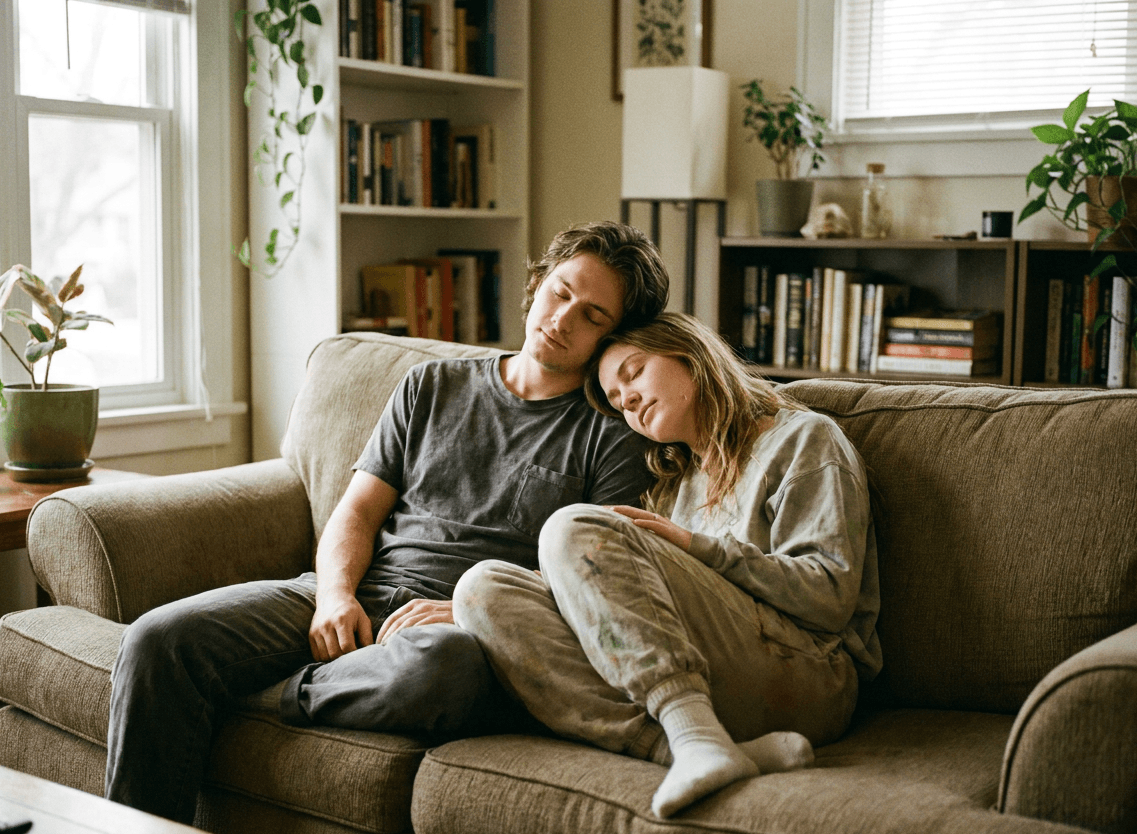
Real love rarely looks the way films suggest it does. It does not arrive at airports or declare itself in the rain. It does not sustain itself on grand gestures and perfect timing. What real love looks like, on most days, is considerably quieter — and considerably more instructive. It shows up in small acts of consideration, in the texture of daily attention, in the way two people treat each other when nothing important is happening. Understanding what real love looks like on an ordinary day matters because ordinary days are most of what a relationship is made of.
Why Ordinary Days Reveal More Than Grand Moments
Dramatic moments in a relationship are real, but they are not representative. A proposal, a crisis navigated together, a significant anniversary — these events carry emotional weight and reveal something true about a couple. But they are not the daily reality of a relationship. They are interruptions of it.
The ordinary day is where real love either exists or does not. It is the Tuesday evening, the Sunday morning, the commute home when both people are tired and there is nothing particular to celebrate. How two people treat each other in those moments — with what degree of care, attention, and basic consideration — tells you more about the health of their relationship than any highlight could.
Someone real, navigating an actual life with another person, experiences love mostly through these unremarkable hours. The question worth asking is not what love looks like at its most dramatic. It is what love looks like when nothing is at stake except the ordinary business of being together.
Real Love Shows Up in How People Pay Attention
Attention is one of the most underrated expressions of real love. Not the dramatic, focused attention of a significant conversation or a moment of crisis — but the low-level, ongoing attentiveness that signals genuine interest in another person's inner life.
Real love pays attention to the small things. A partner who notices that the other person seems quieter than usual and asks about it. Someone who remembers, without being reminded, that today was a difficult meeting or an important deadline. A person who tracks the minor details of their partner's life — the coffee order, the friend they were worried about, the project they mentioned last week — not because they are keeping score but because they are genuinely interested.
This kind of attention is a form of consideration that healthy relationship research consistently identifies as central to sustained intimacy. John Gottman's work on couples describes what he calls "turning toward" — the small daily acts of noticing and responding to a partner's bids for connection. Relationships in which partners turn toward each other regularly, even in minor ways, show significantly higher rates of long-term satisfaction than those in which those bids go unnoticed or unacknowledged.
Mindfulness plays a quiet role here. The capacity to be genuinely present — not distracted by a phone, not mentally elsewhere — is what allows this kind of attention to exist at all. Real love, on an ordinary day, often looks like putting something down to be fully in the room with the person you are with.
Real Love Looks Like Maintenance, Not Performance
One of the clearest markers of real love on an ordinary day is the presence of unglamorous maintenance — the small, consistent acts that keep a relationship functioning well without producing anything worth photographing.
Making coffee for someone without being asked. Handling the task the other person finds difficult. Giving space when space is what is needed and offering presence when presence is what is needed. Checking in not because something is wrong but because the other person matters.
These acts do not announce themselves. They accumulate. And their accumulation is what a healthy relationship is actually built from. The consideration that real love requires is not reserved for significant moments — it is practiced in the absence of them, which is what makes it meaningful.
True care in a long-term relationship also includes the maintenance of the relationship itself. Raising a concern before it becomes a grievance. Apologizing cleanly when an apology is owed. Making time for genuine connection during weeks when logistics threaten to consume everything. These are not exciting acts. They are essential ones.
Real Love Includes the Right Kind of Honesty
Honesty is another feature of real love that looks different in practice than in principle. Most people value honesty in the abstract. Fewer practice the specific kind of honesty that a real relationship requires.
Real love includes the willingness to say difficult things with care. To tell a partner when something is not working, to share a worry rather than manage it alone, to name what you need instead of waiting for the other person to intuit it. This kind of honesty requires both courage and consideration — the courage to speak and the consideration to do so in a way that the other person can actually receive.
It also includes the honesty of staying present in hard conversations rather than deflecting or withdrawing. Real love does not make difficult conversations easy. But it makes them possible — and it makes repair after them more likely.
The absence of this honesty is one of the quieter ways real love fades. When partners stop sharing what is true because it feels easier, or because they have stopped believing the other person wants to know, the relationship begins to hollow out from the inside. The ordinary days continue. The real connection gradually does not.
What Real Love Does Not Look Like
Understanding real love on an ordinary day also involves recognizing what it does not look like — the habits and patterns that masquerade as love without functioning as it.
Constant reassurance-seeking is not love. Neither is chronic self-sacrifice that breeds private resentment. Love that requires performance — the need to always appear happy, always be generous, always present the best version of the relationship — is not real love. It is image management. And it is exhausting in a way that genuine love, even on its hardest days, is not.
Real love also does not look like the absence of conflict. Couples who never disagree are not necessarily more loving — they are often more conflict-avoidant, which is a different thing entirely. What real love looks like, around conflict, is not its absence but its management: disagreements that happen with basic respect, repairs that happen without excessive delay, and a shared understanding that conflict does not threaten the relationship's foundation.
Real Love in the Body Language of Ordinary Life
Some of the clearest evidence of real love on an ordinary day is nonverbal. The quality of physical presence — not dramatic touch, but the casual, habitual closeness of people who are genuinely comfortable with each other — signals something that words often do not.
A hand on a shoulder in passing. Eye contact held a moment longer than strictly necessary. The ease of sitting in the same room without needing to fill the silence. These are not romantic gestures in the conventional sense. They are expressions of a bond that does not need to perform itself.
Real love, in the body language of daily life, looks relaxed. It looks like people who have chosen each other often enough that the choosing has become second nature.
Conclusion
The most honest measure of real love is not what a relationship looks like at its most significant moments. It is what it looks like when nothing particular is happening — when the day is ordinary, the stakes are low, and the only thing present is two people and their accumulated choices about how to treat each other.
Real love, on an ordinary day, looks like attention and consideration. It looks like honesty delivered with care, like maintenance that nobody notices because it is working, like genuine, unhurried presence.
That is what makes it real. And that is what makes it worth building.