Italian
  English
  Russian
  French
  German
  Spanish
  Polish
  Ukrainian
  Turkish
  Portuguese
  Greek
Greek  Arabic
  Korean
  Chinese
  Japanese
  Czech
Czech 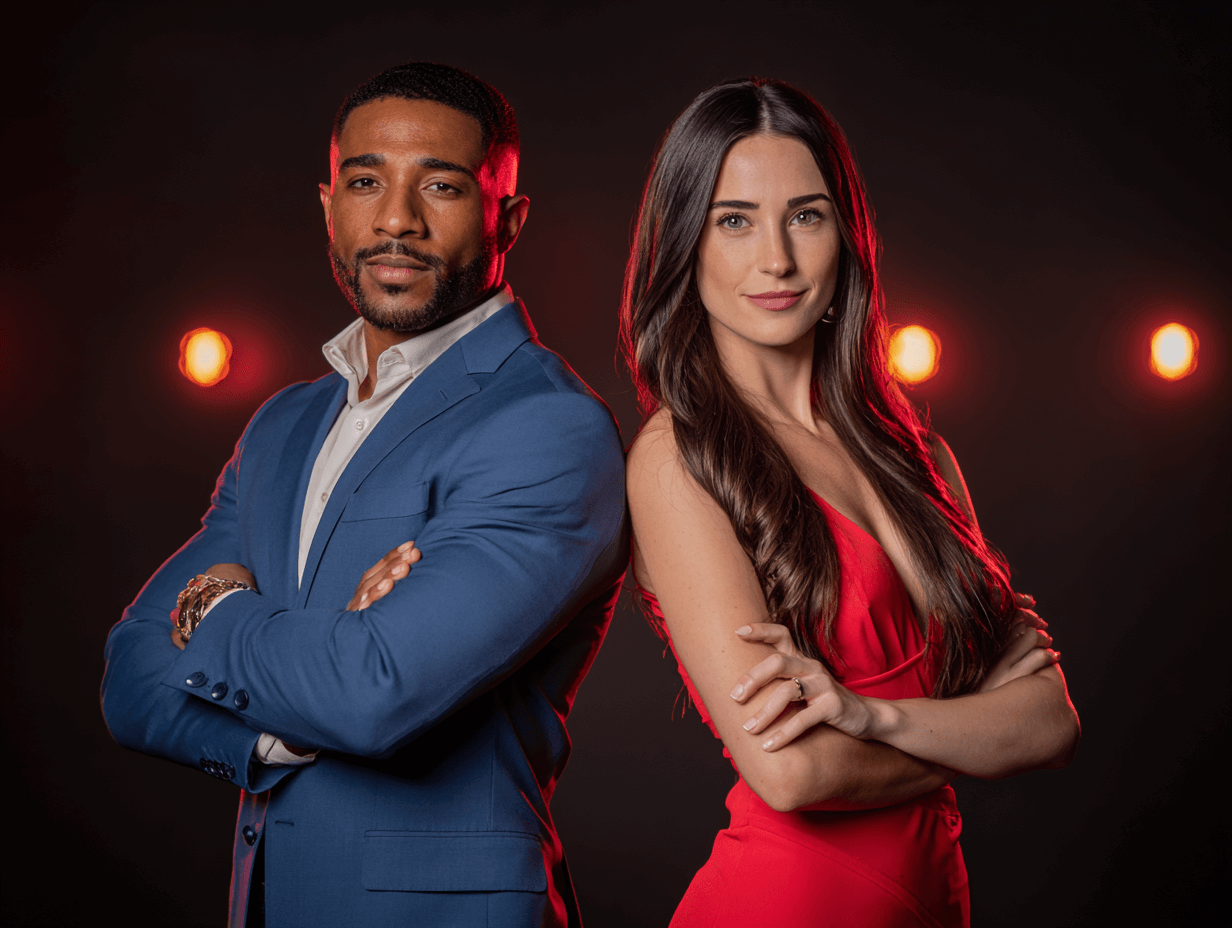

Introduzione
In the last decade, popular matchmaking TV shows have become a cultural phenomenon. Whether viewers are watching hopeful singles on Love Is Blind, emotional weddings on Married at First Sight, or tropical flirtations on Love Island, the fascination remains the same — the search for authentic connection in a curated world of cameras and competition.
These reality TV programs combine human vulnerability, relationship drama, and the thrill of watching love unfold in real time. As dating becomes more digital, the success of popular matchmaking TV shows reveals our continued desire for emotional storytelling — and perhaps, proof that true love can emerge in the most unconventional ways.
The Appeal of Matchmaking on Reality TV
At their core, popular matchmaking TV shows explore a universal curiosity — how people connect, fall in love, and stay committed. Viewers are hooked because these shows reflect real-life dating struggles but heighten them with drama, culture clashes, and emotional intensity.
Unlike traditional dating shows of the past, where contestants simply competed for affection, modern reality dating TV series incorporate compatibility tests, relationship experts, and psychological experiments. Programs such as Ready to Love e Love Is Blind take matchmaking beyond surface attraction, asking whether emotional intimacy can truly form without physical presence or prior history.
This evolution reflects shifting attitudes toward romance and relationships. Today’s audiences want more than glitz and glam — they want depth, sincerity, and a story that feels relatable, even if it unfolds under studio lights.
Love Is Blind: When Love Is Truly Blind
One of Netflix’s most talked-about reality series, Love Is Blind, challenged traditional dating norms. Participants form emotional bonds without seeing each other, speaking through pods until they decide to get engaged. The experiment asks a bold question: Is love truly blind?
What sets Love Is Blind apart from other dating shows is its focus on emotional connection first. The lack of visual cues forces singles to listen deeply and communicate honestly — a sharp contrast to modern app-based dating. When couples finally meet face-to-face, the tension between physical attraction and emotional connection drives the drama that keeps millions of viewers hooked.
The show’s global success proved that audiences crave authenticity and vulnerability — even when the setting is constructed for television.
Married at First Sight: Science Meets Emotion
Few popular matchmaking TV shows have sparked as much debate as Married at First Sight. The premise is as shocking as it sounds: complete strangers are paired by relationship experts and meet for the first time at the altar. What follows is an intense experiment testing compatibility, attraction, and the endurance of commitment.
The combination of science and emotion makes Married at First Sight one of the most psychologically rich reality TV formats. Viewers get a rare glimpse into the immediate aftermath of marrying a stranger — the awkwardness, the intimacy, and the genuine effort to build trust from nothing.
The show also raises larger questions about modern love: Can expert analysis create a lasting bond? Does chemistry matter more than compatibility? For many fans, this tension between data and desire is exactly what makes it irresistible.
Love Island: Flirtation, Strategy, and Sun-Soaked Romance
Mentre Married at First Sight focuses on commitment, Love Island thrives on chaos and chemistry. Set in a luxurious villa filled with single contestants, the show is equal parts dating competition and social experiment.
Contestants match up to avoid elimination, forming alliances and romantic connections along the way. Each season of Love Island captures a mix of emotional vulnerability and game strategy, making it one of the most addictive reality dating formats worldwide.
Part of its charm lies in its spontaneity — new arrivals, surprise twists, and re-couplings keep both participants and viewers guessing. Beyond the drama, though, Love Island showcases modern dating’s contradictions: the tension between genuine affection and the fear of rejection under constant public scrutiny.
Perfect Match and the Streaming Era of Dating TV
With streaming platforms dominating entertainment, the genre of popular matchmaking TV shows has expanded like never before. Netflix’s Perfect Match merges contestants from various dating series — including Too Hot to Handle e The Circle — into one competitive love experiment.
The show explores whether prior fame or social media savvy can help contestants find real connection. In Perfect Match, charisma, compatibility, and timing are everything. Contestants couple up, compete in challenges, and constantly re-evaluate their partners. The rotating relationships highlight how modern love is fluid, fast-paced, and influenced by external pressures.
This new breed of reality TV reflects how dating culture itself has evolved — with blurred lines between entertainment, authenticity, and emotional growth.

Beyond the Screen: Why Matchmaking Shows Matter
Il successo duraturo dei popolari reality show di matchmaking non riguarda solo il dramma; riguarda la risonanza emotiva. Questi programmi creano esperienze condivise che scatenano conversazioni globali sull'amore, la fiducia e la vulnerabilità.
Ogni spettacolo offre la sua prospettiva:
- Love Is Blind esplora se una connessione emotiva possa durare più a lungo delle apparenze.
- Married at First Sight domande se l'impegno può precedere l'attrazione.
- Love Island analizza come attrazione e lealtà si manifestano sotto pressione.
- Ready to Love si concentra su single maturi alla ricerca di relazioni a lungo termine che vadano oltre l'attrazione superficiale.
- Perfect Match e Too Hot to Handle riflettono la lotta della nuova generazione con la gratificazione immediata e le connessioni autentiche.
Anche 90 Day Fiancé, un altro titano dei reality TV, esamina gli scontri culturali e l'amore a distanza, dimostrando che le relazioni vere non seguono sempre una formula perfetta.
Insieme, queste serie fungono da specchi sociali, rivelando come le persone gestiscono l'intimità in un'era di esposizione e giudizio costante.
La psicologia del guardare l'amore
Perché gli spettatori rimangono ossessionati dai popolari programmi TV di matchmaking? Gli psicologi suggeriscono che sia perché queste serie combinano tre fascinazioni umane: narrazione emotiva, confronto sociale e il brivido dell'imprevedibilità.
Osservare gli altri affrontare delusioni d'amore o trionfi offre al pubblico sia una catarsi emotiva sia una comprensione delle proprie relazioni. Per alcuni è puro escapismo, per altri è un modo per riflettere su cosa significa l'amore nella propria vita.
Inoltre, i dating show spesso giocano con l'idea de “l'anima gemella” — una persona che rappresenta l'inafferrabile abbinamento perfetto. Che si tratti di un matrimonio combinato o di un flirt in una villa, quella ricerca di connessione fa sì che gli spettatori tornino stagione dopo stagione.
Reality TV e il futuro del matchmaking
È probabile che il futuro dei popolari programmi TV di matchmaking diventerà ancora più diversificato e sperimentale. Le reti e i servizi di streaming continuano a fondere il realismo emotivo con sfide concettuali di alto livello.
Stiamo già vedendo emergere formati di nicchia, a partire dagli incontri per senior su The Golden Bachelor a serie reality inclusive come Ho baciato un ragazzo e Ho baciato una ragazza con concorrenti LGBTQ+. Anche la tecnologia gioca un ruolo sempre più importante, con appuntamenti virtuali, matchmaking tramite IA e votazioni interattive da parte degli spettatori che plasmano la prossima era dei reality dating show.
In definitiva, questi programmi continueranno a evolvere di pari passo con le opinioni della società su romanticismo, genere e identità. Ma la loro essenza, la ricerca di una connessione, rimane senza tempo.
Conclusione
Da Love Is Blind a Love Island, Ready to Love a Married at First Sight, i popolari programmi TV di matchmaking catturano qualcosa di universale sull'esperienza umana. Ci ricordano che, sebbene ambientazioni, regole e concorrenti possano cambiare, il desiderio di amare ed essere amati perdura.
Che vi sintonizziate per il dramma, la psicologia o la speranza di vedere sbocciare un abbinamento perfetto, questi programmi offrono uno sguardo affascinante sulle relazioni moderne. Mentre il confine tra intrattenimento e realtà continua a sfumare, i popolari programmi TV di matchmaking dimostrano che l'amore – in tutta la sua gloria disordinata e imprevedibile – sarà sempre un soggetto televisivo avvincente.






 Matchmakers vs. Dating Apps: Finding the Right Way to Love">