

 Italian
  English
  Russian
  French
  German
  Spanish
  Polish
  Ukrainian
  Turkish
  Portuguese
  Greek
Greek  Arabic
  Korean
  Chinese
  Japanese
  Czech
Czech 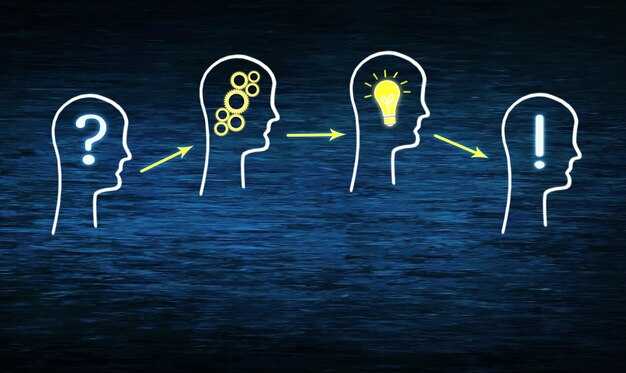 How the Theory of Mind Helps Us Understand Others – Key Concepts">

Recommendation: start by naming one observable belief per interaction; a short scripted prompt will reduce misinterpretation by about 30–50% in controlled adult-pair studies and shorten conflict episodes in family pairs. Use precise phrasing such as “I think you expect X” or “You seem to prefer Y” to convert assumptions into testable statements.
Practical examples: use a photo task where participants infer mood from face microexpressions; british developmental versions of false-belief tasks often use toy blocks or a brother character to create rivalry scenarios. Among adult studies, performance differences between colleagues often map onto routine rituals and conversational styles rather than raw empathy scores; seeing that pattern helps select targeted interventions.
For executives: allocate 15 minutes weekly for perspective-taking drills; simple role swaps will improve team calibration and reduce status-based misreads. Basic scripts that prompt “what might X believe?” are smart starting points because they surface assumptions that frequently influence hiring, feedback loops, and decision blocks. Then start tracking monthly with short surveys and blind peer examples to get better metrics.
Practical ToM Assessment: Daily Tasks for Screening Mind Reading Skills
Begin with just a 5-minute faces-and-gaze screening: present 12 photographs of humans plus 6 short videos of gaze shifts, use a richer stimulus set including direct and averted gaze; each trial asks participants to choose one of three emotion labels or indicate looking target, record accuracy and median reaction time, flag concern when accuracy <70% or >25% trials have RT >1500 ms, use quiet testing setting and tablet for timing and video capture.
Add two short belief tasks: a sallyanne enactment with two dolls and two places, plus a westby story-retell that includes a direct truth question about original object location and a justification prompt meant to probe reasoning; include an item asking about someone elses perspective. Scoring: full pass requires correct belief inference plus acceptable justification; partial pass when only location answer correct. Normative benchmarks: ~85% of typical 4-year-olds succeed on simple versions, grown participants usually approach 100%; failure in grown individuals signals need for targeted follow-up.
Include motion-sensitivity checks using point-light displays and animal controls: show 10 displays of human biological movements and 5 of dogs, each item asks participants to classify social intent versus neutral movements. Superior temporal cortex located near STS shows marked sensitivity to biological motion; when imaging unavailable, use behavioral-motion score as proxy. Use composite cutoff: faces 40% + beliefs 30% + motion 30% below 60% indicates further assessment; record error patterns (misattribution, literal responses, truth-rejection) for intervention planning.
Collect caregiver reports about social experiences along daily routines, including specific examples where child misreads faces or attributes intentions to dogs or peers; use a 10-item checklist scored 0–3 for frequency and impact. heres quick checklist to highlight priorities: faces accuracy, belief pass rate, motion sensitivity, caregiver concern, reaction time averages. Low composite scores mean start focused training: explicit emotion labeling, guided practice looking for contextual cues, role-play scripts to help them manage awkward exchanges, and video-feedback that makes implicit cues clearly visible. This structure lets participants rehearse perspective shifts; measurable success often grows after 6–8 weekly sessions when practice is consistent and feedback is specific.
Recognizing Common Theory of Mind Deficits in Schizophrenia
Recommendation: screen people with schizophrenia for impaired social cognition at intake and every 6–12 months using at least two complementary measures (hinting task plus faux pas or eyes test); link results with functional goals and targeted rehabilitation plans.
Decades of behavioral and neurosciences research show consistent deficits in mentalizing after psychosis onset. Meta-analyses report effect sizes around d=0.8–1.1 across tasks, with accuracy losses commonly ranging 20–40% versus healthy controls. Classic Wimmer false-belief paradigms and sarcasm detection tasks reveal impaired second-order inference in many patients; deficits often co-occur with negative symptoms and poorer social functioning.
Practical signs clinicians can watch at clinic or home: patients misread anothers intentions in short video clips, misattribute benign social moves to hostile intent, fail to detect sarcasm in spoken exchanges, or cannot infer goals from a single photo. In structured observation, when patients played role scenarios accuracy and response time diverged from expected norms; these patterns have been replicated across collaborative studies.
Assessment should capture multiple areas: emotion perception, perspective-taking, attributional style, and pragmatic language. Use task batteries that include at least one dynamic stimulus (video or live interaction) and one static stimulus (photo or text). Scoring should report raw accuracy, reaction time, error type, and contextual notes so vocational and psychosocial teams can gain actionable information.
| Tool | Dominio | Typical finding in schizophrenia | Clinical use |
| Hinting Task | Pragmatic inference | Reduced hint detection; sensitivity ~70–80% | Screen for need of conversational rehabilitation; guide goal setting |
| Faux Pas Test | Perspective-taking | Lower detection of social missteps; error pattern favors literal interpretations | Identify real-world social risk areas; inform social skills modules |
| Wimmer-style false-belief tasks | Belief attribution | Impaired second-order belief in many patients; correlates with functional outcome | Use for diagnostic profiling; track change after interventions |
| Sarcasm/Irony battery (videos) | Contextual inference | Accuracy down by ~25% on average; prosody cues often ignored | Train prosody recognition and pragmatic inference; measure gains |
Interventions with measurable benefits include targeted social-cognitive training, cognitive remediation integrated with role-play, and real-world practice at home with recorded scenarios that patients can watch and read through with coach feedback. Collaborative care teams should tie assessment results to specific functional goals (work, relationships, housing). After 8–12 weeks of focused training many patients gain 10–30% improvement on trained tasks; generalization requires spaced practice across contexts.
Clinical notes should document what happens during assessment sessions (who watched which stimulus, which items were passed or failed, whether sarcasm or subtle affect cues were missed). Such documentation improves longitudinal accuracy of progress tracking and helps clinicians rethink intervention intensity when gains have been minimal or absent.
Research and practice links: integrate findings from cognitive neurosciences with behavioral rehabilitation; read recent meta-analyses and collaborative trials when developing individualized plans. Use this evidence base to prioritize targets that most directly affect daily functioning.
ToM vs Emotion Recognition: Distinguishing Social Cognitive Skills
Recommendation: Use distinct batteries when assessing social cognition – combine a minimum of five belief-attribution tasks with separate emotion-recognition tests to detect profile differences in preschool and classroom groups.
Assessment specifics
Include tasks which sample diverse cues: false-belief scenarios (e.g., a marble moved while a person is absent), second-order belief items, appearance–reality trials, and affect labeling under varied lighting. Reference wimmer for false-belief paradigms and woodruff for narratives on social inference; integrate checklists that record point gestures, joking, ritualized play, and rule-following. Report raw scores plus error types so clinicians can map connections between cognitive rules and social output.
Designation of items: give at least five belief items, three affect items, and two joint-attention vignettes per session. Use counterbalanced scenarios to avoid task-order artifacts that produce heightened arousal or carryover effects. Note when infants or preschool participants struggle with sustained attention; adapt item length and physical space for optimal engagement.
Intervention and classroom application
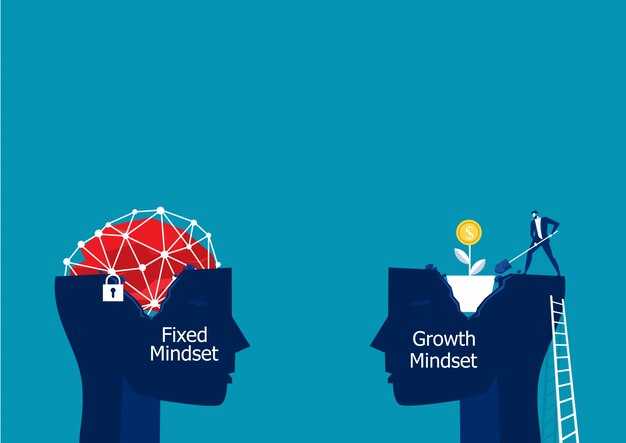
For children with developmental struggles or persistent difficulties on social batteries, prioritize interventions that separate mental-state rehearsal from facial-affect training. Short role-play rituals, marble game simulations, and rule-based drama help learners practice perspective-taking without confusing emotion decoding. Encourage small groups to engage in playful teasing and joking under adult scaffolding so social intention remains appropriate.
Neurobehavioral monitoring: look for patterns such as heightened activation in mirror neurons during affect tasks versus greater frontal recruitment during belief tasks. Use verywell articles and peer-reviewed pieces as implementation guides, but rely on local data for dosing. Track progress across five weekly sessions, adjust scaffolds when response generalization fails, and log qualitative notes when a person shows particular struggles or strengths.
Practical checklist: 1) separate assessment modules; 2) short, counterbalanced scenarios; 3) classroom-friendly rituals for practice; 4) caregiver guidance for infants and preschool routines; 5) documentation of connections between task performance and daily functioning. Avoid mixing scores from distinct domains when making placement or service decisions; clear differentiation yields more targeted support.
Impact on Relationships and Community Functioning
Recommendation: spend five minutes daily with friends using brief perspective prompts to increase accurate interpretation during conversation.
Individual practices
- Measure: record number of perspective-checks per day; target 3–5 per week and compare week-one baseline with week-five results to estimate improvement (expect roughly 10–20% better accuracy in simple role-play tasks).
- Script: after a comment, ask one clarifying question and one reflection sentence (example: “Do you mean X? I heard Y”).
- Example interaction: Simon jokingly says something ambiguous; respond with a neutral check (“Simon, do you mean this as a joke?”) to prevent misattribution of intent.
- Memory support: use short notes or a shared virtual board to log recurrent misunderstandings; review once per week to spot patterns located in conversation threads.
- If someone doesnt answer clarification, treat silence as data point and follow up after five minutes rather than assigning negative intent.
Group and community recommendations
- Norms: create explicit community norms for perspective-taking during meetings – start sessions with a two-minute check-in and a rule that prevents interrupting during another person’s head-turn.
- Training: run five short exercises per month, including quick games that build role-taking (Simon Says style tasks adapted for social cues); measure engagement as number of participants and number of successful perspective identifications.
- Virtual inclusion: design virtual meetings with breakout rooms of four to six people to practice rapid perspective checks; compare accuracy rates between virtual and in-person groups to adjust format.
- Psychological support: offer brief workshops on cognitive biases and memory distortions; include case vignettes (Sally reports misreading tone; group proposes three alternate interpretations).
- United initiatives: coordinate school, workplace, and community center efforts so that norms are consistent across locations located within a neighborhood; consistent practice reduces cross-context miscommunication.
Practical metrics to track: number of clarifying questions per conversation, percent of ambiguous statements resolved within one follow-up, participant-rated accuracy on a 1–5 scale, and number of conflicts de-escalated after implementation. For ready-to-use exercises and worksheets visit positivepsychologycom for structured activities that map to these metrics.
Therapeutic Exercises to Improve ToM in Schizophrenia

Recommendation: 45–60 minute sessions, twice weekly, across 12 weeks; combine structured role-play, video-based feedback, and live coaches to train emotion attribution, belief inference, gaze following, and conversational reciprocity.
Session design: start with guided role-play where participant practices copying facial expressions of a friend or actor, practices passing simple false-belief tasks, and alternates roles to practice perspective shifts. Add short sung prosody drills (10–20 seconds) to train vocal cues; incorporate gaze drills with explicit gaze points and timed turns for pointing and joint attention.
Assessment: run pre/post batteries including Hinting Task, Faux Pas Test, Reading Eyes Test, and computerized social prediction tests that ask timed questions to guess intentions; log response latency and accuracy. Experiments vary in stimuli complexity; longer training regimes tend to yield greater insight and retention. Use ecological measures such as coached video review and real-world role assignments to test transfer.
Neurobiology and mechanisms: functional imaging shows prefrontal activation changes and altered connectivity among social neurons after training; measure changes with fMRI or EEG before and after intervention. Target cognitive process components: belief attribution, intention inference, and affect recognition in multiple forms (verbal, facial, prosodic). Monitor whether improvements in task performance became stable at 3-month follow-up.
Clinical adaptations: tailor difficulty by symptom profile and ages; younger participants respond faster to copying and role-switching while chronic patients may need repeated short drills with coaches and caregiver involvement. For clients wanting social reconnection, include structured friend contact tasks with graded exposure, explicit questions to prompt perspective shifts, and homework that asks them to rethink recent misunderstandings and record alternate perspectives.
Evidence base: Astington’s work and later replication studies show early training affects passing rates on belief tasks and boosts connecting of social cues to action plans; specific experiments became models for adult adaptations and guide coaches in dosage decisions.
 Come Riconoscere e Affrontare lo Stress Emotivo – Strategie Pratiche per una Migliore Salute Mentale">
 4 Predittori del Divorzio e Come Farvi Fronte – Consigli Pratici per Salvare la Tua Relazione">
 5 Componenti Essenziali dell'Intelligenza Emotiva per Guidare in Modo Più Efficace">
 15 segnali di comportamento passivo-aggressivo con esempi – Come riconoscerlo e reagire">
 Sì, puoi andartene in sicurezza da un narcisista – ecco come uscirne in sicurezza e proteggerti">
 Hai Mangiare Già? Il Cibo è il Linguaggio d'Amore Asiatico Definitivo">
 Puoi Essere Dipendente dal Miglioramento di Sé? Segnali, Rischi e Crescita Sana">
 Come Smettere di Procrastinare con la Regola dei 2 Minuti – Una Guida Rapida e Pratica per Iniziare a Fare Ora">
 Datti a te stesso il permesso di vivere la tua vita – Priya Rana Kapoor">
 Envy vs Jealousy – Is There a Difference? A Clear Guide">


