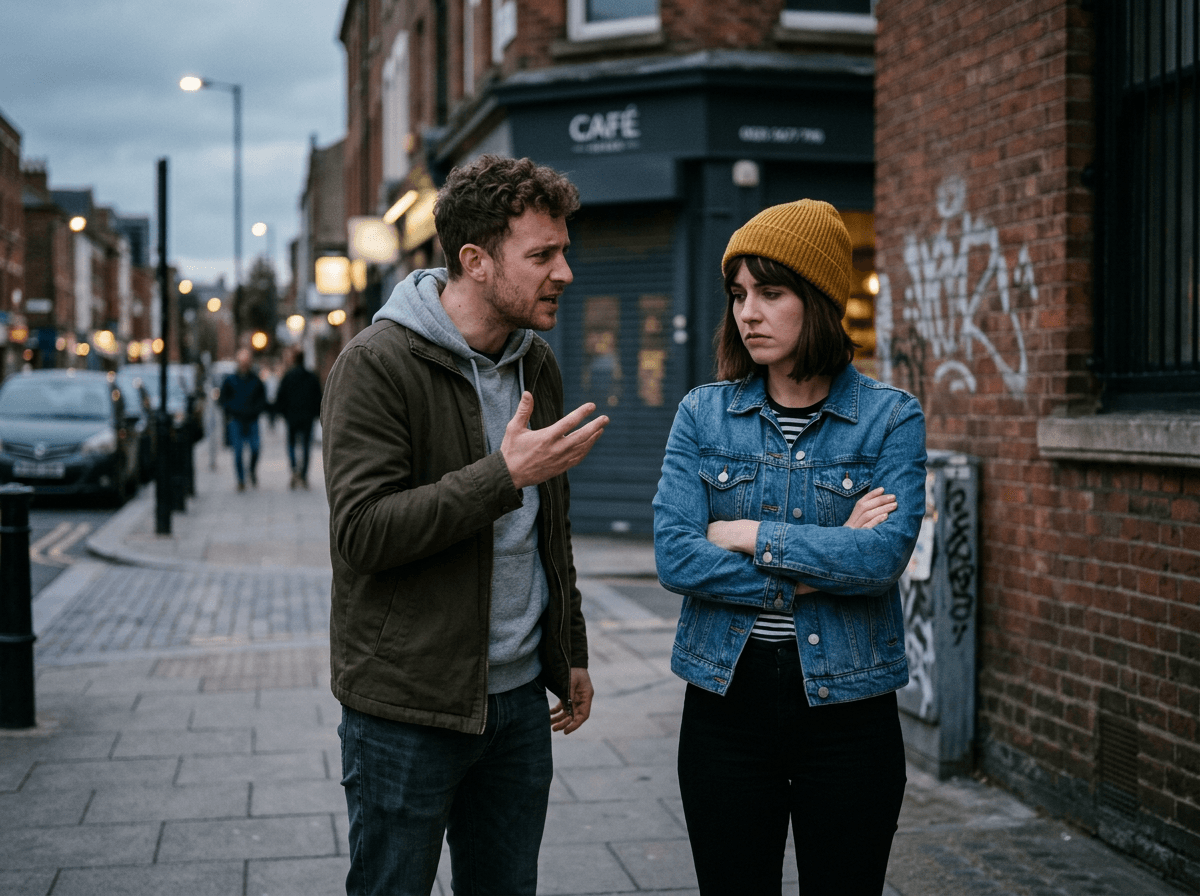
Falling in love is one of the most effortless things a person can do. It requires no skill, no discipline, no particular wisdom. It simply happens — a convergence of timing, chemistry, and circumstance that produces one of the most powerful experiences available to human beings. Staying in love is something else entirely. It requires all the things that falling does not: intention, patience, sustained commitment, and the willingness to keep choosing someone even when the feeling is not doing all the work for you. Understanding the difference between these two experiences is not just intellectually interesting. It is practically essential for anyone who wants a relationship that lasts.
Why Falling in Love Feels Effortless
The neurochemistry of falling in love is well documented. Dopamine surges. Norepinephrine sharpens attention toward the new person. Serotonin levels shift in ways that mirror obsessive thinking. The brain in early romantic love behaves, in measurable terms, similarly to a brain on certain stimulants. The feeling is not imagined — it is chemically real.
This is why falling in love requires so little effort. The brain is doing the heavy lifting. It prioritizes the new person, generates excitement at the thought of them, and produces a biochemical reward for every interaction. The relationship practically runs itself in this phase. Conflicts feel manageable. Differences feel interesting. The future looks easy.
Falling also benefits from idealization. Early in a relationship, couples see each other through a lens that softens flaws and amplifies attractions. This is not self-deception exactly — it is a feature of early attachment. The brain is building a case for commitment, and it does so by highlighting what is best about the other person. The result is a version of the relationship that feels almost too good to be true. Often, in important ways, it is.
None of this diminishes what falling in love is. The feeling is real. The connection it produces is real. But it is not, by itself, a sustainable basis for a long-term relationship. It is a beginning, not a plan.
Where Staying in Love Begins
Staying in love starts precisely where falling ends — when the neurochemical intensity fades and the idealized version of a partner gives way to the real one.
This transition is one of the most misread moments in a relationship. Many people interpret the fading of early intensity as evidence that the love is gone. In most cases, it is not. What is gone is the automatic quality of the feeling — the way it sustained itself without effort. What remains, and what staying in love requires, is the commitment to sustain it deliberately.
That commitment does not look like grand gestures. It looks like small, consistent choices. Choosing to listen when you are tired, to address a conflict rather than let it calcify, to express appreciation for someone who has become familiar enough that appreciation no longer feels urgent. These choices, made repeatedly over time, are what staying in love is actually made of.
Research supports this. Studies on long-term couples who report sustained relationship satisfaction consistently find that the common factor is not the absence of conflict or difficulty. It is the presence of deliberate, sustained investment — partners who actively maintain the relationship rather than assuming it will maintain itself.
The Specific Challenges of Long-Term Commitment
Commitment over time faces challenges that early love never encounters. Understanding them makes them easier to navigate.
Familiarity is one. The same attentiveness that makes a new relationship feel electric can dull with time. The other person becomes known — their habits, their patterns, their responses. That knowledge is one of the great gifts of long-term partnership. It is also one of its risks. Familiarity can shade into taking for granted, and taking for granted is one of the quieter ways that relationships erode.
Life pressure is another. Careers, financial stress, children, health, ageing parents — the challenges that adult life produces do not pause for a relationship. They accumulate inside it, demanding attention and energy that couples might otherwise direct toward each other. Relationships that do not actively resist this pressure — that do not protect time and attention for the partnership itself — gradually reorganize around logistics rather than connection.
Individual change is perhaps the most underappreciated challenge of staying in love. People change significantly over the course of a long relationship. The person someone fell in love with at twenty-eight is not identical to the person they are at forty-three. Staying in love, across that kind of change, requires a commitment not just to the person you know but to the ongoing process of knowing them. It requires curiosity — the sustained interest in who your partner is becoming, not just who they were when you first fell.
What Commitment Actually Means in Practice
Commitment is often framed as a feeling — a certainty, a conviction, an unshakeable sense of belonging with someone. That framing is not wrong, but it is incomplete. Commitment is also, and perhaps more importantly, a practice.
In practice, commitment means showing up consistently — not just in the obvious moments of crisis or celebration, but in the ordinary ones. It means maintaining the habits of connection: the conversations that go beyond logistics, the physical affection that communicates presence, the repair after conflict that prevents resentment from accumulating.
It also means committing to the relationship as a thing worth protecting. Long-term couples who sustain genuine connection tend to treat the relationship itself as an entity with needs — not just two individuals coexisting, but a shared project that requires maintenance. They invest in it, protect time for it and take its health seriously.
Commitment at this level is not always romantic in the conventional sense. Sometimes it looks like agreeing to couples therapy before things get critical or like having the conversation that neither person particularly wants to have. These acts are not glamorous. They are the substance of staying in love.
The Role of Choice in Sustaining Love
Falling in love does not feel like a choice because, largely, it is not. Staying in love is almost entirely a choice — made repeatedly, in both large and small moments, across the duration of a relationship.
This is not a diminishment of long-term love. It is an elevation of it. Falling in love is something that happens to you. Staying in love is something you do. The commitment it requires is a demonstration of something that early love, for all its intensity, cannot yet demonstrate: that you will continue to choose this person when the choosing is not automatic.
That choice is what gives long-term love its particular depth. Couples who have navigated years of ordinary difficulty together — who have changed, disagreed, repaired, and kept choosing each other through all of it — share something that no amount of early intensity can replicate. They share a history of chosen love. And that history is, in the end, what makes a relationship not just real but remarkable.
Conclusion
Falling in love is easy, and it is beautiful. But it is not the measure of a relationship. Staying in love — through familiarity, through difficulty, through change, through all the ordinary days that do not feel like love stories — is the measure. And it is also, for those committed enough to do it, the reward.
The work of sustaining love over time is not a consolation prize for the end of early intensity. It is the thing itself. The commitment that replaces chemistry. The choice that outlasts the feeling. The relationship that two people build not by falling but by staying — deliberately, consistently, and together.