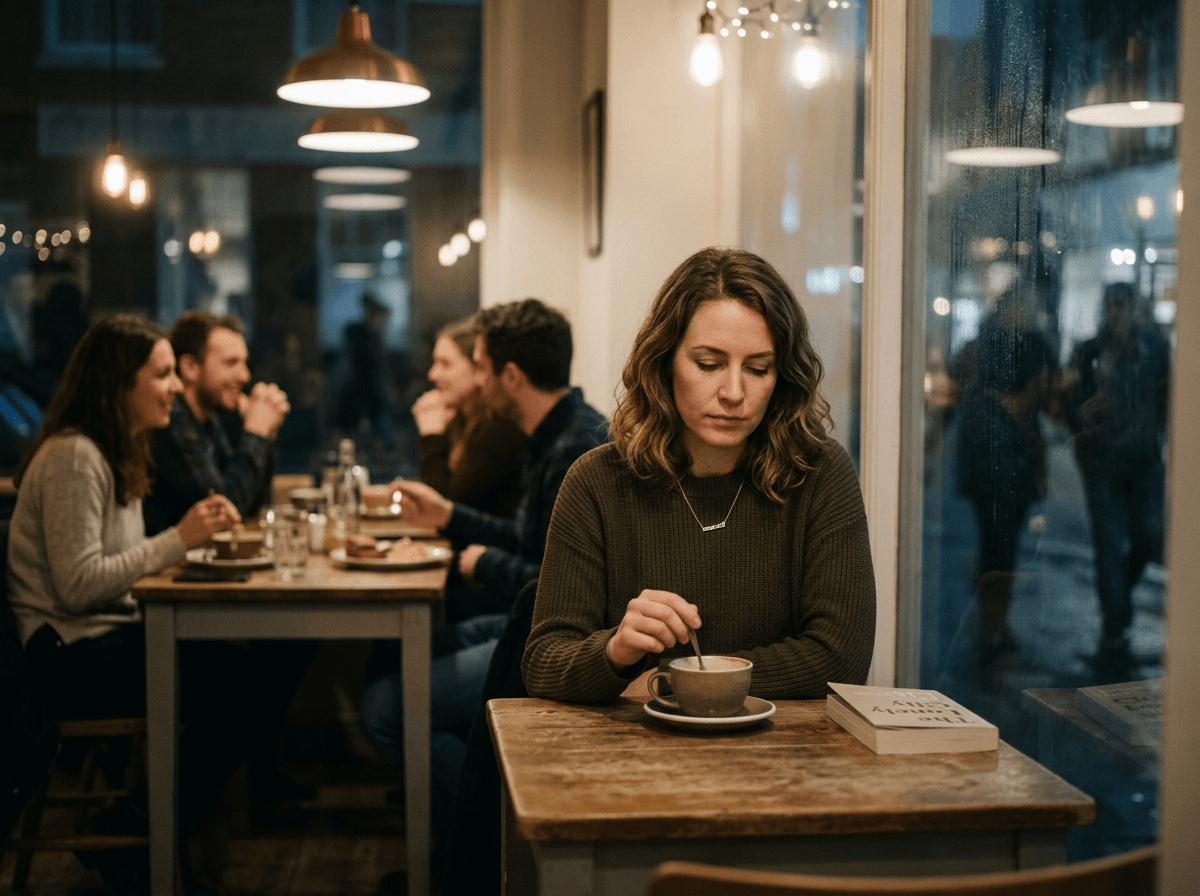
There is a particular kind of discomfort that arrives at family dinners, weddings, and office small talk. Someone asks the question, and the air shifts. "Are you seeing anyone?" For millions of people, the answer — "No, I'm single" — carries a weight it was never supposed to carry. Society frames being single, often subtly and sometimes bluntly, as a problem to be solved. A gap in an otherwise complete life. A waiting room between the life you have and the life that supposedly counts. That framing deserves close examination — and more importantly, firm rejection.
The Social Pressure Around Being Single Is Real — and Manufactured
Modern culture has a couple problem. From romantic comedies to Instagram announcements to the language of milestone birthdays, coupledom appears as the natural destination of a well-lived life. Singleness, by contrast, reads as a detour.
This stigma is not accidental. It runs deep into the architecture of daily life. Tax systems in many countries favor married households. Social events default to "plus one" invitations. Furthermore, the language around single people carries undertones of incompleteness — phrases like "still single" or "hasn't found anyone yet" embed the assumption that the search is ongoing and the failure is personal.
Research backs this up. Studies in social psychology consistently show that single people face lower social status assumptions than their partnered counterparts, even when their professional and personal achievements are identical. The bias runs structural, and as a result it lands hard on people already navigating a world not designed with them in mind.
Recognizing that shame as manufactured — not earned — marks the first step toward dissolving it.
Why Being Single Feels Hard, Even When Life Is Going Well
The gap between how good a single life can actually feel and how others perceive it creates a strange kind of cognitive dissonance. You may carry a rewarding career, deep friendships, a rich inner life, and genuine contentment. And yet, at certain moments, the absence of a partner registers as a verdict.
Part of this response is evolutionary. Humans wire themselves for attachment and community. The desire for a close partnership is real, and nothing is wrong with feeling it. Even so, a clear difference exists between wanting a relationship and feeling ashamed of not having one. One is honest longing. The other is borrowed shame — a verdict handed down by social norms that may have nothing to do with your actual experience.
Beyond that, singleness often disappears from mainstream culture, and that invisibility compounds the difficulty. Representation matters, and the single life — lived fully, not as a prelude — rarely gets its moment on screen or in the cultural conversation. When the stories around you consistently frame your situation as a problem, resisting that view takes real and sustained effort.
Nevertheless, that effort is worth making.
The Hidden Benefits That No One Talks About
Strip away the stigma and what remains is a life with genuine, underappreciated advantages. These are not consolation prizes. They are real features of single life that partnered people often quietly envy.
Autonomy stands as the most obvious one. Every major decision — where to live, how to spend money, which direction to grow — belongs entirely to you. This is not a small thing. Many people in relationships spend years negotiating over careers, cities, lifestyles, and dreams they might have pursued differently if given the space. Being single means your life is yours to design, and that freedom carries real weight.
Personal growth also accelerates when you spend time alone with yourself. Without the emotional shorthand of a long-term partnership, single people develop stronger self-knowledge, resilience, and independent problem-solving skills. You discover who you are in a way that coupledom can sometimes defer.
Friendships, too, tend to deepen. When a romantic relationship no longer absorbs the majority of your emotional bandwidth, the friendships in your life can grow into something extraordinary. Many single people build community ties and chosen family bonds that become the most sustaining relationships of their lives.
Your relationship with time shifts as well. Evenings, weekends, and holidays belong to you. Society undervalues this freedom significantly. The opportunity to pursue creative projects, travel, study, or simply rest without negotiation is, in practice, a genuine form of luxury.
Moreover, dating — when you choose to engage with it — becomes an adventure rather than an obligation. You enter it because you want to, not because you want to fill a void or meet a deadline.
Rethinking What a Complete Life Looks Like
The dominant script says life goes: education, career, partnership, family. Society treats any deviation from that sequence as an anomaly. Yet this script emerged from a particular cultural and historical moment, and it is showing its age.
More people are single today than at any recorded point in modern history. In many Western cities, single-person households now make up the largest residential category. Rather than a crisis, this shift reflects greater economic independence, longer life expectancy, higher standards for what people want from relationships, and a broader cultural permission to live differently.
The idea that a single life is an incomplete life assumes that happiness flows primarily from romantic partnership. The evidence, however, does not support this cleanly. Relationship satisfaction matters enormously, yet so do purpose, friendship, health, creative engagement, and the sense that you live according to your own values. None of those require a partner.
Joy does not arrive pre-packaged in a relationship. Instead, people construct it daily, imperfectly, from the materials of an actual life.
How to Stop Feeling Ashamed of Being Single
Letting go of borrowed shame is not a single decision. It is a practice. Here is what that practice looks like in action.
Start by naming the source of the shame. Most of the discomfort around being single does not originate from inside. It comes from the question at the family dinner, from coupled friends who project their own fears, from the cultural narrative that frames singleness as failure. Once you see where the message originates, it loses some of its power.
Next, stop treating your single life as a waiting room. One of the most corrosive habits is the tendency to put real living on hold until a partner arrives. Travel now. Invest in your home now. Build the community now. The life you intend to start is already underway.
It also helps to seek out portrayals of single life that feel full rather than diminished. They exist — in literature, in podcasts, in the real lives of people around you who thrive while single. Exposure to these stories steadily counteracts the dominant cultural narrative.
Additionally, stay honest about what you actually want. There is a difference between wanting a relationship because you genuinely believe it would enrich your life, and wanting one because you are tired of feeling judged for not having one. The first is worth pursuing. The second is worth examining with some care.
Finally, invest in the relationships that matter to you. Family, friendships, community — these are not consolation prizes for the absence of a partner. They are the substance of a life, and they deserve your full attention.
Being Single Is Not a Problem. It Is a Position.
One version of the single life is lonely, stagnant, and shaped by lack. Another version is expansive, self-directed, and rich with connection. The difference is not luck. It comes down largely to what story you tell yourself about where you are.
Being single does not mean being alone in any meaningful sense. It does not mean being broken, incomplete, or stuck in a holding pattern. It means you live a life that has not followed the standard script — and in a world where that script grows increasingly outdated, there is genuinely nothing to feel ashamed of.
Singleness, as a social stigma, is a construction. Society built it, and society can dismantle it. That dismantling does not happen by finding a partner. It happens by recognizing that the life you are living — right now, on its own terms — already gives you everything you need to work with.
The question, then, is not when your real life will begin. The question is what you plan to do with the one that is already happening.