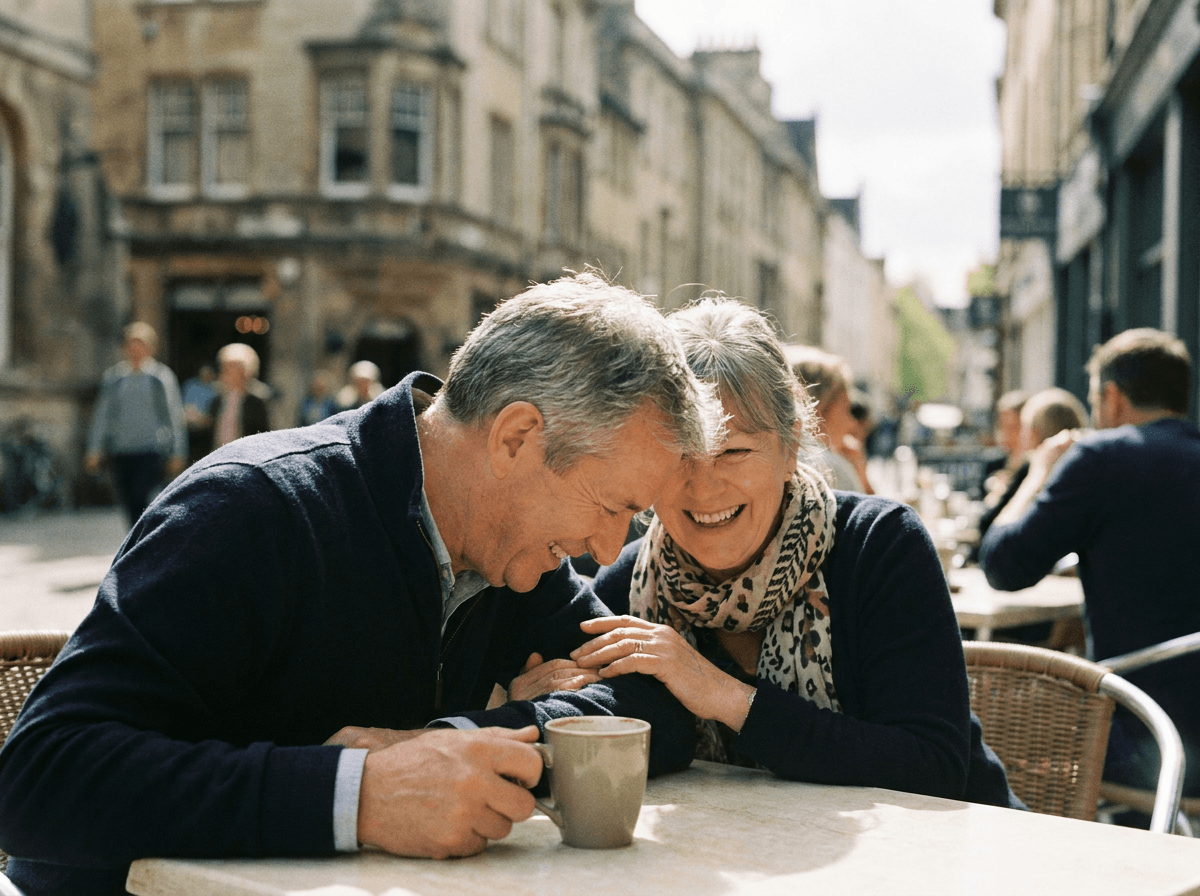
There is a version of dating that most people have never experienced. One where the biological clock has stopped ticking. The career is established. The children are grown. And the opinions of others carry significantly less weight than they once did. Dating after 50 can feel like this. Not for everyone, and not without its own complications. But for a growing number of people navigating romantic life in their fifties and beyond, something unexpected has happened: dating has become genuinely enjoyable. The pressures that defined earlier decades have lifted. What remains is something closer to freedom.
What Changes When the Pressure Lifts
Earlier stages of dating carry a specific kind of weight. The pressure to find someone before it is too late. The anxiety around whether a relationship will lead to marriage, children, or the right kind of future. The performance of potential — presenting not just who you are but who you might become, filtered through what you think a partner wants to see.
By 50, most of these pressures have either resolved or lost their grip. The question of children is typically settled. The career trajectory is largely established. The social pressure to be coupled up, so acute in the twenties and thirties, softens considerably as peers normalize a wider range of life arrangements. Dating later in life begins from a different baseline. Not one without challenges, but one where the existential stakes of each encounter feel considerably lighter.
Read also: Beyond the Honeymoon Phase: Stages of a Relationship and What Comes Next
This shift produces something valuable: the ability to enjoy the process rather than endure it. People who date after 50 consistently report that encounters feel less fraught. A date that does not lead anywhere is simply a date that did not lead anywhere, not evidence of failure or a narrowing window. That recalibration changes the emotional texture of dating entirely.
The Self-Knowledge That Later Life Dating Brings
One of the most significant advantages of dating after 50 is the self-knowledge that accumulates through decades of lived experience. By this stage, most people understand their own patterns with reasonable clarity. They know what they genuinely need in a relationship, what they have repeatedly tried to make work and why it did not, and what they are no longer willing to tolerate.
Read also: The Dating Landscape in 2040: A Grounded Look at What Comes Next
This clarity is not cynicism. It is discernment, and it makes dating considerably more efficient and honest. Someone who knows they need a partner with genuine emotional availability will not spend months investing in someone who clearly lacks it. Someone who understands that they thrive in relationships with generous humor will recognize its absence more quickly. The experiences of earlier decades have done real work.
This self-knowledge also produces a more honest version of self-presentation. The performative quality of younger dating, projecting potential, managing impressions, softening edges, tends to drop away in later life. People who date after 50 generally report presenting themselves more authentically. They are less worried about being found acceptable and more interested in finding someone genuinely compatible. That shift is liberating for both people in the encounter.
Read also: Compersion: What It Is, Where It Comes From, and Why It Matters
Redefining What a Relationship Is For
Dating after 50 also invites a fundamental reconsideration of what a relationship is actually supposed to provide. Earlier in life, the expectations layered onto partnership are enormous. A partner is supposed to be a co-parent, a financial collaborator, a social companion, a source of identity and validation, and a romantic match, simultaneously, indefinitely.
By 50, these expectations have typically been tested, refined, and in many cases released. People have lived enough of life to know which of those dimensions matter most to them personally, and which ones they can meet through other channels. Some people dating later in life are not looking for cohabitation or legal partnership. They want connection, companionship, intellectual engagement, and physical closeness: on terms that fit their actual life.
Read also: Stop Obsessing Over Someone Today: Find Freedom, Feel Better, and Love Yourself
This flexibility produces a wider range of relationship possibilities. Some people dating after 50 find long-term committed partnerships. Others find deeply meaningful connections that do not fit traditional templates. Without external pressure to conform to a specific relationship structure, people can be honest about what they actually want. They can find partners who want the same thing.
The Practical Landscape of Dating After 50
Dating after 50 takes place in a different practical landscape than earlier decades. Most people at this stage carry more complex histories — previous marriages, children with other partners, established living arrangements, and financial structures built for independence. These realities require more explicit early conversation than younger dating typically demands.
Read also: How to Prepare for Your First Date After Online Dating
This is not a disadvantage. It is a context that rewards directness and rewards it early. People who date after 50 tend to appreciate a partner who can discuss practical realities openly, who they are, what their life looks like, and what they are genuinely looking for. The tolerance for ambiguity and mixed signals drops considerably with age. That intolerance is healthy. It moves things forward or ends them cleanly, both of which are more respectful than prolonged uncertainty.
The digital landscape of dating has also opened considerably for this age group. Dating apps and platforms specifically oriented toward older adults have expanded the pool significantly. Many people dating later in life find that the range of compatible partners available through digital means far exceeds what their immediate social environment would offer. The infrastructure for meeting people has improved at exactly the stage of life where organic encounters become less frequent.
What Dating After 50 Asks of You
Freedom in dating does not mean effortlessness. Dating after 50 asks something specific of the people who navigate it well: a willingness to remain open despite accumulated experience.
The risk of later life dating is not naivety: it is overcorrection. People who have been hurt, disappointed, or profoundly changed by past relationships sometimes arrive at 50 with protective armor that closes off exactly the openness that connection requires. The experiences of earlier life are valuable as information. They become a problem when they function as a barrier.
Dating well after 50 means carrying self-knowledge without carrying cynicism. It means bringing discernment to the process without bringing a verdict about how it will end. It means staying curious about people, genuinely curious, rather than running them against a checklist assembled from past disappointments.
Conclusion
Dating after 50 is not a consolation prize. For many people, it is the first time dating has felt genuinely aligned with who they actually are. The pressure has lifted. The self-knowledge is real. The expectations are honest. And the capacity to enjoy another person's company, without the weight of existential stakes, is fully developed.
Later life offers something earlier decades rarely could: the freedom to date as yourself, for reasons that are genuinely yours, toward a version of connection that fits your actual life. That freedom is worth embracing.
These articles are for information only. They are not a substitute for consulting a psychologist, psychotherapist or other qualified specialist.