English
  Russian
  French
  German
  Italian
  Spanish
  Polish
  Ukrainian
  Turkish
  Portuguese
  Greek
Greek  Arabic
  Korean
  Chinese
  Japanese
  Czech
Czech 

Protocol: 5 sessions per week – 10 min focused sequence drills (pattern recall, serial lists, paired associations) followed by 5 min of intense movement (example: 2 sets of 10 burpees with 30s rest). Warm up with a 90s stretch and mobility set to protect joints and muscles. Aim to double the number of items to recall every two weeks until you master the 30-item benchmark; if you have major joint issues, substitute burpees with step-ups or cycling sprints.
Track objective gains: time to complete recall, error count, and reaction time. Log weekly so you can assess whether the routine works for you; in pilot groups improvements were apparent by week 4 and increased through week 8. If progress is slow, reduce movement intensity and focus on accuracy, then increase load again. Use both numeric scores and self-reports to detect short-term improvements and persistent forgetfulness.
Design strategy to maintain adherence: rotate drills so those tasks feel novel, pair practice with a training team for accountability, and add a 3-minute mindfulness scan before each session to lower stress and improve encoding. For getting consistent benefits, set a calendar cue, review performance twice weekly, and treat difficulty on a task as a trigger to slow the pace and repeat until mastery. Combining movement and recall increases blood flow and catecholamine production, producing huge gains in recall speed without needing long sessions.
Daily brain-boosting games and exercises

Do 20 minutes every day: split into three focused drills (7 minutes associative chains, 7 minutes problem-solving, 6 minutes spatial/memory). Reserve that time first thing or just ahead of mentally demanding work so transfer to other tasks is immediate.
Make it a habit: schedule the session on your calendar and treat it like physical training for muscles of recall. ucla showed targeted practice increases markers linked to neural production; be sure to record minutes and perceived difficulty to track progress.
Specific drills including rapid associations (name 10 related words in 60 seconds), dual-task arithmetic (count backward while tapping alternating hands for 3 x 90 seconds), and visual rotation (rotate simple shapes mentally for 5 minutes). They train retrieval, attention and spatial capacity simultaneously.
If something is difficult, reduce load: start with 30-second bursts and build to full seven-minute sets once accuracy improves. Practice them without distractions; close phone notifications, avoid doing anything else during the block.
Use variety to build transfer: crossword puzzles, short coding puzzles, language flashcards with spaced repetition, and tactical problems (chess puzzles or route planning). Many studies show mixing formats helps enhance retention more than repeating a single task again and again.
Developing progress metrics: log minutes, success rate, and perceived effort weekly. Change difficulty when accuracy exceeds 80% for two consecutive days. Perhaps increase task complexity or timing to expand working memory capacity and processing speed.
Practical targets: 20 minutes daily, seven days a week is ideal; if that’s not possible, aim for regular sessions five days with two lighter sessions. Never drop practice for more than one week without resuming–skills come back slower than they build.
Once routines are established, they will build resilience: you will notice faster recall, fewer errors in production tasks, and quicker association formation. Tailor drills to what each person needs and adjust ahead as capacity increases.
5-Minute Focus Boosters for Morning Routine
Do a 90-second seven-count breathing plus rapid subtraction drill: inhale 4, hold 7, exhale 8 while subtracting 7 from a three-digit number, repeat until 90 seconds expire; this raises alertness, increases blood flow, enhances brainpower per research. Be sure to sit upright, keep eyes open, set a visible timer for precision.
Spend two minutes practicing language retrieval: name seven verbs, seven nouns, seven colors aloud in thirty-second blocks; this engaging exercise trains lexical access, increases processing speed, enhances verbal fluency according to studies. If someone hates word puzzles, switch to naming household things while walking in place.
Spend 60 seconds on a rapid problem-solving task: choose a one-minute puzzle from paper or apps, time responses, aim to solve at least three items; doing timed trials strengthen attention control, improve understanding of error patterns. Treat mistakes as data, record one thing to fix next session so you can master that micro-skill over a week.
Right after the drills, log one metric in a seven-day tracker: number solved, median response time, mood rating; commitment to five-minute practice every morning shows huge benefits in studies for older adults, with lower decline rates in non-smoking cohorts, theres measurable improvement in executive function with consistent effort. Use this short routine as a reliable part of morning habits to enhance focus, increasing resilience for longer tasks.
Visual-Spatial Puzzles to Improve Navigation
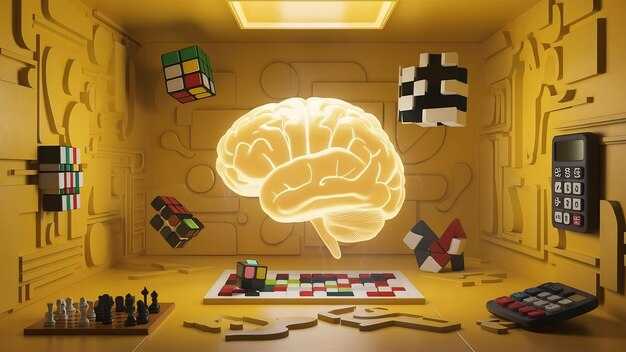
Do 20–30 minutes of targeted visual-spatial exercises at least four times weekly; prioritize map-route planning, timed mental-rotation sets, tangram assemblies, jigsaw puzzles, letter grids with mixed numbers.
Begin with low-complexity tasks: 5–12 tangram shapes, 24-piece jigsaws, simple letter-grid mazes; after two weeks increase challenge by 25% for pieces or rotation angle, reduce allowed time by 10% while keeping accuracy above 80%. Track session duration, error rate, completion time; youll notice faster scene parsing and improved wayfinding after 6–8 weeks.
Specific solving drills: trace a 3-step route on an unfamiliar map, then simulate that route aloud while visualizing landmarks; practice reversing the route from memory; use alternating sessions that mix real-world walking routes with indoor letter/number grid tasks to translate tabletop skills into street experience. Use a strategy of previewing three landmarks ahead before moving; similar preview routines reduce on-route hesitation.
Evidence and mechanisms: ucla work showed increased activation in hippocampal and parietal networks during focused spatial practice; other studies have shown links between regular spatial stimulation and reduced risk markers for alzheimers. Lab measures have shown improving spatial skills, while self-report experience frequently records higher confidence in unfamiliar environments.
Make training a habit by inserting two short sessions into commute prep, using puzzle books during breaks, treating one weekend block as a longer simulation of a new neighborhood. Small rewards help: treat completion with a brief walk down a new street, log progress to create visible gains. The goal is increasing daily stimulation that will help retention; being consistent converts exercises into useful strategy rather than one-off tasks.
Many practical tips: mix paper maps with app-free navigation, label three letters or landmark codes per route to speed recall, time yourself solving map problems versus reading route instructions, compare similar routes to strengthen pattern recognition. Perhaps combine social sessions with peers for competitive puzzles, which can further stimulate attention while making practice enjoyable.
Proverb to remember: “Use it or lose it” – overall practice, measured progression, thoughtful strategy will push spatial skills ahead of declining tendencies.
On-the-Go Memory Drills
Begin with a 5-minute spaced-recall routine during transit: study six items for 30 seconds, wait 90 seconds while doing light movement, then recall items aloud twice.
- Spaced-recall bursts: carry a 6-item list, use a timer set to 30s study, 90s break, 2 recall cycles, repeat once more; frequency: twice daily for 4–6 weeks for measurable gains in retention.
- Dual-task physical drill: perform a set of 10 burpees, immediately recite a 10-word sequence, rest 60s, repeat twice; purpose: double load on processing to strengthen memory under stress.
- Auditory chunking while commuting: listen to 20–30s musical phrases, break into chunks of three notes, reproduce patterns vocally; similar tasks improve auditory sequencing abilities, attention, musical memory transfer.
- Micro problem-solving sprints using apps: choose short puzzles requiring logic or pattern matching, limit to 3 minutes per sprint, complete 3 sprints daily; best apps offer difficulty scaling, immediate feedback, spaced repetition export.
- Flashcard rotation: load 40 new items into a spaced-repetition app, review 10 items per session, mark items failing recall for extra review later that day; aim for 12 reviews per item across 3 weeks.
- Face-name pairing: while waiting, scan social feeds, select 5 faces, assign vivid cues, test recall after 10 minutes, again after 24 hours; method targets associative memory, useful for many social scenarios.
- Daily schedule: 5-minute spaced-recall on commute, 3 micro-sprints during breaks, one 5–10 minute flashcard session before bed.
- Progress metrics: track percent correct per session, log time-to-recall, expect 10–25% improvement in recall speed within 3–6 weeks if commitment consistent.
- Variation plan: rotate drills every 7 days to target different processing channels, include musical chunking, visual sequences, numeric series.
Evidence notes: ucla work highlights that brief, repeated practice produces transfer effects to working-memory processing when combined with problem-solving tasks; several studies report effect sizes that suggest modest gains with short daily commitment.
Risk management: if frequent forgetfulness interferes with safety or function, consult psychiatry for formal assessment; thresholds for referral include repeated missed appointments, trouble managing finances, sudden decline in attention.
Practical tips: use apps that export review logs, set reminders tied to lifestyle anchors such as coffee or commuting, alternate motor activity with recall to increase durability, reduce sessions when sick or fatigued to avoid diminishing returns.
Attention-Training Routines for Task Switching
Do a focused 20-minute switching session: alternate 60 seconds of rapid arithmetic with 60 seconds of text-summary (15 rounds), three times per week, and record accuracy plus reaction time after each session.
- Basic protocol: 5-minute warm-up (simple reaction test), 20-minute alternating block, 5-minute debrief; only increase difficulty when accuracy >85% for two consecutive sessions.
- Double-task progression: begin with alternating tasks, then add a concurrent secondary cue (tone or light) to create a controlled double load after week 3.
- Measurement: compute switch cost = mean RT_switch − mean RT_repeat; target a 15–25% reduction in switch cost and a 5–10% increase in accuracy in 6–8 weeks.
Structured exercises (use a timer or apps that log RT and accuracy):
- Number/Words alternation – 60s arithmetic, 60s word-categorization; records errors and RT variance.
- N-back alternating – 2-back for 90s, 0-back for 30s, repeat 10 rounds; increases working memory load and switching demand.
- Stroop switch – 30s color-naming, 30s word-reading, cue every trial; progress to unpredictable cues to train rapid re-orienting.
Weekly programme example: Monday (20 min switching + 10 min debrief), Wednesday (25 min with double-task), Friday (30 min mixed tasks). If youre getting fatigued, split sessions into two 10–15 minute micro-blocks; having short recovery decreases error drift.
- Data targets: reduce mean RT by 80–150 ms on switch trials, decrease intra-session RT variability by 20%, and observe modest increases in accuracy-based scores.
- Objective logging: export session CSV from apps, track moving averages over 4-week windows, have someone review progress monthly.
- Transfer checks: test with real tasks (email triage for 10 minutes, then a planning task) to verify benefits beyond exercises.
Practical setup: sit facing a clear visual cue, remove notifications, use low background noise, and keep hydration; these small controls make switching exercises much easier to perform reliably.
Physiological and task rationale: repeated switching engages frontal lobe networks and working memory circuits, increases task-set reconfiguration efficiency, and strengthens attention “muscles” through repeated high-frequency toggling; programme adaptations should be evidence based and graded.
Progress markers and tips: youre likely to see initial accuracy drops when adding double loads – that is normal; come back to simpler blocks for two sessions, then reintroduce complexity. When youre getting consistent gains, increase switch frequency (from 60s to 30s) or add semantic shifts (numbers ↔ words) to push frontiers of flexibility.
- Concrete ideas to try: alternate visual search with verbal fluency, mix timed recall with categorization, use mountain-of-tasks breakdowns (10-minute chunks) for real-world practice.
- Apps and tools: use adaptive timers, task-logging apps, and n-back utilities that export performance data; youll want CSV exports for trend analysis.
- Outcome interpretation: look for increases in accuracy and decreases in switch cost rather than single-session highs – consistent small gains show durable improvements in abilities and memory-related control.
Real-World Problem-Solving Challenges
Schedule four 45–60 minute real-world problem sessions per week: planning, budgeting, spatial layout, troubleshooting.
Each session splits into two modules: a timed planning/problem-decomposition task (20–30 minutes); a focused error-detection or repair task (20–30 minutes). Alternate solo drills with a weekly team exercise of 3–5 participants to build collaborative decision routines.
These modules require measurable outputs: completion time in seconds, accuracy as percent correct, subjective effort on a 1–7 scale. Choose tasks with clear success criteria; factor novelty, real stakes, emotional relevance when assigning difficulty levels.
Measure progress biweekly. If improvement stalls, double practice duration for one week or add complexity by a factor of two in constraints; continue adjustments until accuracy drops below a pre-set threshold or subjective effort exceeds 6 out of 7.
Many studies have demonstrated that targeted real-life problem practice enhances executive control, reduces age-related functional decline risk, and can delay measurable loss of task flexibility. Researchers observing longitudinal cohorts reported transfer to daily activities when training tasks matched occupation-relevant demands.
Practical examples: reconstruct a small appliance from a manual, redesign household budget to reduce expenses by 10% monthly, plan a multi-stop route minimizing fuel use, lead a volunteer team through a local logistics challenge. If solitary drills feel stale, introduce another constraint such as time pressure or role rotation; something that forces strategy shifts rather than repetition alone.
Use short debriefs after each session to record what worked, what failed, and the primary reason for errors. Case note: a community pilot led by sharon emphasized error analysis, reporting faster improvements in understanding task dependencies when participants reflected with peers. Track both objective gains, subjective readiness, evidence of real-life transfer to assess long-term benefit.
Target at least three months of this regimen before re-evaluating baseline performance; just one week of activity will not reliably stimulate lasting change. Maintain variety, escalate challenges gradually, document outcomes to build an evidence-based routine that strengthens problem-oriented capacities mentally well into later life.