

 German
  English
  Russian
  French
  Italian
  Spanish
  Polish
  Ukrainian
  Turkish
  Portuguese
  Greek
Greek  Arabic
  Korean
  Chinese
  Japanese
  Czech
Czech 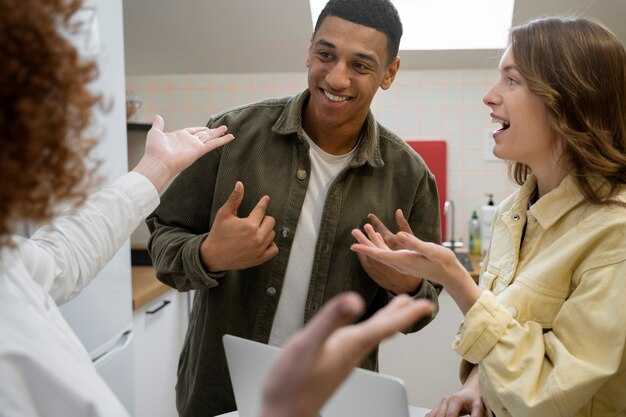 How to Read People – 3 Proven Techniques to Decode Body Language & Intent">

Recommendation: Use a three-step routine–focused noticing, strategic mirroring, and cluster-signal analysis–to decode intent within minutes during real conversations. Apply each step for 60–90 seconds: that short window gives you reliable cues without becoming overly intrusive and helps you act on signals rather than guesses.
Focused noticing. Start by scanning concrete markers: eye direction, micro-expressions, hand placement and shoulders. For instance, if someone narrows their eyes while their shoulders tense, record that pattern mentally and watch for repetition. Quantitative practice: run five 90-second observations per day for a week and note which cues repeat; youll sharpen pattern recognition and reduce false positives. Use a simple log (time, interlocutor type, cue, reaction) to spot trends that matter to your role or department.
Strategic mirroring. Match posture and tempo subtly to build rapport and test intent. Mirror a relaxed shoulder angle and speech cadence at 80–90% of the other person’s level; this increases openness without mimicking. Behavioral researchers and co-authors of small-group studies report cooperation rises roughly 20–35% when mirroring stays subtle. If the person withdraws or stiffens, stop mirroring immediately and switch to neutral posture–that reaction itself is a clear signal about trust.
Cluster-signal analysis. Treat single cues as weak evidence and rely on clusters instead: combine facial expression, gesture, vocal tone and proxemics into a single read. When three or more signals align (for example, quick glances to the exit, crossed arms, and clipped answers), act on the pattern rather than the isolated thing you first noticed. Use the third-check rule: after observing two matching signals, wait 10–30 seconds for another; if another appears, intervene or change strategy. This method reduces bias, helps you infer motive behind actions, and improves decision speed in negotiations or interviews.
Technique 1 – Microexpressions: Spot brief facial leaks
Train to spot 1/25–1/5 second microexpressions: watch short clips, pause at a suspected flash, mark the exact frame and label the muscle movement (eyebrow, lip corner, cheek) to convert quick observations into reliable reads.
- Establish a neutral baseline with each person to limit preconceptions; compare every flash to that baseline rather than to a mental template.
- Pick controlled practice material (getty stills and 10–30 second interview clips); timing these materials allows you to measure progress and recognize flashes by timestamp.
- Observe specific cues: tiny frown lines, micro-eyebrow raises, brief lip tighten. A single instance under 1/5 second often signals unspoken emotion rather than deliberate expression.
- Differentiate valence: quick upward mouth corners correlate with positive affect; downward corners or a pulled-down lip signal defensiveness or down mood, especially when jaw tension appears.
- Watch for mixed signals: a smile with tightened eyes is authentic, a smile with flat eyes or fidgety hands suggests masking; tune attention to eyes and asymmetry to avoid false reads.
- Label then verify: name the emotion silently, then watch the next 2–3 seconds for matching responses (tone, posture). If responses match your label you read correctly; if else, revise your interpretation and note what misled you.
Practice routine: five 60-second sessions per day for two weeks. Each session: pause at suspected microexpressions, log the time, note whether the change was subtle or overt, and record whether the person looked nervous or relaxed afterward. This drill builds control beyond guesswork and produces concrete insight.
- Drill A – rapid recognition: 30 clips, pause, identify emotion in under 1 second, then check full clip for context.
- Drill B – verification: watch full 10–30 second clips, flag microexpressions, then annotate subsequent verbal and nonverbal responses to confirm or refute your read.
- Drill C – real interactions: use brief notes (time, cue, label) after real conversations to track patterns and reduce bias from preconceptions.
Use these steps to master subtle facial leaks: the method allows faster, more accurate reads, reduces misinterpretation when someone seems fidgety or defensive, and gives clear insight into unspoken states rather than relying on surface impressions.
Where to focus: eyes, mouth and brows for instant clues
Start with the eyes: in conversations scan gaze direction, blink rate and pupil openness during the initial 1–3 seconds – they reveal attention and interest faster than words.
Concrete checks: a normal blink rate sits near 15–20 blinks per minute; a sudden spike often signals stress, a sharp drop can mean cognitive load. If a person leans forward and holds steady eye contact, that combination suggests engagement; if they leans back while averting gaze, the opposite is likely. Use these against baseline: compare to how the same persons behaved just moments past.
Mouth signals give polarity and control cues: tight lips or compressed mouth corners point to restraint; an asymmetric smile that appears under 0.5 seconds is a quick leak of genuine feeling, while a smile that begins at the mouth but lacks eye involvement usually signals politeness. Dont treat a single smile as truth – cluster mouth signs with eyes and brows before calling it sincere.
Brows resolve intent and timing: an inner brow raise with tension between brows often signals confusion or deep processing; a rapid outer brow lift (single-raise) can mark surprise or a quick appraisal. Watch onset and offset: raises that pop up and disappear in under 0.5 seconds tend to be reflexive; sustained furrows for several seconds require follow-up questions.
Practical checklist for instant reading: (1) note the initial 1–3 second reaction, (2) count blinks if time allows, (3) check whether eyes, mouth and brows move together – congruent movement strengthens the signal, (4) if signals conflict, establish baseline through a neutral question, (5) if youve seen the same pattern across different moments, weight it higher.
Use small experiments: in one example Henrik asked a neutral question, then paused; when the person relaxed their jaw and softened the eyes, Henrik moved forward with the request. That sequence – question, pause, micro-change, action – maps to many conversations and requires no special equipment.
Keep context and source in mind: lighting alters pupils, cultural norms alter smile usage, and physical discomfort alters expression. For an источник on facial signals consult empirical work on microexpressions and gaze behavior. Apply these points, let clusters guide you, and dont rely on single cues when the matter affects decisions or relationships.
Timing and duration: recognizing flashes under a second
Watch for micro-expressions that last 40–200 ms (about 1/25–1/5 second); mark them as rapid cues, then verify with context before labeling intent.
Measure with a camera or stopwatch: 120 fps captures 8.3 ms frames, 240 fps captures 4.2 ms frames, so use 120–240 fps for reliable capture. Train by reviewing clips at 25% speed and counting frames: a 40 ms flash equals ~5 frames at 120 fps. This concrete metric helps you separate noise from revealing signals.
Track clusters between face, head and hands: a brief mouth tightening on the face plus a quick head turn and an instant self-touch commonly signals uncertainty or suppressed emotion. One isolated flash does not make someone a liar; combine timing, verbal content and baseline for a stronger read.
Use questioning and feedback loops: ask an open-ended question, watch the 0–500 ms window after the prompt, then compare reactions when youre talking vs listening. If youve practiced this pattern, youll spot consistent micro-patterns faster and with less second-guessing.
Apply simple drills that research-backed organizations and Ekman school methods recommend: 10 minutes daily of flash identification, progressively faster clips, and tagging the character of each flash (neutral, anger, contempt, fear, joy, sadness, surprise). That routine improves both intuitive and analytic recognition.
| Signal | Typical duration | What it can convey | Practice drill |
|---|---|---|---|
| Micro-expression (face) | 40–200 ms | Concealed emotion; intense but brief | Review 240 fps clips at 25% speed, label emotion |
| Gaze aversion | 200–600 ms | Uncertainty or processing | Ask open-ended questions, time response windows |
| Self-touch (hands to head/face) | 150–600 ms | Comfort seeking, stress, thinking | Compare against baseline during casual talk |
Focus on seeing timing, not just shape: an intense, revealing flash that takes 60 ms carries different weight than another that takes 180 ms. Western studies report similar ranges but expect cultural variation. This article gives practical timings and drills for helping you build reliable skill rather than guesswork.
If you need a classroom-ready exercise, film 30 two-question exchanges, annotate each micro-moment, then review patterns across subjects; organizations that teach interrogation and negotiation use this same method. Thanks for reading and practicing these measures; they speed recognition and reduce uncertainty.
Common microexpressions and the likely emotions they signal
Focus on the eyes and mouth first: microexpressions typically last 0.04–0.2 seconds and often happen before words, so spotting them gives a faster read than speech alone.
- Happiness (genuine) – Face: AU6 (crow’s feet) + AU12 (lip corner pull). Posture: slight forward lean, open chest. They tend to show a full Duchenne smile; youll notice eye crinkling even when the mouth is controlled. If smiling only with the mouth, treat the signal as polite, not sincere.
- Surprise – Face: raised eyebrows, wide eyes, dropped jaw. Posture: brief freeze or recoil. These microexpressions happen fast and indicate real-time detection of unexpected information; use a clarifying question to know whether the surprise is positive or negative.
- Furcht – Face: brows raised and pulled together, upper eyelids tensed, mouth slightly open. Posture: backward shift or rigid stance. Noticing fear early can help you steer conversations away from threats or toward reassurance.
- Anger – Face: eyebrows down, eyes hard, lips pressed or parted with tight corners. Posture: chest forward, hands clench. Anger often leaks toward confrontation; give space or ask a calm, specific question when you see brief anger cues.
- Disgust – Face: nose wrinkle, upper lip raise. Posture: head tilted back or turned aside. Disgust tends to indicate rejection; treat sudden disgust as a signal to probe what specifically caused the reaction rather than assume intent.
- Sadness – Face: inner brows up, mouth corners down, eyelid droop. Posture: slumped shoulders, slow movements. Sad microexpressions can be brief and subtle; paying attention to reduced animation helps you respond with empathy.
- Contempt – Face: unilateral lip corner raise or smirk. Posture: subtle lean back or one-sided shoulder drop. Asymmetry across sides of the face often signals contempt or dismissal rather than friendliness.
Use a three-level check for any microexpression: 1) baseline – know how the person usually looks while neutral; 2) timing – note if the microexpression appears before, during or after speech; 3) congruence – compare face and posture with words. This method reduces false reads when signals appear ambiguous.
- Practice with short clips at 0.04–0.2s speeds and label each microexpression; feedback on hits and misses helps build accuracy.
- When you meet someone in business or life and see a mismatch (for example, smiling mouth with non-engaged eyes), ask a targeted question about feeling or preference rather than assuming motive.
- Paying attention to body sides and symmetry improves reads: unilateral cues often indicate suppressed or mixed feelings.
Microexpressions are largely universal across cultures, but intensity and social display rules vary; interpreting them without context is difficult because words, posture, and situational cues change meaning. Use microexpressions as one data point within broader storytelling about behavior rather than a final verdict, and youll increase your social intelligence and real-world accuracy when decoding others.
Short drills to train rapid facial recognition
Do four timed drills daily: 60-second flash-ID (20 faces, 3s each), 90-second micro-expression spotting (30 brief clips, mark onset), 2-minute paired-distinction (two similar faces, label differences), and a 3-minute live-observing run with immediate feedback. Track accuracy and reaction time; aim for 80% correct and sub-1.2s median reaction on flash-ID within three weeks.
Flash-ID: use photo banks with labeled emotions and neutral faces. Set a timer, present each face for 3 seconds, then give a single-word label. Experts report that 20–30 items per set yields best retention. If mislabels happen, flag the image and repeat it twice at the end of the set. Don’t surrender to uncertainty–mark guesses and review with open-ended questions that probe why you chose that label.
Micro-expression spotting: use silent 0.5–1s clips. Count onset frames and note whether the expression touches eyes, mouth or brow; include head and limbs posture to check congruence. Typically trainees miss eye-related cues first, so isolate eye-only crops for 50 repetitions. Progress when you detect onset correctly on 70% of trials.
Paired-distinction and recall: alternate two similar faces for 45–60s periods, then close your eyes and write five distinguishing features. Use only visual cues–no names. This trains perceptual templates so peoples from diverse backgrounds become easier to separate. Record which features you wanted to remember and which you simply forgot; repeat until recall errors drop by half.
Live-observing and transfer: in casual conversations, watch for micro-timelines–initial tensing, peak, release–and compare to labeled clips. Use short, low-stakes interactions first before applying skills in high-stakes settings. Ask open-ended questions after each practice: whether your label matched feedback, what touched your judgment, and what you wont do next time. Measure progress weekly and adjust methods rather than relying on basics alone; that approach truly shifts the norm in seeing subtle expressions.
Technique 2 – Posture & Proxemics: Read power, comfort and boundaries

Stand at 0.5–1.2 m for one-on-one talk to keep persons comfortable; move closer only if they lean in, and step back when they shift away.
Read torso and shoulder orientation: a body turned to the side or keeping one shoulder back often signals a reserved stance or a hidden agenda, while a square chest and raised chin project confident intent. Arms crossed or clenched fists show defensiveness; open palms and visible hands indicate willing engagement and honesty.
Scan micro‑behavior through the first 10 seconds using a quick “stratyner” check: note feet direction, shoulder alignment and hand activity. Fidgety fingers, quick leg bounces and tight jaw are correlated with anxiety in studies found across settings; these cues let you treat them as stressed rather than oppositional.
Match proxemic zones to the situation: intimate 0–0.5 m for close relationships; personal 0.5–1.2 m for friends and collaborators; social 1.2–3.6 m for professional exchanges; public beyond 3.6 m. Cultural values change preferred distances, so watch how comfortable a person is and adjust to create ease rather than push boundaries.
Three practical moves: 1) Orient your torso toward the other person and keep your hands visible to show you have no hidden agenda; 2) If they angle to your side or step away, mirror less and give more space; 3) Use small forward leans and micro‑nods to invite disclosure when you detect fidgety or reserved behavior. Apply these in interactions to read power, comfort and boundaries more reliably.
 Law of Attraction – 10 Proven Tips to Manifest Your Desires">
 Having a Crush While in a Relationship – What to Do">
 Martha’s Blog – Lifestyle, Recipes & Travel Tips">
 Are You Ready for a Relationship? Take Our Quiz & Get Expert Advice">
 Key Theories of Developmental Psychology Unveiled | Explained">
 How to Respect Other People’s Boundaries – 10 Practical Tips">
 Pick Me Girl Explained – Why Labeling Someone Is Complicated">
 Protect Yourself Against Romance Scams — Online Safety Tips">
 Are You Really Into Them or Just Romantic Fantasy? 9 Signs">
 What Is Situational Anxiety? Causes, Symptoms & Treatment">


